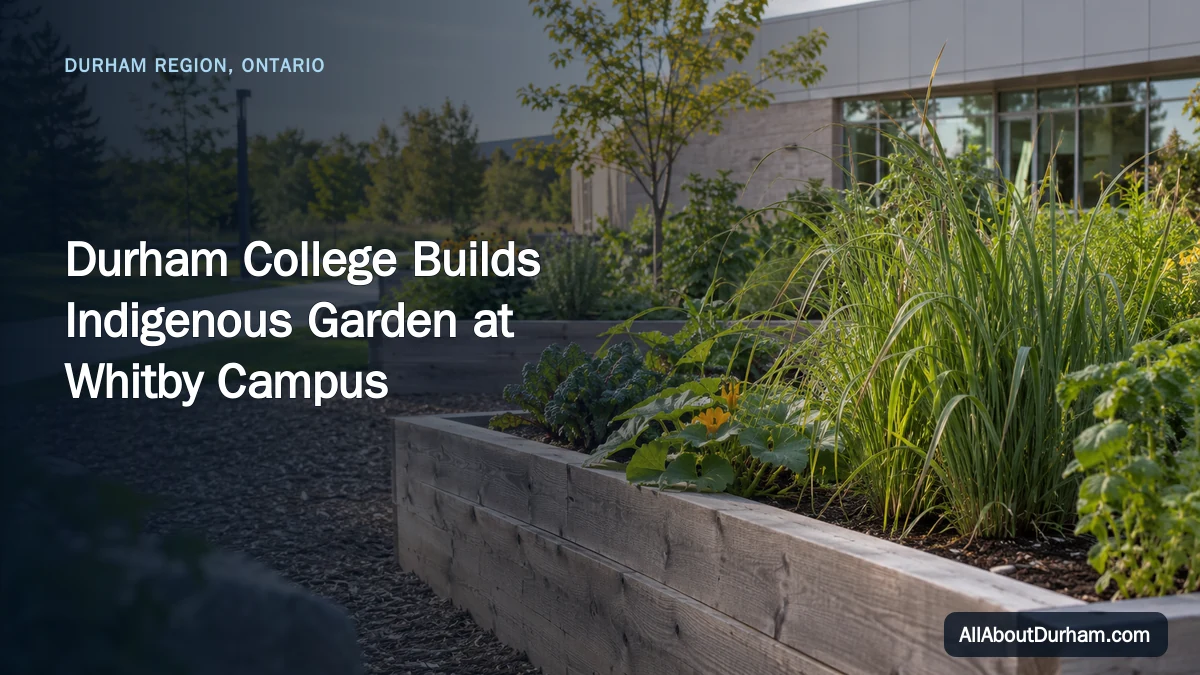
A new Durham College Indigenous garden is taking shape at the Whitby campus, combining land-based teaching, sustainable agriculture and hands-on student work.
The garden is part of the campus food forest operated with the Barrett Centre of Innovation in Sustainable Urban Agriculture. Durham College says it creates space for Indigenous knowledge while showing how edible plants can be grown in layers that resemble a natural forest.


Work began after an Indigenous ground blessing in May. The college describes the project as an Indigenous Agroecology installation that broadens how students and visitors think about food production, soil health and relationships with the land.


Medicines and teachings
Sweetgrass is among the medicines growing in the space. Durham College says its use in braiding illustrates the strength created when individual strands are brought together.
Tobacco is also included. The college explains that it is understood as the first medicine and may be offered back to the Earth when plants or medicines are harvested as an expression of gratitude and reciprocity.
The garden draws on the Anishinaabe Seven Grandfather Teachings, encouraging respect for knowledge shared by earlier generations, learning from experience and openness to others’ teachings.
Students contribute across programs
Horticulture students helped plant and harvest. Carpentry and Renovation students built raised planters and benches, while Graphic Design students are preparing signs, illustrations and QR-code elements. Culinary Management students are exploring ways to work with crops grown there.
A future naming ceremony will formally announce the garden’s Anishinaabe name. The college has not published a date for that ceremony or announced regular public visiting hours.