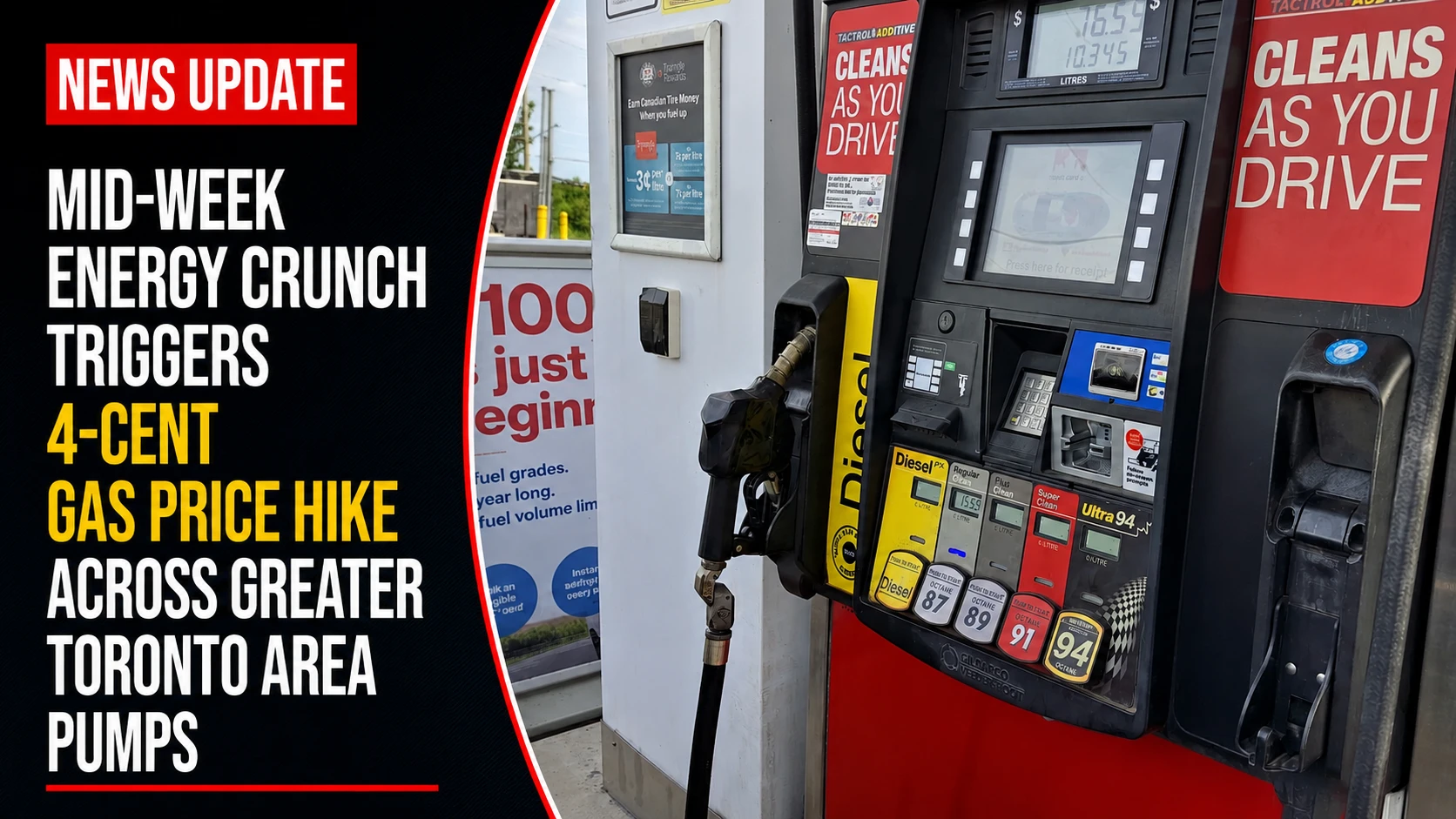
The regional logistics networks, commercial fleet operations, and daily commuters across the Durham Region are bracing for an immediate financial hit at the pumps. Tracked under provincial energy portfolios on Tuesday, July 7, 2026, market data analysts finalized the price adjustment file Gas prices set to jump across southern Ontario. Driven by shifting international crude values and tightening wholesale refinery margins ahead of mid-summer travel peaks, retail fuel prices are locked into a widespread regional spike that will take effect precisely at midnight.
Petroleum industry watchdogs note that while some municipalities will face steeper overnight hikes than others due to localized pricing anomalies, the final cost baseline will equalize across the urban grid.


The Wednesday Retail Fuel Price Framework
The incoming mid-week price correction hits all primary fuel grades, pushing standard commuter and commercial diesel costs to near-record seasonal highs.


-
The Regular Grade Metric: The cost for a standard liter of regular unleaded gasoline will climb by four cents across the Greater Toronto Area, settling at an identical baseline of $1.669 per liter.
-
The Margin Corrections: Certain southern Ontario micro-markets that previously maintained slightly lower baseline margins will experience an acute five- to six-cent jump, effectively erasing previous localized discounts and bringing those regions level with the broader $1.669 GTA average.
-
The Premium Upgrade Cost: High-octane premium blends are tracking a concurrent four- to six-cent increase, pushing luxury and performance vehicle fuel costs to a pricey $1.969 per liter across most southern Ontario stations.
-
The Commercial Diesel Baseline: Essential logistics operations face a matching four-cent hike on diesel fuel, locking commercial transport lines into a baseline cost of $1.859 per liter starting Wednesday morning.
Analyzing the Fuel Grade Pricing Impact Grid
The retail fuel metrics moving into the mid-week cycle show how different vehicle classes will be impacted across regional gas bars.
| Fuel Product Class | Immediate Overnight Premium | Certified Wednesday Price Cap | Primary Regional Economic Driver Impacted |
| Regular Unleaded | +4.0¢ Per Liter | $1.669 / Liter | Daily passenger vehicle commuting and household discretionary spending |
| Premium Octane | +4.0¢ to +6.0¢ Per Liter | $1.969 / Liter | High-performance fleet maintenance and luxury consumer transport lines |
| Commercial Diesel | +4.0¢ Per Liter | $1.859 / Liter | High-volume supply chain logistics, regional shipping, and construction grids |
The Fleet Management Strategy
Commercial transport coordinators and regional logistics managers are advising local drivers to fill up their tanks before the midnight price hike kicks in. For a standard 50-liter passenger vehicle tank, the four-cent increase adds an extra $2.00 per fill-up. While that may seem minor for individual households, the cumulative impact creates a massive overhead spike for corporate fleets, food delivery networks, and long-haul transport operations running across the Highway 401 corridor.
The tracking data supplied by industry monitoring platforms suggests that retail prices will remain highly volatile through the second half of July as summer travel volumes place maximum strain on regional refinery production grids.
The Ontario Ministry of Energy and independent petroleum monitoring networks handle ongoing retail price auditing.
Durham Region commuters, commercial fleet managers, and local consumers looking to look over real-time regional fuel price maps, track daily wholesale petroleum cost shifts, or access alternative transport resources can find the data platforms online at affordableenergy.ca, caa.ca/gas-prices, or monitor regional consumer updates via durham.ca.