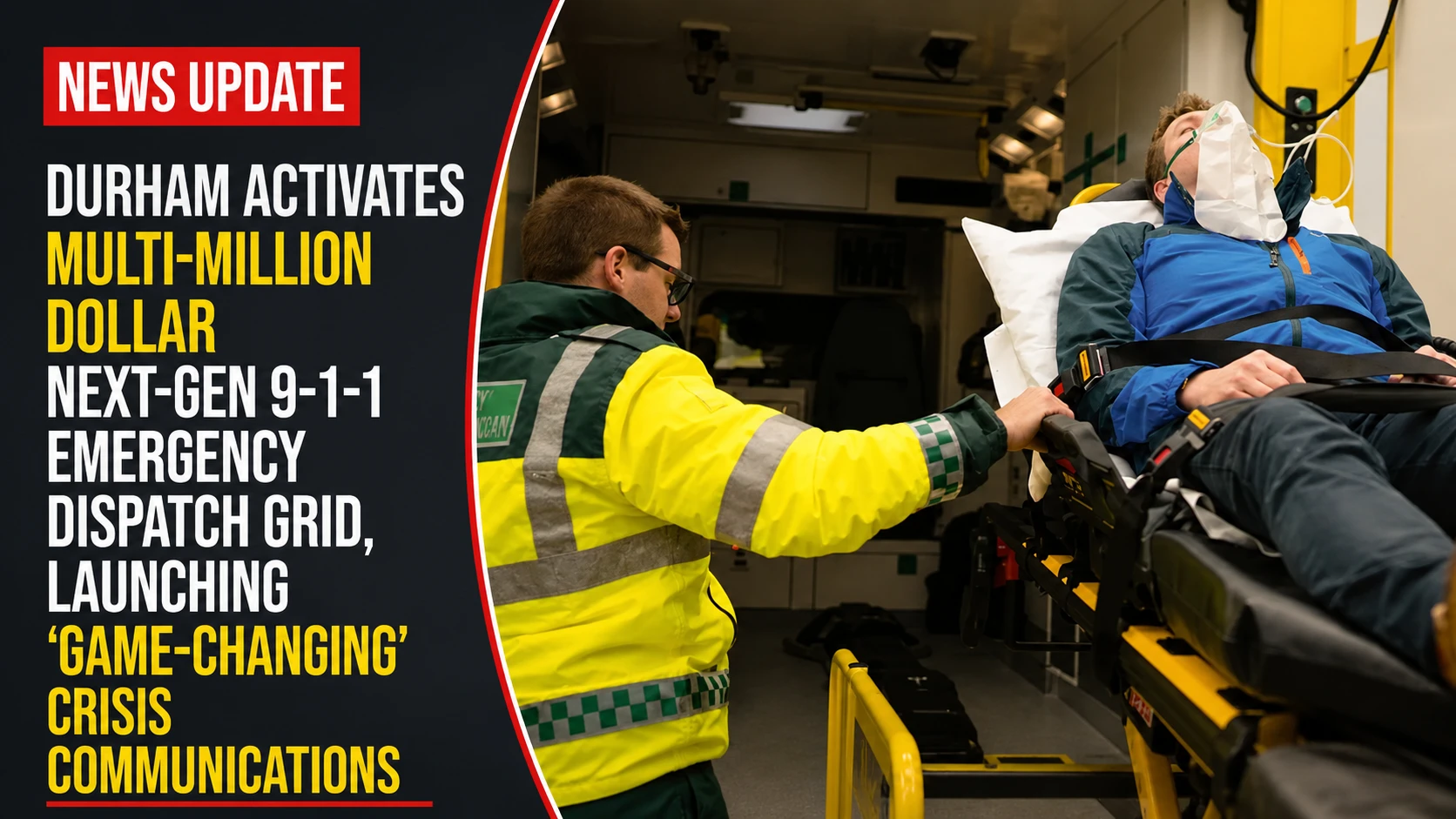
The emergency dispatch centers, municipal fire directorates, and regional paramedic networks across the Durham Region have officially transitioned onto a highly advanced, unified communication infrastructure. Tracked under provincial public safety portfolios on Tuesday, July 7, 2026, technology deployment clerks finalized the system integration file New ‘game changer’ 9-1-1 dispatch system now online in Oshawa and Durham Region. Supported by $6.7 million in targeted funding from the Ontario government, the launch of the Next Generation 9-1-1 (NG9-1-1) platform replaces decades-old analog infrastructure with a secure, digital IP-based network capable of delivering real-time, life-saving telemetry to first responders.
The digital upgrade satisfies a critical federal regulatory milestone well ahead of the hard structural deadlines imposed by national telecom watchdogs.


The Consolidated Dispatch Architecture and Cost-Sharing Grid
The rollout marks the culmination of a multi-year effort to centralize all regional fire dispatch services into a single, high-efficiency municipal hub.


-
The 2024 Consolidation Catalyst: The massive scale of the NG9-1-1 system required a regional footprint far larger than any single Durham town could support on its own. This reality triggered the complete consolidation of dispatch services in 2024, when Ajax and Pickering officially merged their operations with Oshawa Fire Services.
-
The Six-Way Budget Split: Under the modern regional partnership agreement, operating costs for the centralized hub are split six ways instead of four. Oshawa, Ajax, Pickering, Whitby, and Clarington each hold a single stake, while the three northern rural townships (Scugog, Uxbridge, and Brock) count as a single combined entity.
-
The Taxpayer Yield: This shared-service model has trimmed Oshawa’s independent dispatch overhead by up to 28 percent, while saving Ajax and Pickering millions in standalone equipment upgrade costs.
-
The Technology Integration Consortium: The design, deployment, and secure integration of the new network were executed through a public-private engineering partnership alongside telecommunications giants Bell, Avaya, Netagen, and Komutel.
Analyzing the Phased NG9-1-1 Operational Roadmap
While voice calling remains the only way for the public to contact emergency services today, the infrastructure is built to unlock advanced multimedia capabilities in the near future.
| Implementation Phase | Active Network Capabilities | Future Digital Infrastructure Upgrades | Core Public Safety Objective |
|
Phase 1 (Live July 2026) |
• Ultra-fast call routing connections • Enhanced system backup reliability • Initial localized data transfers |
Upgraded cross-agency coordination tools for multi-jurisdictional disasters | Drastically cut down call processing times when lines face maximum stress |
|
Phase 2 (Incoming Iteration) |
• Highly precise caller location tracking • Real-time automated text-to-911 |
Integration of advanced geographic information system (GIS) maps | Send rescue crews directly to exact coordinates, even without a spoken address |
|
Phase 3 (CRTC Target) |
• Live incident video streaming • Citizen photo submissions |
Secure transmission of personal medical histories and accessibility needs | Give frontline teams visual clarity on fleeing suspects or crash severity before arrival |
The Legislative and Executive Endorsement
Ontario Solicitor General Michael Kerzner termed the new network an absolute “game changer” for provincial emergency management, stating that real-time data delivery translates directly into lives saved across the GTHA. Oshawa Mayor Dan Carter and DRPS Chief Peter Moreira echoed this stance, noting that advancing how calls are captured and managed delivers a more dependable lifeline during high-stress crises where every single second counts.
The transition keeps Durham perfectly aligned with the Canadian Radio-television and Telecommunications Commission (CRTC) mandate, which legally requires all emergency services across Canada to completely sunset legacy 9-1-1 infrastructure by March 31, 2027.
Oshawa Fire Services and the Durham Regional Police Service handle ongoing network security and operational dispatch monitoring.
Durham Region residents, emergency planning coordinators, and public safety researchers looking to review the technical standards of the new system, track regional emergency vehicle response metrics, or look over community disaster safety guides can access the informational networks online at oshawa.ca/fire, drps.ca, or read the comprehensive federal upgrade framework via crtc.gc.ca.