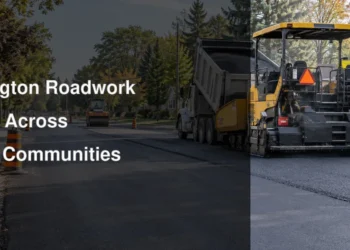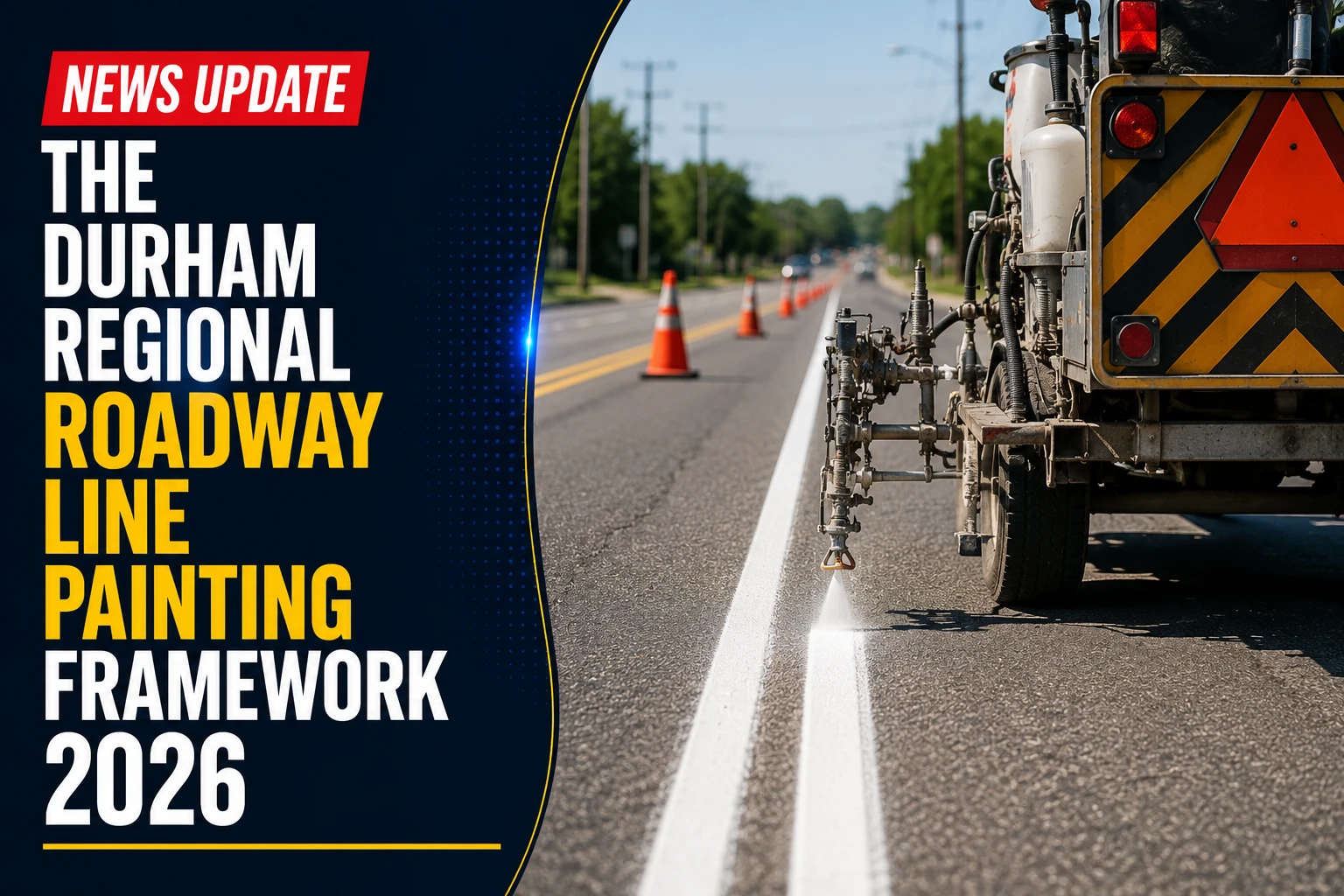
The Regional Municipality of Durham’s Works Department, operating under its annual traffic infrastructure upkeep mandate, has activated its specialized mobile convoy network to initiate the seasonal line-marking campaign. Tracked under the active regional maintenance dossier The Durham Regional Roadway Line Painting Framework 2026, administrative engineers published the formal driver guidelines on Wednesday, June 10, 2026. The massive rolling operation will cover the region’s main thoroughfares, reinforcing vital safety markers that guide motorists, cyclists, and pedestrians through daily traffic flows.
Because the specialized quick-dry layout paint requires dedicated setting windows, transportation officials are issuing a strict warning to regional drivers to avoid tracking over freshly laid lines.
The Operational Footprint and Material Chemistry
The seasonal program represents a massive logistical effort, deploying specialized equipment across multiple road networks simultaneously from June through November 2026.


To maximize road crew safety and minimize delays for commuters, traffic managers have established a structured scheduling matrix:
-
The Geographic Scope: Maintenance crews are tasked with refreshing more than 3,300 lane kilometers of Regional roads, alongside targeted local municipal streets and key Ministry of Transportation (MTO) highway on/off-ramp intersections.
-
The Shift Windows: Core operations will take place on weekdays between 8:00 a.m. and 5:00 p.m., with additional overnight and weekend shifts scheduled for high-volume commuter corridors to limit gridlock.
-
Reflective Chemistry: The applied latex paint is mixed with millions of microscopic retroreflective glass beads. When vehicle headlights hit these embedded beads, they bounce the light directly back to the driver, significantly boosting line visibility during dark or rainy nighttime conditions.
Convoy Safety, Vehicle Damage, and Real-Time Tracking
The painting process functions as a slow-moving assembly line on wheels, traveling at a steady pace of 12 to 15 kilometers per hour. The spray truck is closely flanked by heavy follow-up trucks that act as protective buffers, keeping traffic back to give the wet latex paint a few critical minutes to dry.
| Driving Action Profile | Immediate In-Convoy Consequence | Long-Term Infrastructure Impact | Available Remedial Action |
| Maintaining Safe Distance | Safe passage / Zero vehicle contact | Preserves crisp line reflectivity | Normal transit progression |
| Crossing Wet Line Markings | Wet latex overspray on vehicle body | Destroys bead visibility mapping | Immediate high-pressure rinse |
| Passing Between Convoy Trucks | High risk of structural collision | Ruined lane delineation grids | Subject to active police citation |
Drivers who lose patience and attempt to weave past the buffer trucks or cross wet lines face immediate consequences: the wet paint will spray onto the vehicle’s body panels and wheel wells, where it quickly hardens. This tracking also smears the fresh markings, ruining the reflectivity and requiring expensive city crews to return and repaint the damaged section.
To help commuters avoid these slow-moving maintenance lines, Durham Region has equipped its entire painting fleet with live GPS tracking systems.
Residents can open their preferred smartphone navigation apps or visit the Region’s dedicated portal at durham.ca/LinePainting to check the real-time location of active painting crews.
If you accidentally drive through wet paint, the Works Department has published step-by-step DIY paint removal guides on their website to help you safely clean your vehicle without ruining its finish. For direct operational questions or to report a faded or skipped intersection marking, residents can reach the regional administrative desk at 905-668-7711.