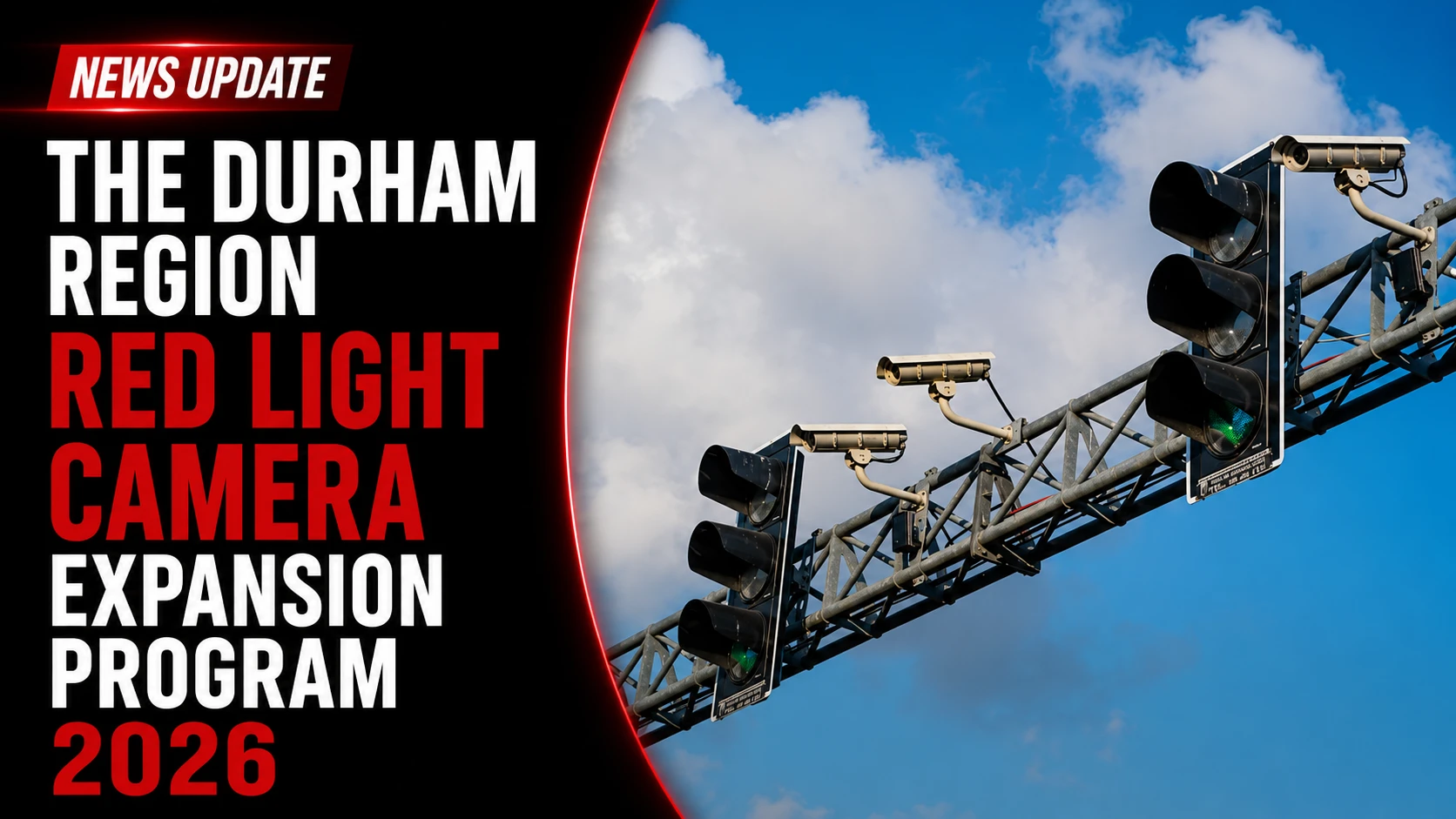
The Regional Municipality of Durham’s Works Committee has formalized an aggressive public safety directive, recommending a major expansion of automated intersection enforcement to lower severe injury rates across the local roadway network. Tracked under the corporate municipal folder The Durham Region Red Light Camera Expansion Program 2026, regional staff submitted their strategic expansion report on Friday, June 5, 2026. The empirical data highlights a planned doubling of active automated enforcement technology, expanding the regional grid from its current footprint of 12 cameras to a maximum cap of 24 operating locations.
The expansion plan aligns with Durham’s broader Strategic Road Safety Action Plan (SRSAP), which designates automated traffic cameras as a critical weapon against intersection-related human trauma.

Analyzing the Before-and-After Safety Metrics
The corporate decision to double down on automated enforcement is backed by comprehensive, multi-year performance logs gathered from the region’s original 12 pilot intersections, which have been fully operational since December 2020.


The localized before-and-after collision analysis revealed a massive shift in how accidents happen at camera-monitored intersections:
-
T-Bone and Angle Impacts: High-velocity angle collisions—which carry the highest statistical risk of critical injuries and fatalities for drivers and passengers—dropped by a dramatic 48 per cent.
-
Rear-End Collisions: Conversely, lower-severity rear-end shunts experienced a 32 per cent increase, a common trend as drivers brake suddenly to avoid a ticket.
Regional engineers emphasize that this trade-off is a major net positive for public health, as lower-speed rear-end impacts cause significantly fewer severe injuries than high-speed side-impact crashes. Currently, Durham Region still logs an average of 1,000 severe, injury-causing, or fatal collisions every year at non-monitored intersections, highlighting the need for immediate, wider technological enforcement.
The Toronto Joint Procurement and Vendor Timelines
Because developing a standalone automated camera processing network is incredibly expensive, Durham Region is saving taxpayer dollars by piggybacking on the City of Toronto’s larger municipal buying power.
| Operational Infrastructure Vector | Current Program Status (2026) | Proposed Target Expansion | Active Tech Vendor Partner |
| Active Camera Sites | 12 Operational Crossings | 24 Maximum Locations | Jenoptik Processing Systems |
| Procurement Strategy | Contract Expiring Dec 31 | Joint Toronto RFP Piggyback | Pending Competitive Bidding |
Durham’s current processing contract with vendor Jenoptik is officially scheduled to expire on December 31, 2026. In anticipation of the deadline, Toronto is launching a comprehensive Request for Proposal (RFP) to secure a long-term technology vendor for the next decade.
To prevent any dangerous gaps in automated enforcement while the RFP is being processed over the coming months, the Works Committee has given the Commissioner of Works, the Regional Solicitor, and the Regional Chair the authority to sign an interim “bridge contract” with Jenoptik. Once Toronto picks a winning vendor, Durham staff will bring a final implementation report back to Regional Council to formally approve the funding and lock in the installations for the new 12 intersections.