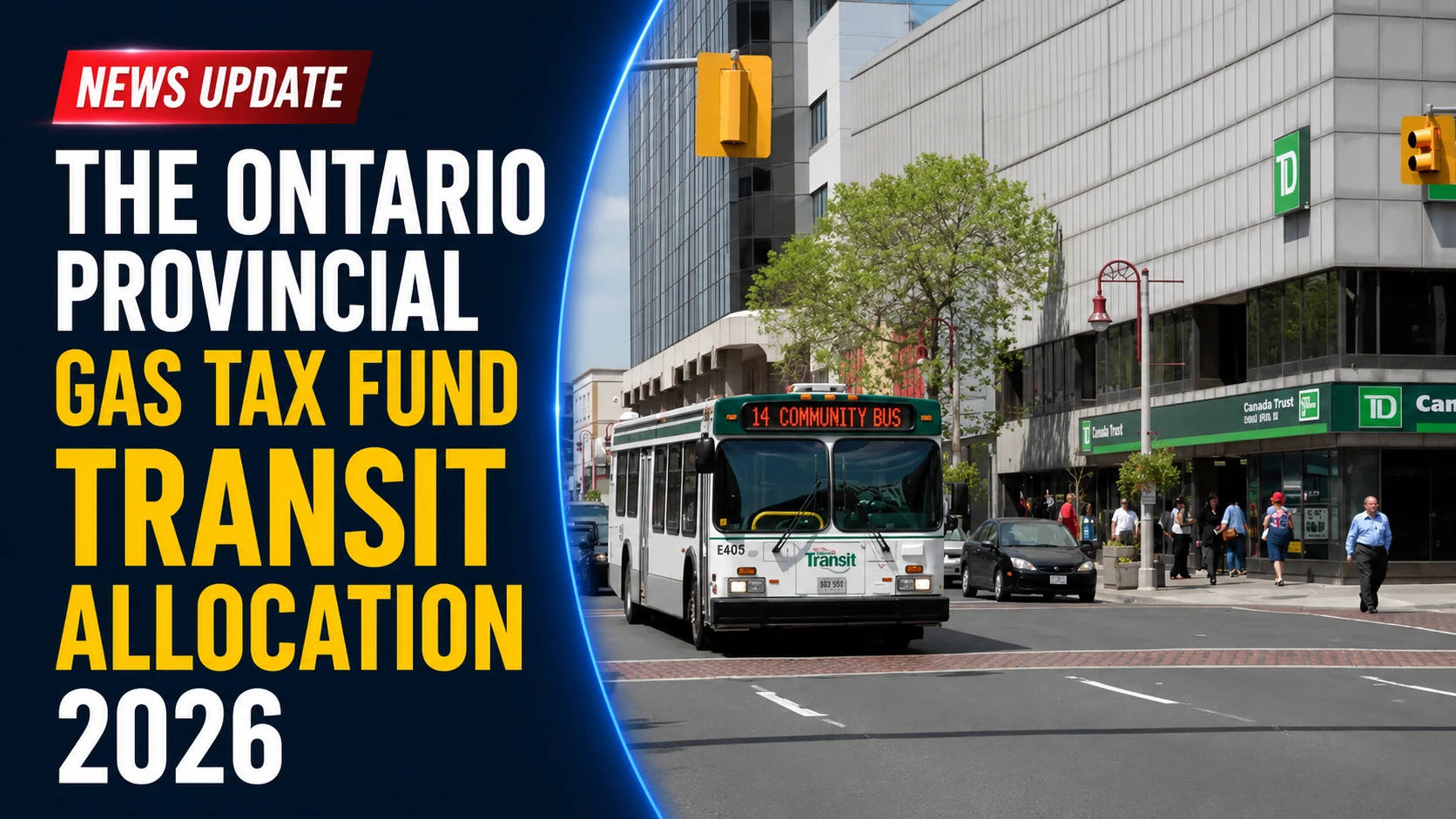
The Ministry of Transportation has officially cleared the release of the 2025–26 gas tax funding tranches, delivering a multi-million-dollar capital injection to Durham Region Transit (DRT) to strengthen the area’s strained bus networks. Tracked under the active fiscal dossier The Ontario Provincial Gas Tax Fund Transit Allocation 2026, provincial transportation directors finalized the funding documents on Friday, June 5, 2026. The financial update locks in a substantial $9,634,000 capital allotment specifically earmarked for Durham Region, serving as a core component of a wider provincial funding envelope worth nearly $380 million distributed across 107 Ontario municipalities.
The immediate injection of cash gives local transit planners the flexibility to fund daily operational costs and long-term transit construction projects without placing an extra burden on municipal property taxes.
The Mechanics of the Two-Cent Gas Tax Funding Model
The multi-million-dollar funding matrix is governed by the Dedicated Funding for Public Transportation Act. Unlike unstable year-to-year government grants, this specific program uses a permanent funding model tied directly to real-world consumer fuel consumption across the province.
The underlying math used to calculate Durham’s annual share relies on three key data points:
This legislative setup transfers two cents per litre of gasoline sold at retail pumps straight into a protected provincial transit fund. Because the funding relies heavily on local ridership gains and population shifts, Durham’s rapid population growth has helped lock in a larger slice of the provincial fund. This year’s allocation gives DRT planners a reliable financial foundation to manage the rising costs of running a major regional transit network.
Operational Fleet Integration and Route Scaling Strategies
Durham Region Chair John Henry confirmed that the $9.6 million investment will be immediately used to support service improvements and modernize the bus fleet. This funding is designed to make it much easier for residents to travel to work, school, and medical appointments across the region’s expanding communities.
| Priority Transit Action Vector | Targeted Operational Scope | Long-Term Transit Impact |
| Service Hour Extensions | Late-night & weekend routing blocks | Improved access for off-shift employment |
| Fleet Modernization | Buying high-capacity low-floor hybrid vehicles | Lower fleet downtime / Better accessibility |
| Grid Boundary Expansion | New connecting links in growth areas | Shorter walk times to active bus stops |
The Region’s discretionary funding plan allows transit managers to target specific bottleneck areas in the system. DRT is currently prioritizing buying new low-floor, accessible hybrid buses to replace aging, high-maintenance vehicles on high-traffic routes.
Concurrently, scheduling teams are preparing to extend service hours on busy commuter routes connecting north Durham communities to the main Lakeshore East GO train lines. This focus on seamless transfers aims to lower overall wait times and make public transit a much more reliable option for daily commuters across the Greater Toronto Area.