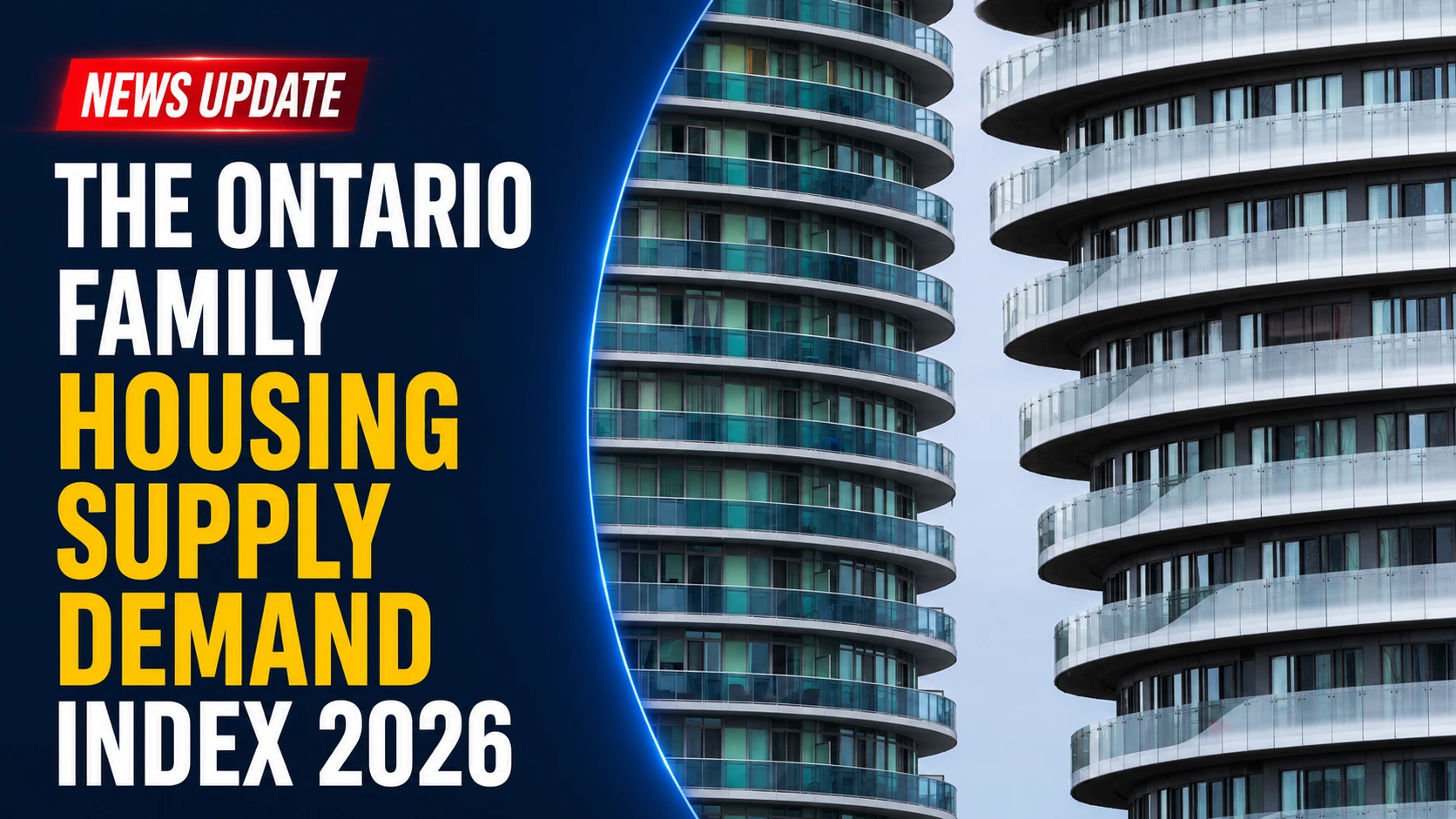
An intensive market correction across southern Ontario has exposed a severe structural mismatch between developer output and consumer preferences, sparking a broad political and social debate over municipal land use. Tracked under the property tracking folder The Ontario Family Housing Supply Demand Index 2026, recent industry intelligence and regional polling figures updated on Friday, June 5, 2026, show a sharp drop in consumer interest in high-density micro-apartments. Instead, buyers are pushing for a massive strategic shift toward traditional detached and semi-detached family-sized residential construction.
The shift comes at a critical time, as the high-density real estate market navigates a multi-year economic slump that has frozen new residential construction pipelines across the province.


The Historical Shift and Present Economic Realities
To understand the current supply gap, analysts look back at a multi-decade change in the province’s construction focus. Data from the Municipal Property Assessment Corporation (MPAC) tracks a clear transition in local building trends over the last seventy years.
While single-detached builds dominated the post-war era—accounting for a massive 95 per cent of all new residential completions in the 1950s—high-density multi-residential structures accelerated rapidly during the 1990s. By 2020, the supply landscape had completely inverted: high-density condominiums accounted for roughly 41 per cent of all new residential builds, eclipsing single-detached properties, which fell to a minor 38 per cent share.


This building push has now hit a major roadblock. Industry analytics firm Urbanation confirms the high-density market is stuck in a severe downturn that has lasted for over four years. During the first quarter of 2026, sales of new units inside the Greater Toronto and Hamilton Area (GTHA) fell to an unprecedented 35-year low.
Only 246 new units changed hands during Q1 2026—marking a steep 52 per cent year-over-year drop and sitting a staggering 94 per cent below the historical 10-year first-quarter average of 4,046 sales. For the first time in over three decades, developers did not launch a single new project during the entire quarter.
Analyzing the Public Opinion Mandate
The complete drop in investment buying has exposed a clear truth: while smaller units were once snapped up by speculative investors, real end-users and growing families are struggling with a severe shortage of livable space.
| Polling Choice Metric | Total Verified Responses | Percentage Share | Core Market Implication |
| Yes (Too Many Condos Built) | 3,092 Votes | 85.84% of Sample | Massive demand for family-sized supply |
| No (Balance is Correct) | 510 Votes | 14.16% of Sample | Content with high-density urban focus |
An identical trend emerged in a public pulse poll conducted by media network INsauga.com, which asked residents: Do you think too many condos are being built compared to family-sized housing?
The public response was decisive. Out of 3,602 local residents surveyed, an overwhelming 85.84 per cent (3,092 individuals) voted yes, confirming that current developer plans do not match what communities actually need. Conversely, only 14.16 per cent (510 individuals) believed the current high-density focus was correct.
With more than 1.8 million Ontarians currently living in condo units according to the Condominium Authority of Ontario, urban planners warn that unless the province shifts its focus toward building multi-bedroom townhomes and family-sized properties, a generation of young families will find themselves completely priced out of a place to grow.