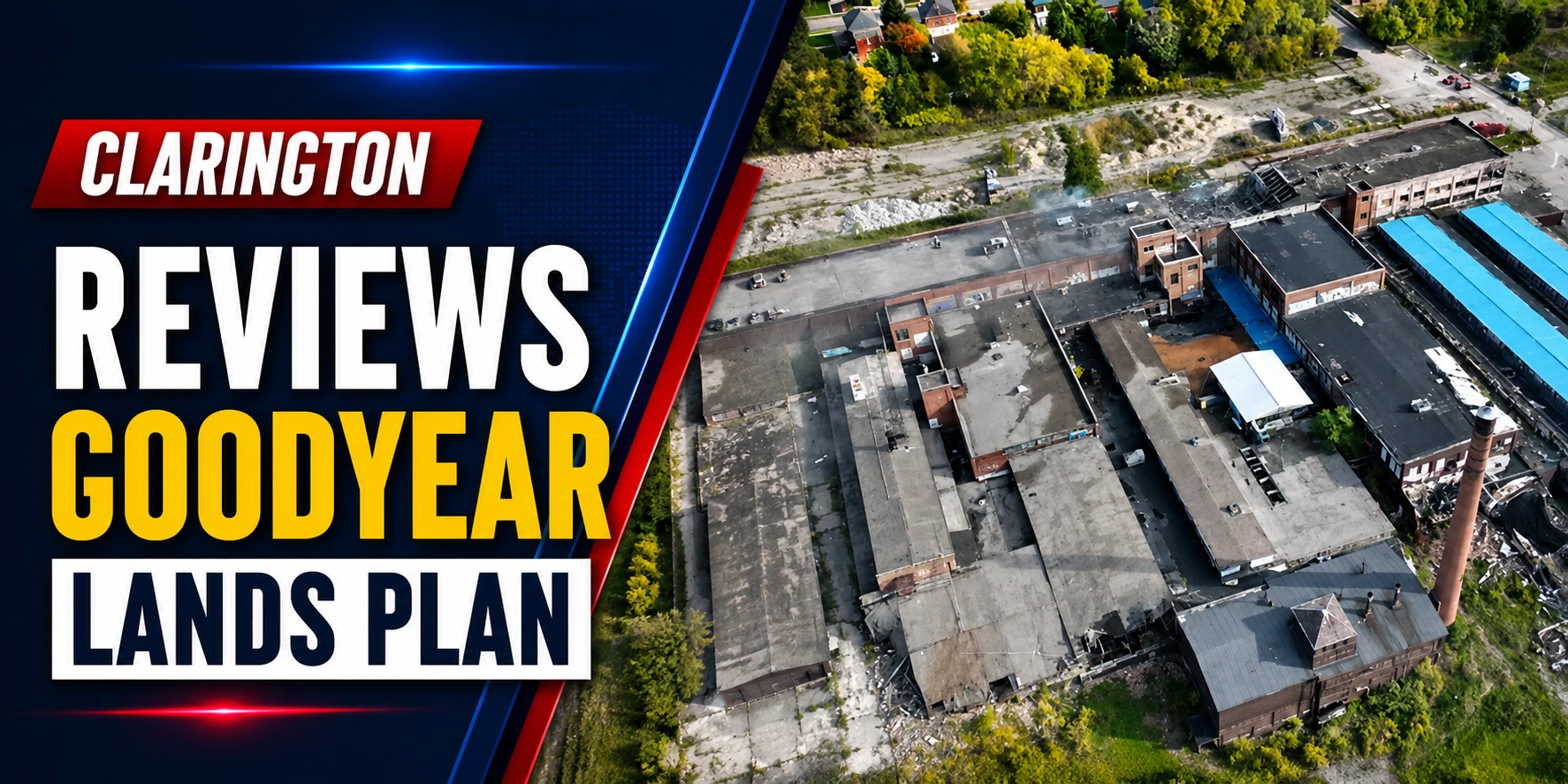
Clarington Council is scheduled to discuss a highly controversial proposal to redevelop the historic former Goodyear lands in Bowmanville during a pivotal upcoming meeting on May 25. The site, prominently located at 45 Raynes Ave., has long been a focal point for local revitalization efforts. It is currently the subject of a comprehensive planning application that aims to construct 3,200 new residential units alongside nearly 10,000 square metres of non-residential commercial space. The ambitious plans outline building heights ranging from four storeys up to a staggering 25 storeys, with proponents estimating the development would eventually house a population of approximately 6,000 people, fundamentally altering the community’s landscape.
Residents voiced significant and impassioned opposition to the current scope of the project during a packed planning meeting held on May 11, citing a profound mismatch with the existing character of the town. Multiple attendees argued passionately that the proposed density is fundamentally incompatible with the surrounding older residential neighbourhood. They warned that the sudden influx of thousands of new residents and the associated increase in vehicle traffic could overwhelm local roadways, sewer systems, and other essential municipal services. Although the proposal includes the preservation of two existing historic industrial buildings and the iconic smokestack to honour the site’s rich heritage, critics maintain that the sheer scale of the new high-rise construction remains visually inappropriate and physically disruptive for the area.


Specific concerns were raised regarding the architectural design and the general suitability of tall buildings within a small-town context that values a lower skyline. “This is an older residential neighbourhood, it’s not designed for traffic flow or density like this,” resident David Hoyle told the meeting, expressing frustration with the lack of infrastructure planning. He further criticized the layout, stating, “This proposal does not consider the community at all, this is how many people they can squeeze into a small area with no care for what’s existing. This is a really poor design.” Resident Terri Cosgrove echoed these sentiments, noting that 25-storey buildings are typically found closer to downtown Toronto rather than in the heart of Bowmanville. “The fabric of this neighbourhood is older and mixed. Many subdivisions have been seamlessly put into Bowmanville, but this is massive for such a small town,” Cosgrove said, highlighting the fear of losing the town’s identity.


Environmental remediation remains a central and highly technical topic of debate given the site’s long history of heavy industrial use and its close proximity to the sensitive Bowmanville Valley Conservation Area. Mark Beasy, representing Cambrium Inc., addressed the council regarding the detailed strategy for cleaning up the property. He stated that while it would be impractical to return the site to a pristine condition due to decades of manufacturing, the environmental impacts would be managed to meet strict provincial regulations. “The majority of impacts found on the site… will be addressed through risk management measures,” Beasy explained. However, Councillor Willie Woo, a former long-time employee of the facility, expressed deep skepticism regarding the safety of disturbing the contaminated soil. “I can tell you there is much contamination that you don’t see, which is in the ground,” Woo said. He emphasized his personal familiarity with the chemicals used historically and warned that disturbing the site without extreme caution could release them into the wider environment.
Councillor Woo also pointed out the immediate physical hazards posed by the current state of the derelict buildings, referencing a significant past fire at the location that required emergency intervention. “It’s unacceptable the way it’s sitting there because we did have a major fire there and it’s sitting there waiting for another accident to happen,” he remarked, balancing safety concerns with remediation risks. Meanwhile, Councillor Lloyd Rang raised alarms about the potential long-term impact on the adjacent conservation area. The current development plan features multiple trails linking the new neighbourhood to the green space, a detail Rang has repeatedly requested be reduced to minimize human interference. He argued that placing 6,000 residents directly next to a sensitive ecological area would be detrimental to the local wildlife populations, potentially causing irreversible damage to the environment.
Councillors are expected to deliberate heavily on these complex zoning and environmental concerns as they review the feasibility of the high-density development plans later this month. The discussion at the May 25 council meeting will determine the next steps for the future of the significant industrial property in the heart of Bowmanville, weighing the benefits of economic growth and housing supply against the preservation of community character and environmental safety.