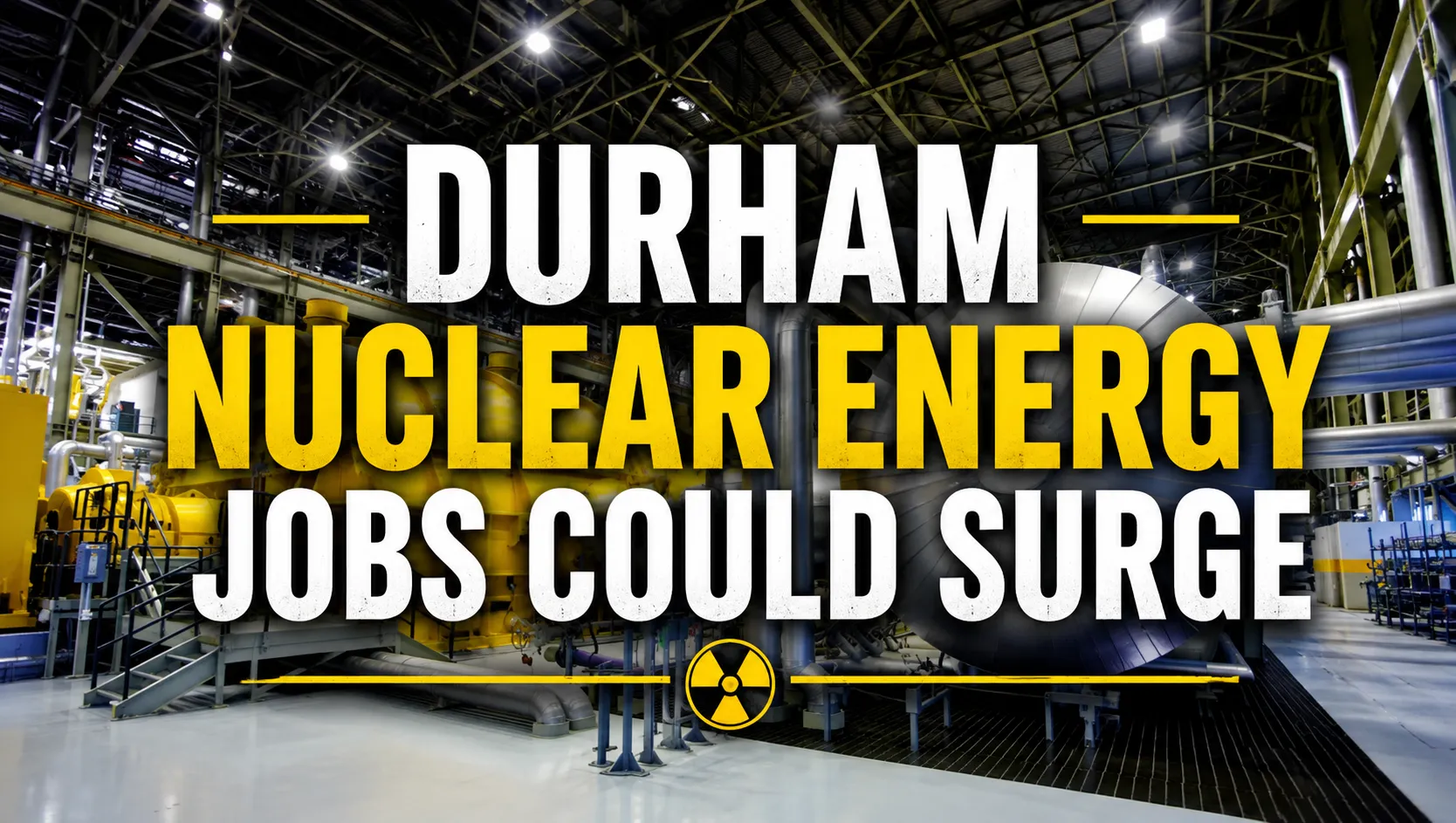
The growing clean energy sector could dramatically reshape employment opportunities across Ontario, with experts predicting that Durham nuclear energy jobs may create tens of thousands of new positions over the next decade.
Industry leaders and academic institutions are now preparing for a major workforce expansion as Ontario continues investing in nuclear energy projects, including the Darlington New Nuclear Project in Clarington. Recent developments have increased optimism around the future of the industry and its economic impact on Durham Region.


Five Ontario post-secondary institutions — Durham College, Ontario Tech University, Centennial College, Georgian College, and Humber Polytechnic — recently announced the creation of the Canadian Clean Energy Workforce (CCEW) consortium. The initiative aims to develop training programs and workforce strategies to support the increasing demand for workers in nuclear and clean energy industries.


The push for more Durham nuclear energy jobs comes as Ontario expands its small modular reactor (SMR) projects and prepares for future clean energy demands. According to industry estimates, nearly 40,000 workers may be needed across Canada beginning in 2030 to support nuclear refurbishment projects, new energy infrastructure, and renewable energy systems.
Experts say Durham Region could become one of the largest employment hubs connected to the industry. Officials estimate there may be 20,000 to 30,000 jobs created around Darlington and Port Hope over the next 10 years.
The expected growth in Durham nuclear energy jobs extends beyond engineering and nuclear science. The sector will require workers in skilled trades such as electricians, machinists, pipefitters, boilermakers, and radiation technicians. There will also be growing demand for cybersecurity professionals, AI specialists, digital infrastructure experts, human resources staff, and safety personnel.
Durham College officials say the region is well-positioned to train workers for these opportunities because of its strong ties to the nuclear industry and hands-on technical education programs. Specialized programs such as non-destructive evaluation (NDE) training are already supporting industry workforce needs.
The Durham nuclear energy jobs outlook is also tied to Ontario’s broader clean energy strategy. Once complete, the four SMRs at Darlington are expected to generate enough electricity to power approximately 1.2 million homes.
Industry leaders believe Ontario’s decades of experience in nuclear development place Durham Region at the centre of international attention. Companies and government representatives from countries including Poland, Singapore, Indonesia, and the Philippines have reportedly visited Ontario nuclear sites to study local expertise and best practices.
Supporters of the consortium say coordinated training efforts will help ensure employers can quickly access skilled workers as demand grows. The long-term goal is not only to fill local positions but also to create a workforce that can support clean energy projects across Canada and internationally.
As investment in nuclear technology continues, the future of Durham nuclear energy jobs could play a major role in transforming both the regional economy and Canada’s clean energy workforce.