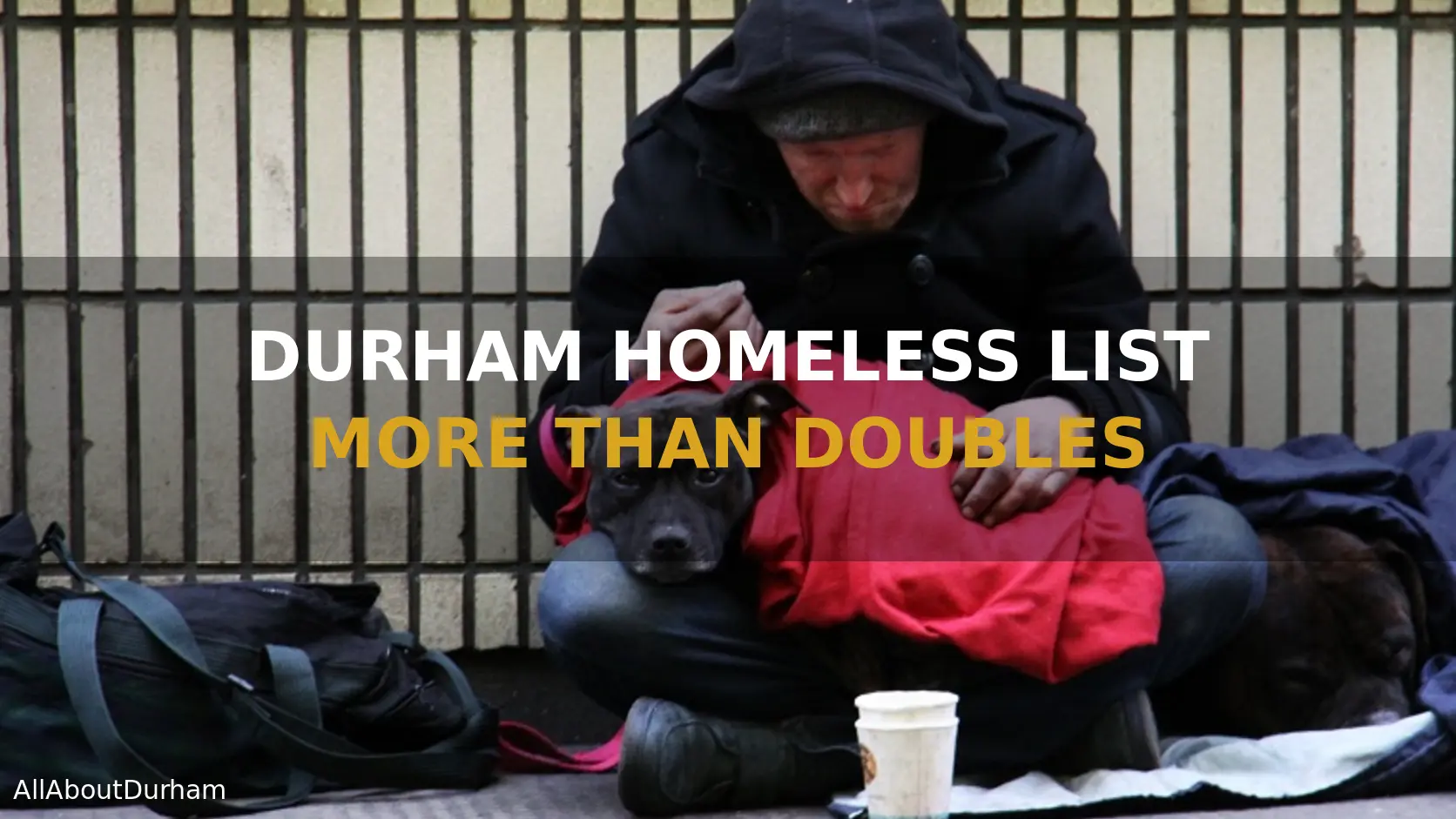
The number of people experiencing homelessness in Durham Region has more than doubled in just six months, according to newly released data that highlights a deepening crisis across the municipality.
The Durham homeless list, officially known as the By-Name List, is a real-time registry of individuals identified as experiencing homelessness. It recorded 811 names in August of last year. By February 2026, that figure had surged to 1,707 — a staggering increase of more than 110 percent. The list does not account for those who have not registered with the region, meaning the actual number of unhoused individuals is likely even higher.
The sharp rise comes despite ongoing construction of new shelter spaces and affordable housing units across Durham. The expansion of the Dundas Street shelter in Whitby, which opened in 2024 with emergency shelter beds, has been operating at or near capacity since its launch. In January, the federal government announced a 0 million investment through the Affordable Housing Fund to support Phase 2 of the facility, which will include transitional housing, addiction recovery services, a medical clinic, and palliative care.
Of the 1,707 people currently on the Durham homeless list, 271 are located in Whitby, according to Mayor Elizabeth Roy. Whitby’s homelessness action plan centres on the 1635 Dundas shelter facility, which has been a critical resource since its opening.
The Region of Durham oversees a range of programs designed to address homelessness, including street outreach teams, homeless hubs, shelters, warming centres, and the Coordinated Access System. Individual municipalities play a supporting role by listing community resources such as food banks and shelters.
Recent changes to provincial law have also affected how municipalities respond to homeless encampments. Outside of immediate health and safety concerns, municipalities cannot immediately remove people experiencing homelessness from public property. In cases involving criminal activity, towns work with Durham Regional Police Services to address concerns and remove encampments from municipal land.
A homeless encampment in Ajax was previously identified as critical by the region. Meanwhile, a Pickering hotel is being converted into temporary accommodation for asylum seekers, according to Durham Region officials.
Community advocates have pointed out that while the region is building new infrastructure, the pace of home insecurity is outstripping those efforts by a significant margin. The gap between available shelter and affordable housing units and the growing number of people in need continues to widen across the region.
The By-Name List serves as both a tracking tool and a starting point for connecting individuals with housing supports. As the numbers climb, pressure is mounting on all levels of government to accelerate solutions that address both the immediate need for emergency shelter and the longer-term goal of affordable, stable housing for Durham residents.