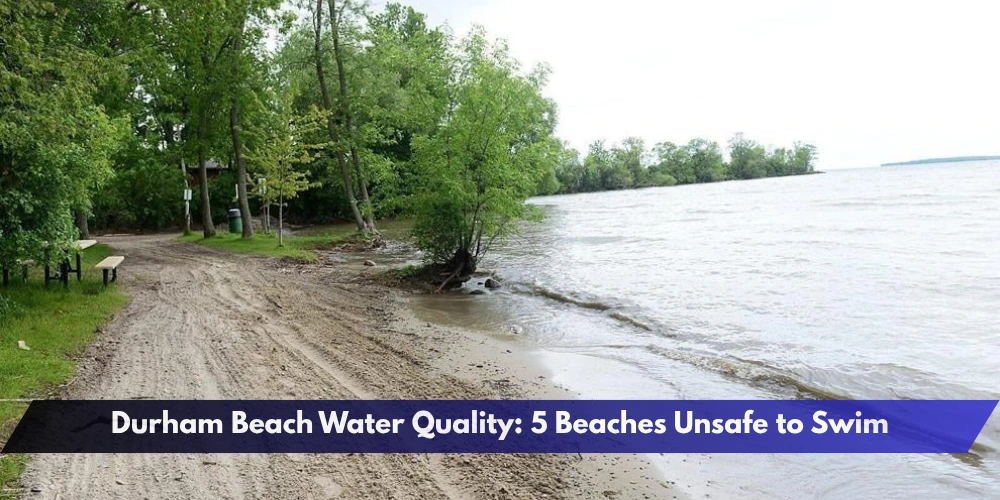
The latest Durham Beach Water Quality results show that five public beaches should be avoided for swimming as of 1 p.m. Thursday, Aug. 20.
Durham Region Health Department regularly tests public beach water for bacteria, including E. coli, to determine whether conditions are considered safe for swimmers.
The latest results identified unsafe swimming conditions at beaches in Brock, Clarington and Scugog.
Five Durham Beaches Test Unsafe
The following beaches tested unsafe for swimming on Aug. 20:
- Beaverton North Beach, Brock — Wellington Street and Victoria Street
- Beaverton South Beach, Brock — Simcoe Street and Harbour Park Crescent
- Bowmanville East Beach, Clarington — Port Darlington Road and East Beach Road
- Kinsmen Beach, Scugog — Water Street and Mary Street
- Rowan Beach, Caesarea/Scugog — Rowan Avenue
Residents and visitors are advised to stay out of the water at these locations until updated testing indicates conditions are safe again.
Beaches Testing Safe
Several other monitored Durham Region beaches were considered safe for swimming in the Aug. 20 report.
These include:
- Bowmanville West Beach, Clarington
- Frenchman’s Bay East Beach, Pickering
- Frenchman’s Bay West Beach, Pickering
- Iroquois Beach, Whitby
- Lakeview East Beach, Oshawa
- Lakeview West Beach, Oshawa
- Newcastle Central Beach, Clarington
- Paradise Beach, Ajax
- Thorah Centennial Park Beach, Brock
- Whitby Beach, Whitby
Conditions can change after samples are taken, however, so swimmers should continue checking posted beach advisories before entering the water.
Why Beaches Can Be Marked Unsafe
According to the public-health information included with the report, beach water may be considered unsafe when E. coli levels exceed provincial guidelines.
A beach can be flagged when one sample contains 400 or more E. coli bacteria per 100 millilitres, or when the geometric mean of five samples reaches 200 or more per 100 millilitres.
Elevated E. coli levels can indicate a higher likelihood that other harmful organisms are also present in the water.
Health Risks From Contaminated Water
Exposure to contaminated recreational water can lead to illness.
The supplied public-health guidance says swallowing water containing elevated levels of E. coli can cause symptoms including:
- stomach cramps
- diarrhea
- vomiting
Other organisms associated with poor water quality can also contribute to skin rashes and infections affecting the eyes, ears, nose or throat.
Testing Results May Lag Behind Current Conditions
One important limitation of Durham Beach Water Quality testing is that collecting, transporting and analyzing water samples can take a day or longer.
That means posted results may not always reflect conditions at the exact moment someone arrives at a beach.
Residents should also use visual conditions and recent weather as part of their decision about whether to swim.
Avoid Swimming After Heavy Rain
Public-health guidance recommends avoiding swimming when:
- it is raining
- the water is unusually cloudy
- waves are strong
- large numbers of birds are present
- there has been significant rainfall within the previous two days
Heavy rainfall can wash contaminants into lakes and beaches through stormwater runoff.
Other Reasons a Beach May Be Unsafe
E. coli is not the only reason officials may advise people to stay out of the water.
Beaches can also be considered unsafe because of pollution, spills, debris, unusual odours, dead fish or other environmental concerns.
Public beaches are also monitored for blue-green algae, which can pose a serious health risk to people and animals.
Check Conditions Before Swimming
With five Durham beaches currently listed as unsafe, swimmers should check the most recent public-health information before heading into the water.
Conditions can improve or deteriorate quickly depending on rainfall, runoff, temperature and other environmental factors.
As of the Aug. 20 report, beaches in Ajax, Oshawa, Pickering and Whitby were among those testing safe, while advisories remained in place at locations in Brock, Clarington and Scugog.