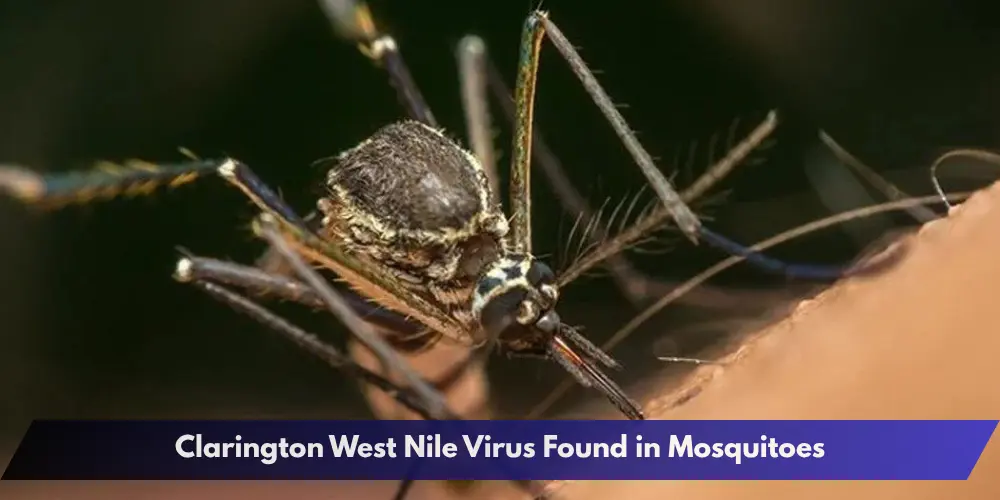
Clarington West Nile Virus activity has been confirmed after a batch of adult mosquitoes collected in the municipality tested positive for the virus, prompting Durham Region Health Department to remind residents to protect themselves from mosquito bites.
The Health Department was notified of the positive result on August 7. According to the supplied report, 13 mosquito batches collected across Durham Region have now tested positive for West Nile virus during the 2026 surveillance season.


Previous positive mosquito tests were reported in Ajax and Oshawa in July.


Durham Region conducts weekly mosquito surveillance during the summer, setting traps at sites across the region and sending collected insects to an accredited laboratory for identification and West Nile virus testing.
How West Nile virus spreads
West Nile virus is primarily transmitted to people through the bite of an infected mosquito.
Mosquitoes can become infected after feeding on birds carrying the virus. They can then transmit it to humans through later bites.
Durham Region Health Department says West Nile virus does not spread directly from person to person or from birds directly to people.
Most people infected with the virus either develop no symptoms or experience relatively mild illness.
Possible symptoms include fever, headache, body aches, nausea, vomiting and a rash on the chest, stomach or back.
Symptoms generally appear between two and 15 days after a bite from an infected mosquito.
Serious symptoms can occur
Although most infections are mild, West Nile virus can occasionally cause more serious illness.
Warning signs may include muscle weakness, a stiff neck, confusion, tremors, numbness and sudden sensitivity to light.
Anyone experiencing significant or worsening symptoms after a suspected mosquito exposure should seek medical advice.
The positive mosquito test does not mean everyone bitten by a mosquito in Clarington will become infected. Public-health surveillance is used to identify virus activity and remind residents that infected mosquitoes are circulating in the area.
Residents urged to prevent mosquito bites
With Clarington West Nile Virus activity now confirmed, Durham Health recommends several steps to reduce exposure.
Residents should wear light-coloured clothing, including long sleeves, long pants, socks and closed footwear when spending time outside, particularly around dawn and dusk when mosquitoes are often most active.
Insect repellents containing DEET or icaridin can be applied to exposed skin according to product directions.
Window and door screens should also be checked for tears or openings that could allow mosquitoes to enter homes.
Remove standing water around properties
Residents can also reduce mosquito breeding opportunities by removing standing water from their properties.
Water can collect in flowerpots, buckets, bird baths, children’s toys, clogged gutters, tarps and other outdoor containers.
These small pools can provide breeding habitat for mosquitoes if they remain undisturbed.
Durham Region also works to reduce mosquito populations by treating catch basins and other stagnant-water locations with larvicide as part of its seasonal West Nile prevention program. Similar prevention measures have been highlighted in previous Durham Health West Nile notices.
Ajax and Oshawa previously recorded positives
Ajax recorded Durham Region’s first positive mosquito batch of the 2026 season in July. Oshawa later recorded another positive batch.
The latest Clarington result shows that West Nile activity is not limited to one municipality.
Continued testing throughout the summer will help public-health officials monitor where positive mosquito pools are appearing and whether activity is increasing.
Residents should continue taking precautions even if no positive mosquito trap has been reported in their immediate neighbourhood.
The confirmation of Clarington West Nile Virus activity is a reminder that mosquito-borne illness remains a seasonal health concern across Durham Region through late summer and early fall.