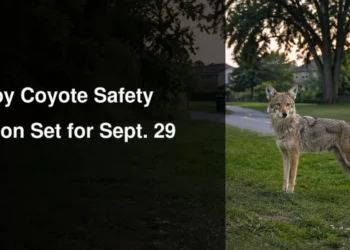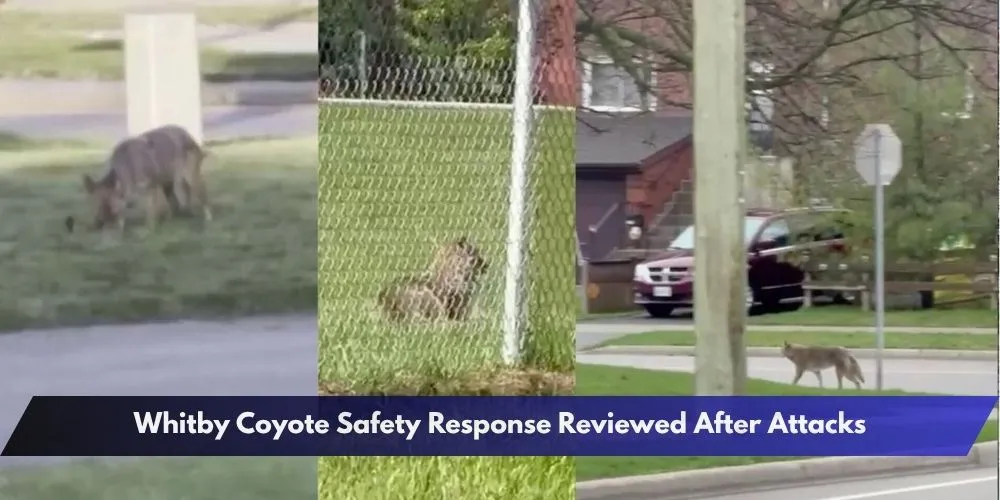
The Whitby coyote safety response came under detailed review during a special council meeting called after two young children were bitten in separate incidents. Councillors questioned municipal staff about how the Town monitors coyote activity, responds to aggressive animals and informs residents about reducing the risk of encounters.
Acting senior manager of enforcement services John Gallen and animal services supervisor Kate Novia presented information about coyote behaviour, habitat and Whitby’s coexistence and response strategy. The Town’s framework prioritizes public safety while using prevention, education, verified incident reports and graduated intervention when animals display increasingly dangerous behaviour.
Whitby Coyote Safety Response Examined by Council
Council members focused much of the discussion on the two recent attacks involving toddlers. Staff said the Town worked to identify the animals believed to be involved and euthanized two coyotes considered connected to the incidents.


Gallen told council that residents should report sightings and concerning behaviour through the Town’s online system. Those reports help Animal Services identify patterns, monitor areas of concern and determine where patrols, warning signs or other measures may be needed.
The Town has also been working with Durham Regional Police and wildlife specialists to assess reported activity. Following the recent incidents, Whitby advised residents to remain especially alert near parks, trails and natural areas, particularly during early morning and evening hours.
Staff encouraged residents who encounter a coyote to remain calm and avoid running. People should make themselves appear larger, wave their arms and use a firm voice or loud noises to encourage the animal to leave. Children should be kept close, while pets should remain on short leashes.
Residents are also urged not to feed coyotes or leave food sources accessible. Unsecured garbage, pet food, bird seed and fallen fruit can attract wildlife to residential areas and increase the likelihood that coyotes become comfortable around people.
Councillor Calls for More Preventive Measures
Regional Councillor Chris Leahy said public safety must remain the priority but argued that relocation to a reputable wildlife sanctuary should be considered before a healthy animal is destroyed when that option is considered practical and safe.
Leahy also called for coyote education sessions in Whitby elementary schools, improved public reporting and tracking, faster response procedures for animals showing dangerous behaviour and discussions with the province about wildlife-management policies for urban municipalities experiencing repeated incidents.
Mayor Elizabeth Roy said Town staff are acting in partnership with Coyote Watch Canada and Durham Regional Police. She emphasized that officials do not want any resident, particularly a child, to have a dangerous interaction with a coyote.
Whitby’s formal strategy says responses should be proportionate to the level of risk. Measures can range from public education and monitoring to warning signs, aversion techniques, enforcement against wildlife feeding and intervention involving wildlife authorities when a coyote presents a serious threat.
Residents Asked to Report Every Sighting
Town officials stressed that reporting helps staff understand where coyotes are appearing and whether their behaviour is changing. A simple sighting may not require the same response as stalking, approaching people, attacking pets or biting a person, but each report contributes to the wider picture.
Anyone who sees a coyote should give it space and never approach or attempt to feed it. Parents should supervise children closely in areas where activity has been reported. If an animal poses an immediate danger to a person, residents should call 911.
The Whitby coyote safety response will continue to rely on public reporting, education, coordinated enforcement and risk-based action. Council’s discussion highlighted the challenge of protecting residents while managing wildlife that has become established in urban and suburban environments.