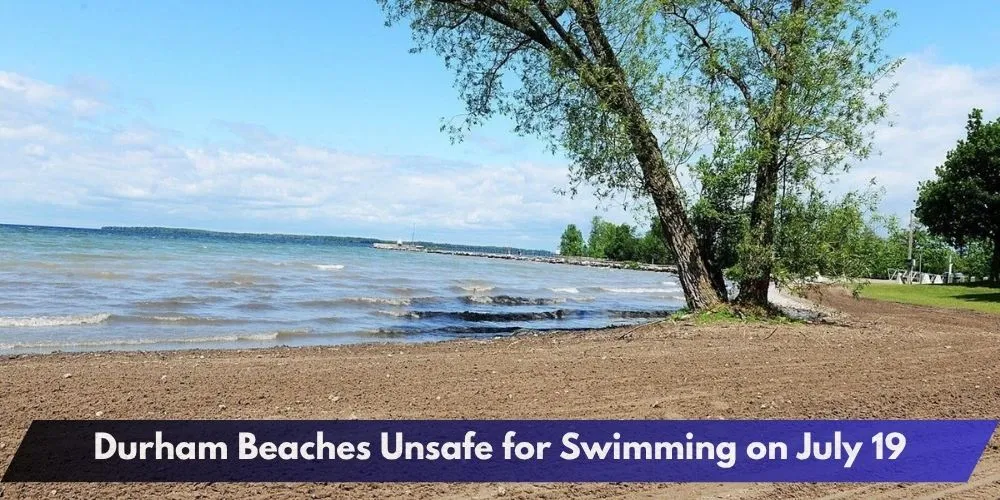
Six public beaches across Durham Region were listed as unsafe for swimming in the latest water-quality report available Sunday, July 19.
The Durham beaches unsafe for swimming were Beaverton North Beach and Beaverton South Beach in Brock, Rowan Beach in Scugog, Lakeview East Beach and Lakeview West Beach in Oshawa, and Whitby Beach in Whitby. The results were based on samples tested July 16 and reported as current at 2 p.m. July 19.


Residents should avoid entering the water at these six locations until Durham Region Health Department posts updated results showing that conditions have improved. Beach status can change after new testing, rainfall, runoff or changing environmental conditions, so visitors should check the Region’s Check&GO! Durham portal before leaving home.


Durham Beaches Unsafe in Four Municipalities
In Brock Township, Beaverton North Beach at Wellington and Victoria streets and Beaverton South Beach near Simcoe Street and Harbour Park Crescent were both listed as unsafe.
In Scugog, Rowan Beach in Caesarea was also identified as unsafe for swimming.
Oshawa had two affected locations: Lakeview East Beach near Simcoe Street South and Lakeview Park Avenue, and Lakeview West Beach near Kluane Avenue and Lakeview Park Avenue.
Whitby Beach, located near South Blair Street and Water Street, was the sixth beach listed as unsafe.
Several other monitored beaches were reported safe based on the same July 16 testing. These included Bowmanville East and West beaches, Frenchman’s Bay East and West beaches, Iroquois Beach, Kinsmen Beach, Newcastle Central Beach, Paradise Beach and Thorah Centennial Park Beach.
Durham Region Health Department monitors public beaches from June through the end of August. Water samples are tested for bacteria, and warning signs are posted when results exceed provincial recreational-water guidelines. The Region also publishes current inspection information through its online Check&GO! Durham system.
Why Beach Water Can Become Unsafe
High bacteria levels can be linked to heavy rain, stormwater runoff, sewer overflows, animal waste, large numbers of birds and other environmental conditions.
Durham Region advises people not to swim for at least 48 hours after heavy rainfall because runoff can raise bacteria levels even when a beach recently tested safe.
Swimming in contaminated water can increase the risk of stomach illness as well as skin, eye, nose and throat infections. Young children, older adults and people with weakened immune systems may face a greater risk of becoming ill.
Visitors should also stay out of water that looks cloudy or discoloured, contains visible scum or algae, has an unusual smell or contains debris. People should not allow children or pets to enter water where a warning or blue-green algae advisory is posted.
Check the Latest Status Before Visiting
The July 19 report reflects samples collected July 16, meaning conditions may have changed since testing. Collecting, transporting and analyzing beach-water samples takes time, and weather can alter water quality quickly.
Anyone planning to visit one of the Durham beaches unsafe for swimming should confirm the latest status through Check&GO! Durham and look for warning signs at the beach. A posted warning should always be followed, even if an older online report lists the location as safe.
Residents can also contact the Durham Health Connection Line by calling 311 within Durham Region or 905-668-2020 for public-health information.
The safest approach is to remain out of the water at all six affected beaches until officials confirm that the warnings have been lifted.