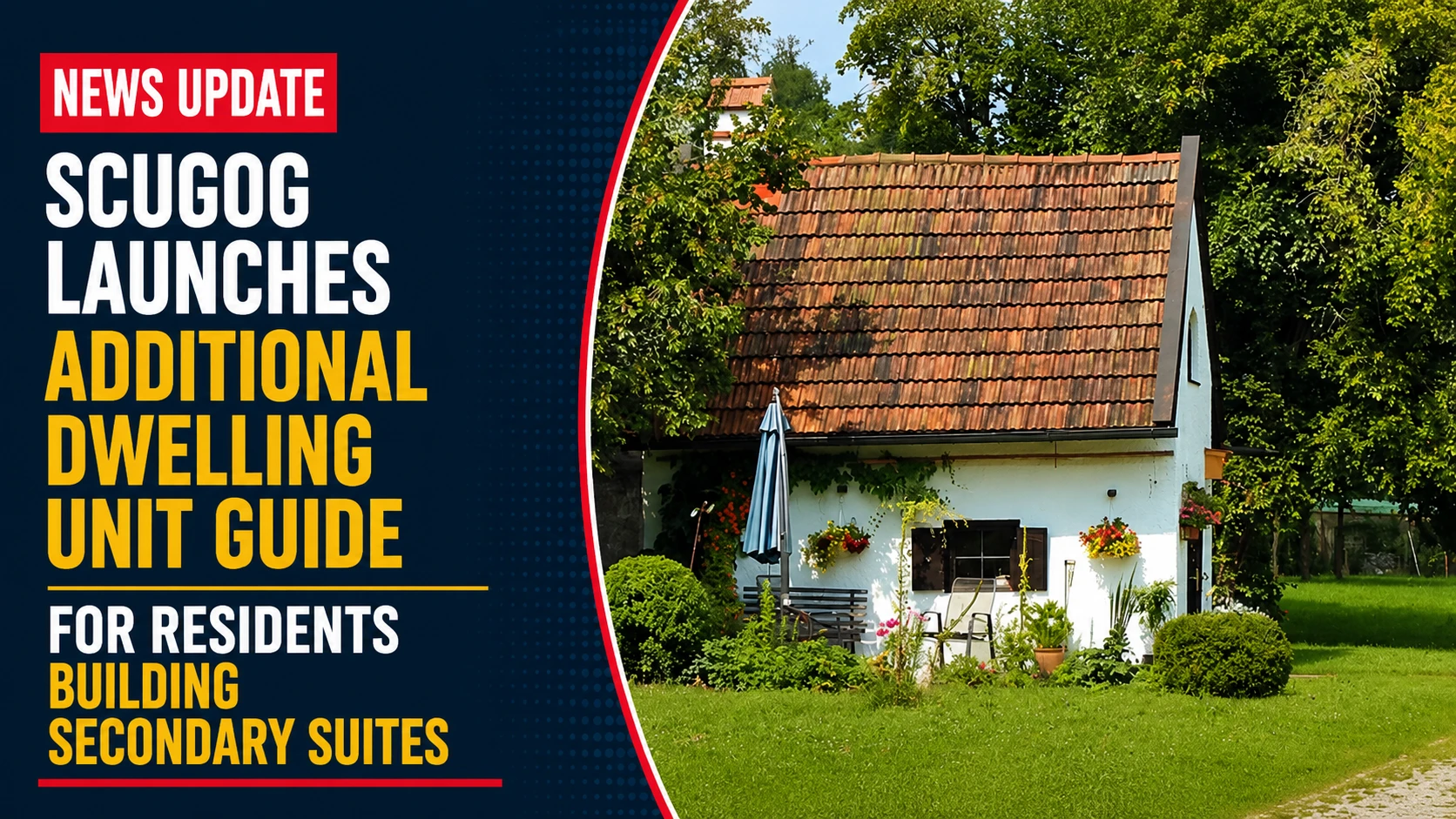
The Township of Scugog has introduced a comprehensive Additional Dwelling Unit (ADU) guide alongside a new registration by-law, giving residents a clear roadmap for creating secondary suites on their properties.
Approved at the June 22 council meeting, the initiatives build on ADU policies adopted by council earlier this year and aim to expand flexible housing options across the township.


What Is an Additional Dwelling Unit?
Under Zoning By-law No. 14-14, an ADU is defined as a self-contained residential unit within or accessory to a primary dwelling, complete with a separate entrance, kitchen, washroom, and living space. Commonly known as secondary units, basement apartments, or in-law suites, ADUs can support a range of living arrangements including multi-generational housing, aging in place, caregiver accommodations, guest space, and rental income.


The township recognizes several types of ADUs, including internal units created within an existing dwelling through basement or second-floor conversions, attached units built as extensions to the primary home, and detached units located in accessory structures subject to height and setback requirements.
Four Steps to Building an ADU in Scugog
The new ADU guide outlines a straightforward four-step process for property owners. First, residents need to determine whether an ADU is permitted on their property. Next, they must confirm compliance with applicable zoning provisions. The third step involves getting the project ready, including design and contractor considerations. Finally, property owners apply for a building permit through the township.
New Registration By-law and Safety Requirements
To support safe and compliant development, Scugog has enacted an ADU Registration By-law under the Municipal Act, 2001. The by-law works alongside existing frameworks under the Ontario Building Code Act and the Ontario Fire Protection and Prevention Act.
Property owners are now required to register ADUs prior to occupancy and demonstrate compliance with zoning, building, and fire safety regulations. Key registration requirements include submitting a completed township application form, providing building permit documentation where applicable, obtaining proof of zoning compliance, and confirming compliance with Ontario Building and Fire Codes.
Six-Month Grace Period Waives Registration Fee
To encourage early compliance, the township is offering a six-month grace period during which the $50 registration fee will be fully waived. After this period, the fee will apply in accordance with the township’s Fees and Charges By-law.
The by-law also establishes enforcement authority for designated township officers and inspectors, including the Chief Building Official, Chief Fire Official, and Municipal Law Enforcement Officers, ensuring that ADUs meet all safety and construction standards.
Accessing the Guide
The ADU guide is available in both PDF and accessible web formats through the Township of Scugog’s official website. While the guide provides comprehensive direction, the township notes that some properties may require additional site-specific considerations depending on lot characteristics, existing structures, and utility connections.
Residents interested in exploring ADU options are encouraged to review the guide and contact township staff for property-specific guidance before beginning any construction work.