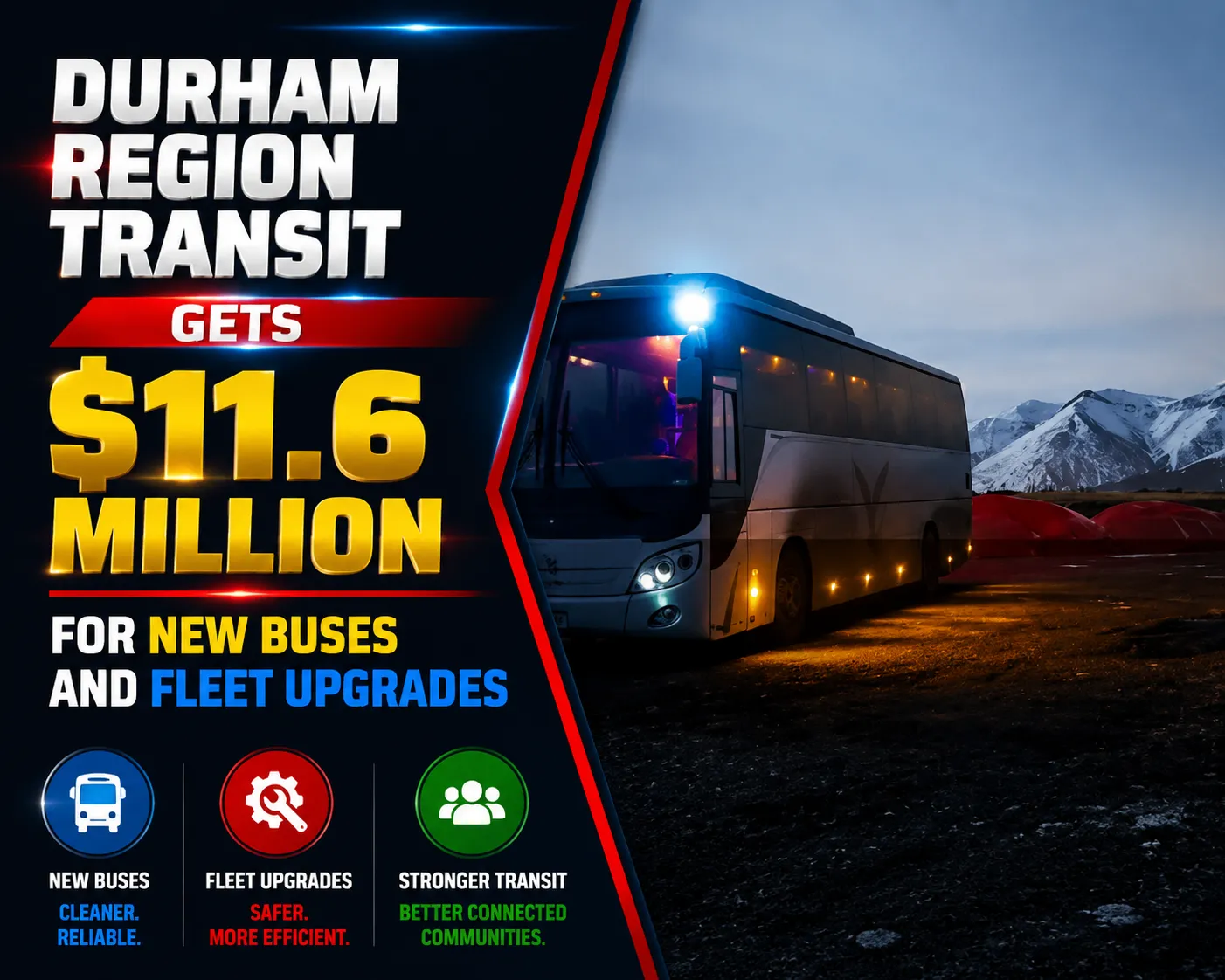
Durham Region Transit is set to receive a major fleet upgrade following a joint $11.6 million investment from the federal government, the Province of Ontario, and the Regional Municipality of Durham. The funding, announced through the Public Transit Infrastructure Stream of the Investing in Canada Infrastructure Program, will support two key projects aimed at improving transit reliability and sustainability across the region.
The first project focuses on replacing aging buses in the Durham Region Transit fleet that have reached the end of their usable lifespan. Ten new 40-foot diesel bus rapid transit vehicles will be purchased, each equipped with intelligent transportation systems and modern fare collection technology. These upgrades are expected to improve on-time performance and reduce mechanical breakdowns on high-demand routes across Oshawa, Whitby, Ajax, Pickering, and surrounding communities.


The second project involves acquiring fuel and fluid management software that will be installed and integrated into DRT’s existing infrastructure. The software is designed to optimize fuel consumption and streamline maintenance scheduling, which the region says will help reduce carbon emissions and extend the lifespan of transit vehicles and other infrastructure.


Durham Region Transit has seen steady growth in ridership, serving between 900,000 and 1.2 million riders per month throughout 2025. As the region’s population continues to expand rapidly, demand for dependable public transit is expected to rise significantly, making these upgrades critical for keeping pace with residential and commercial growth across Durham’s eight municipalities.
The funding breakdown sees the federal government contributing $4,636,000 to both projects combined. Ontario is investing $3,862,947, while Durham Region is contributing $3,091,054 of its own funds to the initiative.
Beyond this specific investment, Durham Region has received more than $174.2 million through the Investing in Canada Infrastructure Program to support a range of public transit initiatives across the region. That total includes $79.2 million in provincial funding alone, reflecting a sustained commitment to expanding and modernizing local transit infrastructure.
Durham Region also received over $9.6 million through the 2025-26 Ontario Gas Tax program, which dedicates two cents per litre of gasoline sold in the province to municipalities for public transportation. The funding can be applied to both transit operating and capital expenditures, giving municipalities flexibility in how they allocate resources.
The transit investment announcement also highlighted Ontario’s One Fare program, which has saved commuters up to $1,600 annually since launching in 2024. The program has enabled over 82 million free transfers between the TTC and regional transit agencies including Durham Region Transit, MiWay, Brampton Transit, York Region Transit, and Peel TransHelp, saving Ontarians more than $264 million in total.
Looking ahead, GO Transit’s Bowmanville Extension will bring the Lakeshore East GO line 18.7 kilometres further into Durham Region. The project is expected to accommodate 17,000 daily trips and 4.9 million annual boardings by 2041, further expanding transit connectivity for residents across the region.
For Durham Region commuters who rely on public transit daily, the new buses and upgraded management systems represent a tangible step toward more comfortable, efficient, and sustainable service on the routes they use every day. With ridership numbers climbing and major transit expansions on the horizon, the timing of this investment signals a broader push to ensure Durham’s transit network keeps pace with the region’s rapid growth trajectory.