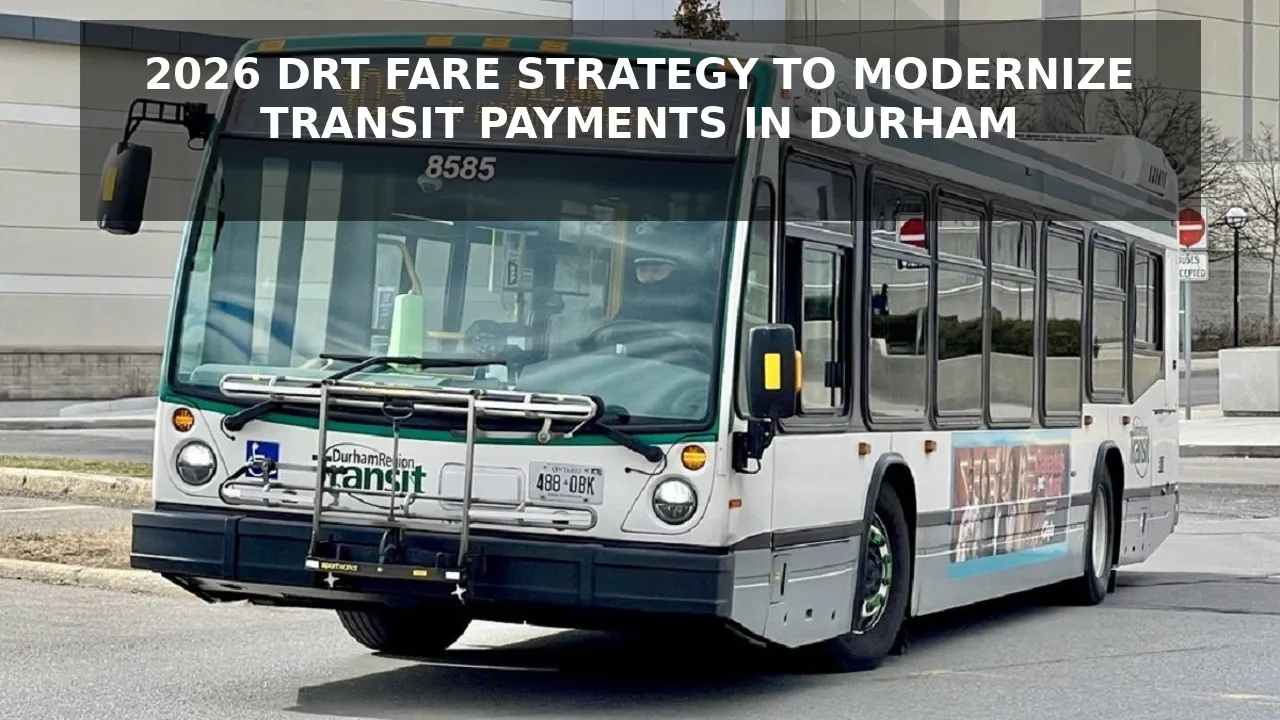
The future of public transportation in the Durham Region is undergoing a significant digital shift following the recent approval of the 2026 DRT Fare Strategy. During an executive committee meeting on April 8, leadership moved forward with a plan that prioritizes modernizing fare management. The core of this initiative involves the phasing out of traditional monthly passes and exploring the complete removal of cash fares. By adopting the 2026 DRT Fare Strategy, the region aims to create a more efficient, consistent, and equitable transit system that aligns with the broader goals of the Greater Toronto and Hamilton Area (GTHA).
According to a regional statement, the 2026 DRT Fare Strategy introduces “fare capping” as a replacement for the old monthly pass model. Fare capping allows riders to benefit from the same savings as a pass without the upfront monthly expense; once a rider spends a certain amount, additional trips are free. This change, alongside an expanded Transit Affordability Program, is designed to ensure that the most vulnerable residents can still access reliable transportation. Bill Holmes, the General Manager of Durham Region Transit (DRT), emphasized that this roadmap is essential for keeping the system modern and responsive to the growing needs of the diverse communities it serves.
Beyond fare changes, the region is also making strides on the Durham-Scarborough Bus Rapid Transit (DSBRT) project. This 36-kilometre corridor will eventually provide a seamless connection between downtown Oshawa and the Scarborough Town Centre. Construction in areas like Ajax and Pickering is set to ramp up between 2026 and 2028, supported by the Investing in Canada Infrastructure Program. Regional Chair John Henry noted that while construction may cause temporary delays, the long-term result will be a faster and more sustainable network that significantly improves the daily quality of life for residents.
In addition to these long-term goals, immediate service improvements took effect on April 13. These updates focus on enhancing GO Train connections and ensuring buses run on schedule. Notable changes include Route 421 taking over weekend trips from Route 411 and a new 421F branch providing better access to the Oshawa Centre Terminal. For those in Port Perry, Route 618 has been modified to serve the Port Perry Hospital, providing much-needed access for patients and healthcare workers. These adjustments prove that while the 2026 DRT Fare Strategy focuses on the future of payments, the current system is still being optimized for reliability.
As DRT transitions to this new model, revenue protection programs will also be strengthened to ensure the system’s financial sustainability. For residents, the shift away from cash and physical passes marks a new era of “contactless” travel. As the 2026 DRT Fare Strategy begins its rollout, transit officials are urging riders to stay informed via the official DRT website for the latest updates on how these policy shifts will impact their daily commutes across the region.
With the move toward a fully digital payment system and the elimination of cash, do you believe the 2026 DRT Fare Strategy is inclusive enough for older residents or those who may not have access to digital banking tools?