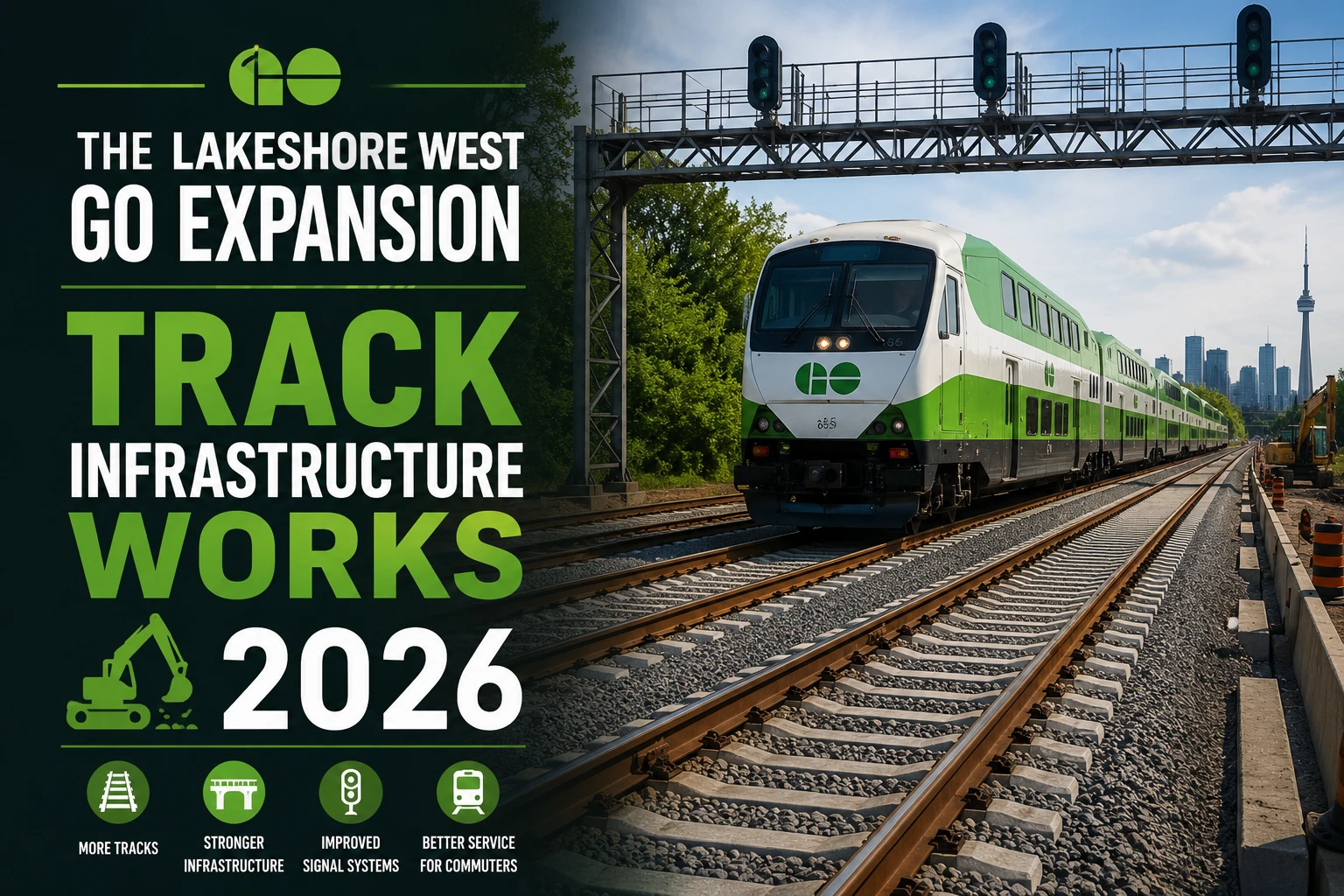
Metrolinx, the provincial transit agency overseeing public transportation networks across southern Ontario, has activated a major weekend rail modification matrix that will disrupt travel across the Greater Toronto and Hamilton Area (GTHA). Tracked under the central infrastructure dossier The Lakeshore West GO Expansion Track Infrastructure Works 2026, transit commanders published the emergency travel grids on Friday, June 5, 2026. The technical alert outlines a major reduction in rail frequencies on Saturday, June 6, and Sunday, June 7, 2026, to allow heavy engineering crews safely onto high-density track zones.
The planned disruptions arrive immediately after two back-to-back weekends of total rail shutdowns in select western sectors, testing the patience of regional commuters.


The Weekend Scheduling Reductions and Connection Bottlenecks
The temporary service cuts are required to complete essential track work and structural upgrades designed to eventually bring faster, more frequent, and fully electrified train service to the province.


From early Saturday morning until the absolute end of service on Sunday night, train operations on the Lakeshore West corridor will drop down to a limited schedule:
-
The Hamilton–Toronto Line: Trains will drop to hourly service between West Harbour GO in Hamilton and Union Station in downtown Toronto.
-
The Oakville–Toronto Core: Frequencies will be kept at 30-minute intervals between Oakville GO and Union Station.
-
The Transfer Bottleneck: Commuters transferring at Oakville GO—whether heading eastbound toward Toronto or westbound toward Hamilton—will face long 15-to-30-minute connection delays to complete their trips.
Metrolinx operations staff warn that these scheduling changes will likely lead to much higher passenger volumes on the remaining active trains. Commuters are strongly advised to check digital platform boards and plan for significantly longer travel times over the weekend.
Civil Engineering Vectors and Long-Term Targets
The physical work on the tracks is focused on two major construction projects that can only be completed safely when regular train traffic is turned off or redirected.
| Active Construction Site | Municipal Jurisdiction | Core Civil Engineering Scope | Primary Long-Term System Benefit |
| Long Branch GO Station | West Toronto | Track leveling and platform edge construction | Enhanced accessibility / Higher boarding speeds |
| Burloak Drive Crossing | Oakville-Burlington Border | Excavation for a new vehicle underpass | Grade separation / Eliminating train-car conflicts |
The first project area centers on the aging track layouts around Long Branch GO in west Toronto, where crews are installing modern platform systems and upgrading track switches. Farther west along the Oakville-Burlington border, structural engineers are working on the multi-million-dollar Burloak Drive underpass project. This massive grade separation plan will permanently separate the rail lines from vehicle traffic below.
While the Lakeshore East line running through Durham Region will maintain its regular weekend schedule, transit managers emphasize that any cross-regional commuters planning to travel past Union Station into Mississauga, Oakville, or Hamilton will hit these frequency cuts. Metrolinx has deployed extra customer service ambassadors across Union Station’s main concourses to help guide travelers toward alternative regional bus routes. All regular train schedules are locked to resume at standard weekday frequencies at dawn on Monday, June 8, 2026.