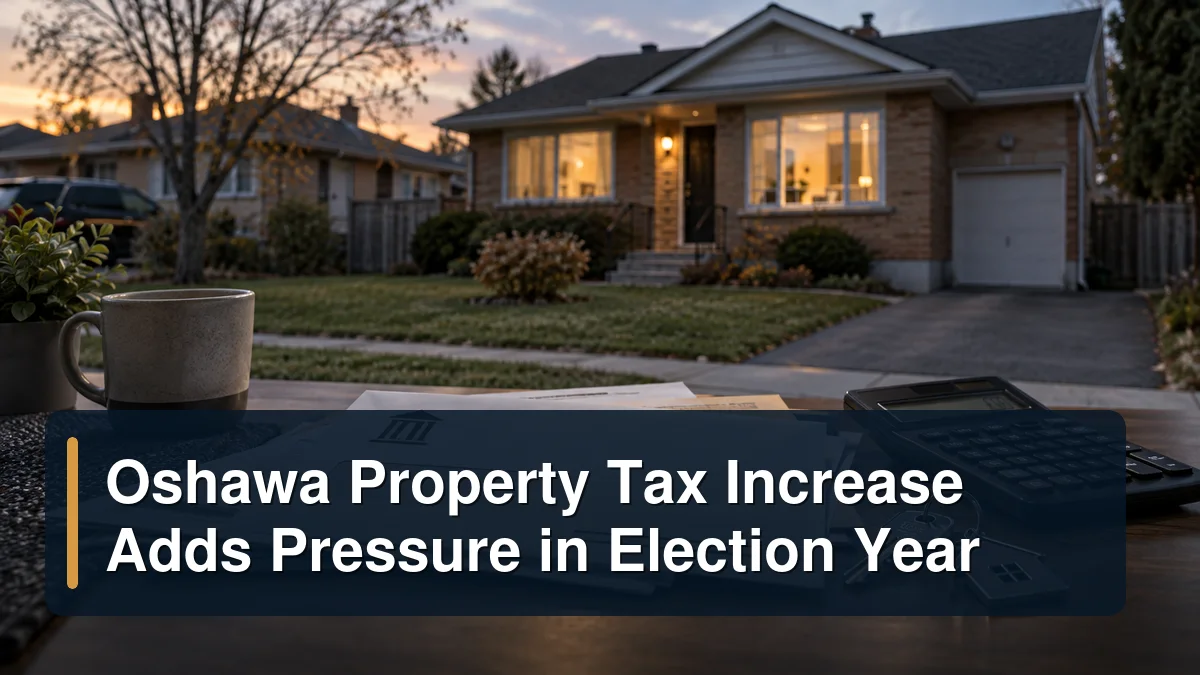
The 2026 Oshawa property tax increase is drawing renewed attention as homeowners weigh higher household costs and municipal candidates debate city spending.
Oshawa’s municipal budget rose 3.98 per cent this year. The city says its share of the residential bill increased 1.68 per cent because the final bill also includes Durham Region and provincial education portions.

Where each tax dollar goes
Oshawa retains about 40 cents of every residential property tax dollar. About 46 cents goes to Durham Region and 14 cents supports education.


The city’s 2026 operating budget is $206.5 million and its capital budget is $44.5 million. Property taxes fund about 76.8 per cent of operating spending.
Municipal spending supports local roads, fire protection, parks, recreation and libraries. The regional portion pays for police, paramedics, public health, transit, regional roads, housing and social programs.
Residents describe pressure
Frequency News and Wesal TV interviewed homeowner Habib Rahim Karimzai, who said his annual bill rose by more than $100. He said taxes compound higher mortgage, utility, insurance and household costs.
The report also interviewed mayoral candidate Dave Westlake and Ward 1 council candidate Salam Shinwary. Both called for spending scrutiny while maintaining essential services. Their comments are campaign positions, not adopted policy.
Oshawa says inflation, aging infrastructure, road repairs and demand for services pressure the budget. Major work includes Stevenson Road North, Sun Valley, Meadow Street, Myers Street, Conlin Road East and Thornton Road.
Comparisons need the full bill
Comparisons can mislead when municipal, regional and education shares are mixed. Rates also reflect assessed values and services.
Whitby estimated its budget would add about 1.2 per cent to the total bill, while Ajax reported a blended 3.96 per cent increase. Pickering raised its municipal levy 3.49 per cent and Clarington approved three per cent. Those figures use different bases.
Durham Region offers tax deferrals for some low-income seniors and people with disabilities. Details are available through the Region and local tax offices.