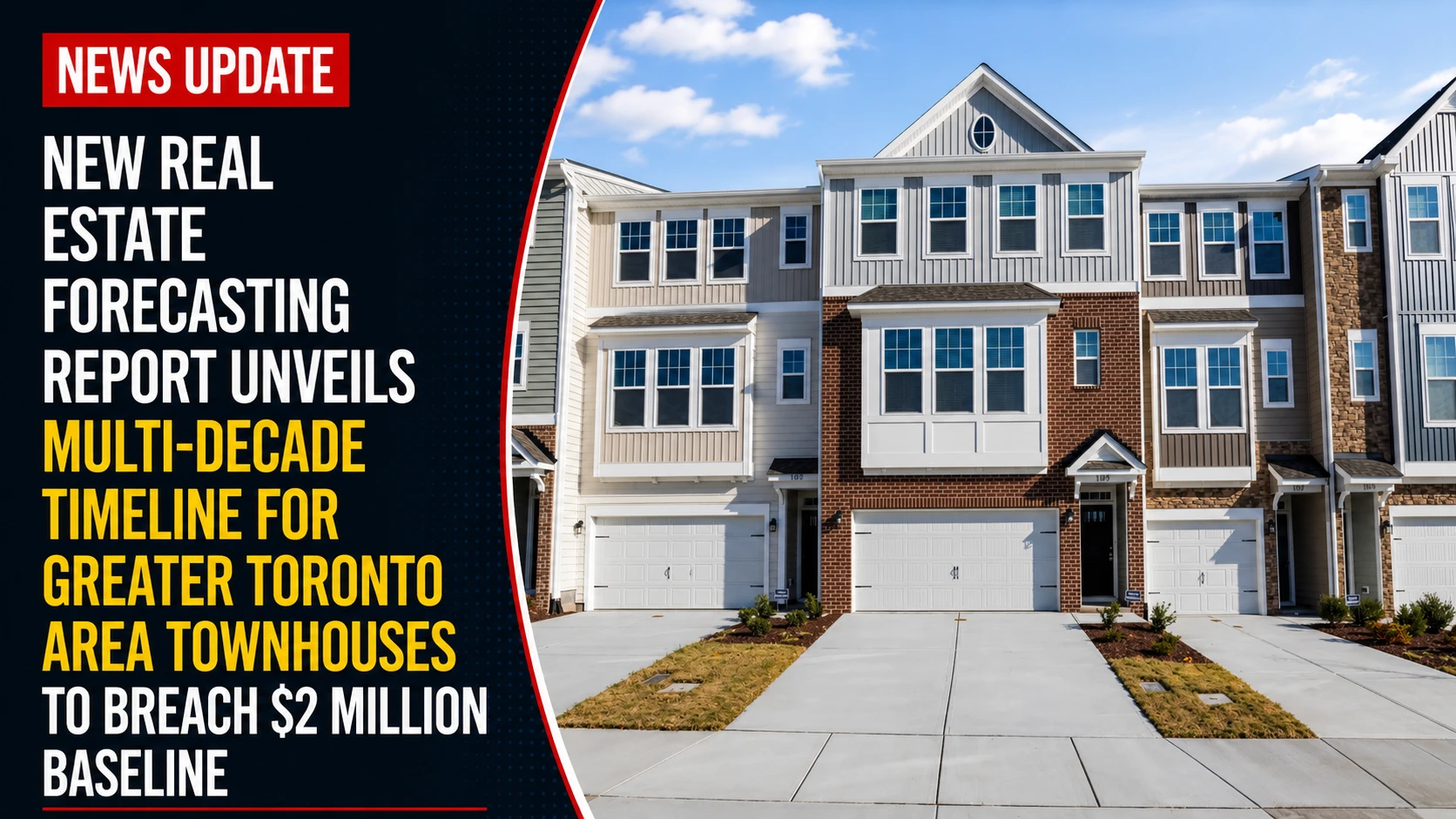
The regional real estate boards, residential development networks, and long-range municipal economic planning divisions within the Durham Region are analyzing a significant new market trajectory. Tracked under provincial property asset portfolios on Monday, July 6, 2026, real estate research desks finalized the analysis file Here’s when townhouses could hit $2M in the Greater Toronto Area. Released by national real estate platform Zoocasa, the comprehensive longitudinal study tracked shifting pricing metrics across 37 separate micro-markets in the Greater Toronto Area (GTA) over a strict ten-year historical window from May 2016 to May 2026, projecting exact dates for entry-level row housing to transform into multi-million dollar luxury assets.
The report labels townhouses as the “Goldilocks of Canadian real estate,” highlighting that entry-level affordability—rather than initial luxury status—has been the primary driver for middle-class wealth creation over the past decade.


The Current GTA Real Estate Asset Baseline
Current market summaries from the Toronto Regional Real Estate Board (TRREB) establish a clear gap between townhomes and traditional detached properties.


-
The Detached Benchmark: The average price for a fully detached home across the broader GTA footprint held firm at $1,364,204.
-
The Condo Apartment Baseline: High-density condo units remain the primary entry-level asset class, averaging $630,688.
-
The Townhouse Sweet Spot: Multi-storey townhouses and attached row structures currently average $912,380 region-wide, keeping them positioned directly between entry-level condos and high-end detached estates.
Analyzing the Regional $2 Million Valuation Trajectory
The report emphasizes that lower initial entry prices in 2016 frequently translated into faster compound growth and accelerated timelines toward the $2 million milestone.
| Targeted Municipal Micro-Market | Historical Bench (May 2016) | Current Asset Valuation (May 2026) | Net Ten-Year Value Infusion | Projected Year to Hit $2 Million |
| Innisfil (Simcoe County) | $348,414 | $874,480 | +$526,066 | 2030 (4 Years) |
| Toronto East (Urban Core) | $695,949 | $1,219,370 | +$523,421 | 2032 (6 Years) |
| Uxbridge (Durham Region) | $497,450 | $980,000 | +$482,550 | 2033 (7 Years) |
| Brampton (Peel Region) | $492,454 | $803,384 | +$310,930 | 2041 (15 Years) |
| Mississauga (Peel Region) | $604,263 | $815,611 | +$211,348 | 2050 (24 Years) |
The Wealth Creation Paradox
The report exposes a fascinating trend in the data: Brampton townhomes are projected to breach the $2 million mark nearly a decade before those in Mississauga, despite starting at a lower value. Real estate analysts point out that entry-level affordability at purchase, rather than high initial prestige, determines who builds the most equity over time. Suburban areas with lower entry points have consistently drawn intense buyer competition, accelerating their long-term value appreciation.
Within the Durham Region boundary, the Township of Uxbridge is leading the appreciation curve, with townhome values jumping from $497,450 in 2016 to a near-million dollar baseline of $980,000 in 2026. At its current rate of growth, local buyers will face a $2 million average by 2033.
The Toronto Regional Real Estate Board tracks all official property transactions and market statistics across the region.
Durham homeowners, residential property investors, and local renters looking to look over the complete 37-market Zoocasa dataset, download historical neighborhood price-trend charts, or track local zoning adjustments can access the public data hubs online at trreb.ca, zoocasa.com, or monitor regional development updates via durham.ca.