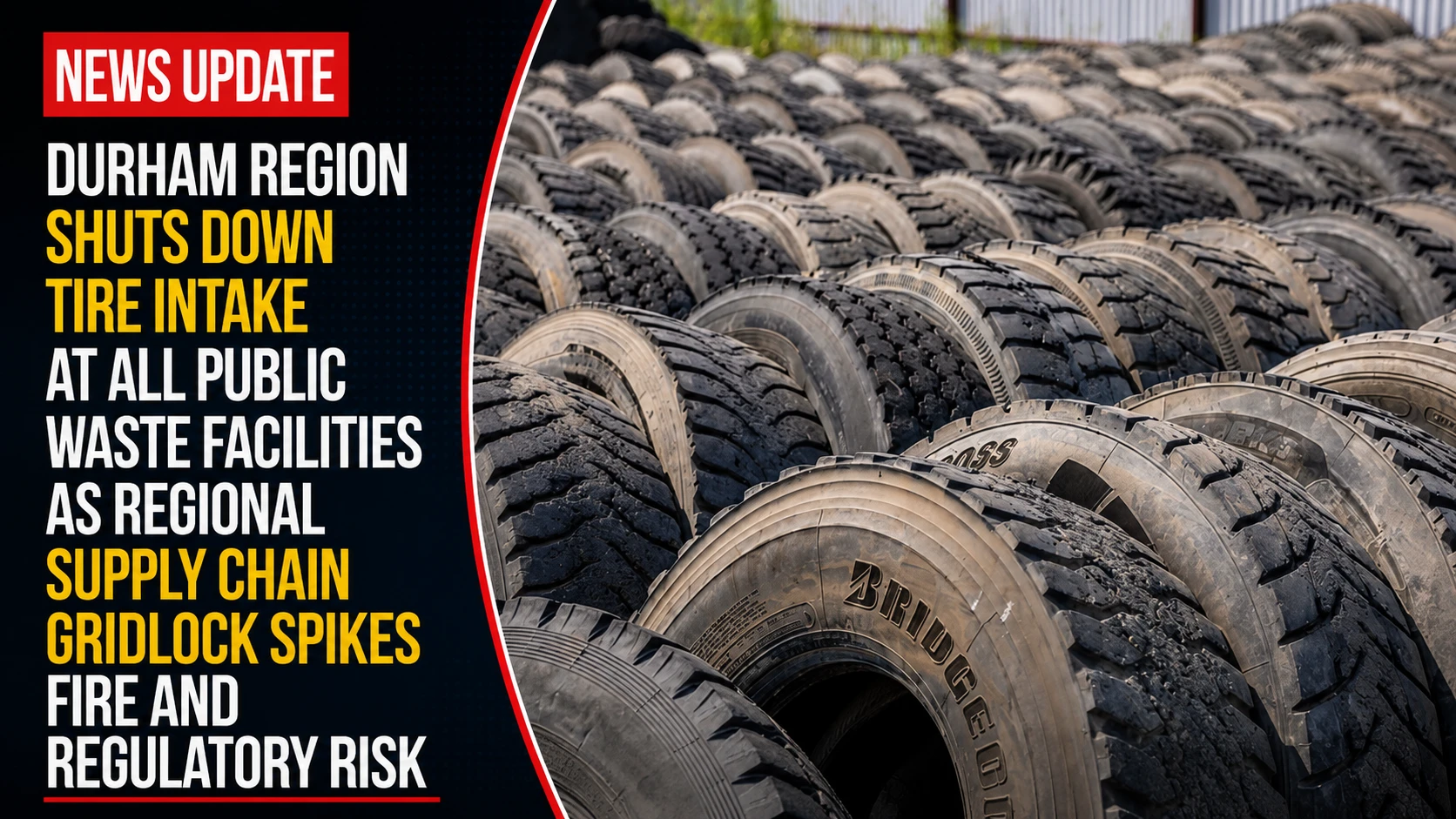
The municipal environmental divisions, regional recycling networks, and facility compliance enforcement desks within the Durham Region are responding to a structural disposal crisis. Tracked under regional public works portfolios on Monday, July 6, 2026, solid waste managers finalized the emergency service bulletin Too many used tires at waste facilities, not accepting any. Confronted by a total logjam in the provincial scrap-rubber hauling network, regional administrators issued a directive halting all tire collection services, warning that existing stockpiles have reached legal safety and environmental maximums.
The suspension is locked into place immediately and will remain active until third-party industrial processors manage to clear out the mounting backlogs.


The Facility Gridlock and Environmental Compliance Constraints
The operational freeze directly impacts the region’s main waste processing nodes, exposing major weaknesses in Ontario’s broader circular economy setup.


The full intake ban targets the three primary municipal hubs: the Oshawa Waste Management Facility, the Scugog Waste Management Facility, and the Brock Waste Management Facility. Local infrastructure officials note that each site operates under a strict, individual Environmental Compliance Approval (ECA) issued by the province under the Waste Diversion Act. These legal certificates enforce hard caps on raw storage volume, physical handling boundaries, and safety zones.
Because used tires represent an extreme, high-intensity fuel source if ignited, allowing rubber mounds to climb past these certified limits creates a severe public safety threat and places the municipality in direct violation of provincial environmental laws.
Analyzing the Producer Responsibility and Hauler Deficit
The root cause of the regional bottleneck traces directly to a regulatory disconnect between consumer drop-off volumes and industrial recycling activity.
| Operational Infrastructure Node | Assigned System Status / Vulnerability | Underlying Program Systemic Deficit | Mandated Citizen Response Protocol |
|
Regional WMF Hubs (Oshawa, Scugog, Brock) |
INTAKE PAUSED: Zero citizen or commercial drop-offs permitted | Tires are accumulating faster than third-party networks can haul them away | Hold and securely store all scrap rubber assets on private property if possible |
| Third-Party Industrial Haulers | Operational slowdown; failing to match municipal generation rates | Recent changes to provincial targets have disrupted processor margins | Divert drop-off traffic away from regional grids to verified auto retailers |
The breakdown highlights systemic vulnerabilities within the current Used Tire Program Plan. The region depends heavily on private, third-party logistics companies and industrial processing plants to clear out collected rubber bins. However, adjustments to provincial recycling mandates have drastically reduced the volume obligations for manufacturers. This has left collection yards across Ontario drowning in excess inventory with no willing commercial haulers available to clear the space.
Regional directors are warning residents and commercial automotive service operators that illegal dumping along backroads or rural creek corridors will face heavy municipal penalties and environmental protection fines.
The Regional Municipality of Durham Works Department manages the centralized solid waste facility network.
Durham property owners, commercial mechanics, and fleet managers looking to check daily facility status updates, locate alternative commercial automotive recycling depots, or look over active residential garbage collection bylaws can find the data portals online at durham.ca/WMF or locate alternative private sector drops via the Resource Productivity and Recovery Authority tracking grid at rpra.ca/where-to-recycle.