








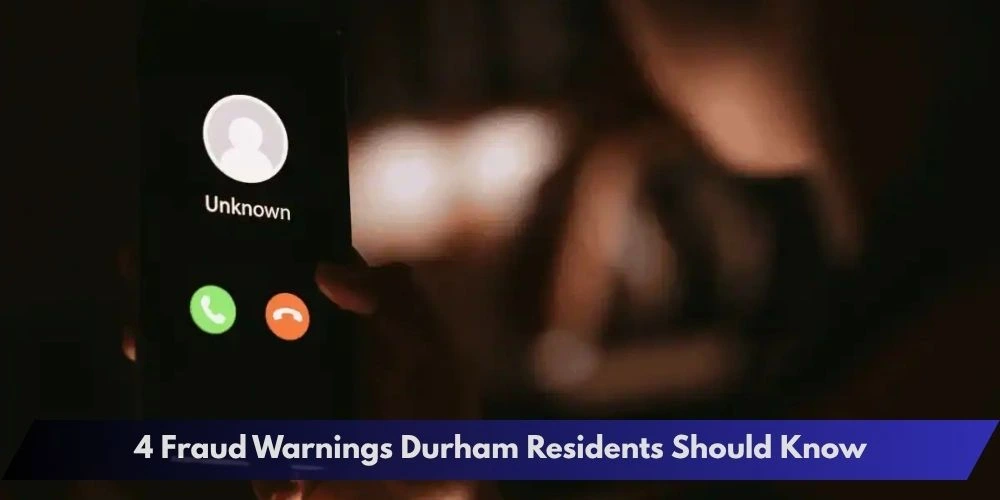
Recent counterfeit-currency investigations in Oshawa and Pickering are providing a timely reminder for Durham Region residents to remain cautious when buying, selling, renting or sharing personal information.
These Durham fraud warnings cover four common tactics: counterfeit cash, fraudulent rental listings, fake event tickets and identity fraud.


Although some recent examples occurred elsewhere in Ontario, the same methods can be used against residents and businesses across Durham Region.


Durham Fraud Warnings Include Counterfeit Cash
Durham Regional Police recently announced charges following an investigation in which two Oshawa teenagers allegedly obtained more than $6,800 in cellphones using counterfeit currency.
Police said a 17-year-old female and a 15-year-old male from Oshawa face fraud and counterfeit-currency charges. The allegations have not been proven in court.
In a separate case, police said a woman allegedly used counterfeit money to buy items in Pickering before returning the merchandise for legitimate currency. A Pickering woman was arrested July 3 and charged with fraud under $5,000 and uttering counterfeit currency. Those allegations have also not been proven in court.
Private sellers should be especially careful when accepting large amounts of cash for electronics, jewellery or other expensive items. Sellers should consider meeting at a police-designated exchange area and verifying payment before surrendering property.
Fake Rental Listings Demand Deposits
Rental scammers frequently post properties on social media or classified websites, collect deposits and disappear before the victim discovers that the home was never available.
Peel Regional Police announced charges in July after identifying 17 alleged rental-fraud incidents with combined reported losses exceeding $60,000. Police said victims signed agreements and sent first-and-last-month deposits before learning that the promised accommodations were unavailable. The charges have not been proven in court.
Prospective Durham tenants should independently confirm ownership, view the property when possible and avoid sending deposits merely because someone claims other renters are waiting.
A significantly below-market price, pressure to pay immediately or a landlord refusing to meet can all be warning signs.
Fake Concert and Sports Tickets
Fraudsters also advertise tickets to sold-out concerts and sporting events through social media, messaging apps and online marketplaces.
They may request an e-transfer before promising that digital tickets will be delivered later. The buyer then receives nothing, receives an altered screenshot or discovers that the same ticket was sold to several people.
Halton police previously investigated extensive Taylor Swift ticket fraud complaints involving undelivered tickets. Those cases demonstrate the risks of purchasing high-demand tickets through unknown sellers, although the complaints originated in 2024 rather than July 2026.
Buyers should use authorized ticket sellers or platforms offering verified transfers and buyer protection.
Identity Fraud Can Create Lasting Damage
Identity fraud occurs when someone uses stolen personal information to open accounts, apply for credit, obtain cellphones or take control of existing financial and online accounts.
The Canadian Anti-Fraud Centre says fraudsters may use stolen information to apply for credit cards, bank accounts, government benefits or cellphone services.
Residents should review banking and credit-card statements, use unique passwords, enable multi-factor authentication and avoid sharing identification through unverified links or messages.
Anyone who notices an unfamiliar account or transaction should contact the affected financial institution immediately.
How Durham Residents Can Report Fraud
Victims should report fraud to their local police service and the Canadian Anti-Fraud Centre. The centre accepts online reports and telephone reports at 1-888-495-8501.
Residents should preserve messages, receipts, usernames, payment records and screenshots that could help investigators.
These Durham fraud warnings should not be treated as a complete list. Scammers continually adjust their stories, but requests for urgent payments, unusual secrecy or irreversible transfers should always prompt additional verification.