A major environmental initiative is underway as the Ajax waterfront erosion project using nature-based solutions aims to stabilize the shoreline and protect a popular public space for future generations. The project is being led by the Toronto and Region Conservation Authority (TRCA) in partnership with federal agencies and local stakeholders.
For decades, Ajax Waterfront Park has been a key destination in Durham Region, but ongoing erosion has gradually weakened parts of the shoreline. This has raised concerns about the safety and long-term sustainability of the waterfront trail, prompting action through the Ajax waterfront erosion project using nature-based solutions.
The first phase of the project was recently launched, with officials and community representatives marking the beginning of the work. Stage 1 focuses on the area west of the Love Crescent parking lot to the storm drain outfall. Future phases will expand east toward Veteran’s Point Gardens and west toward Lion’s Point, depending on funding availability.
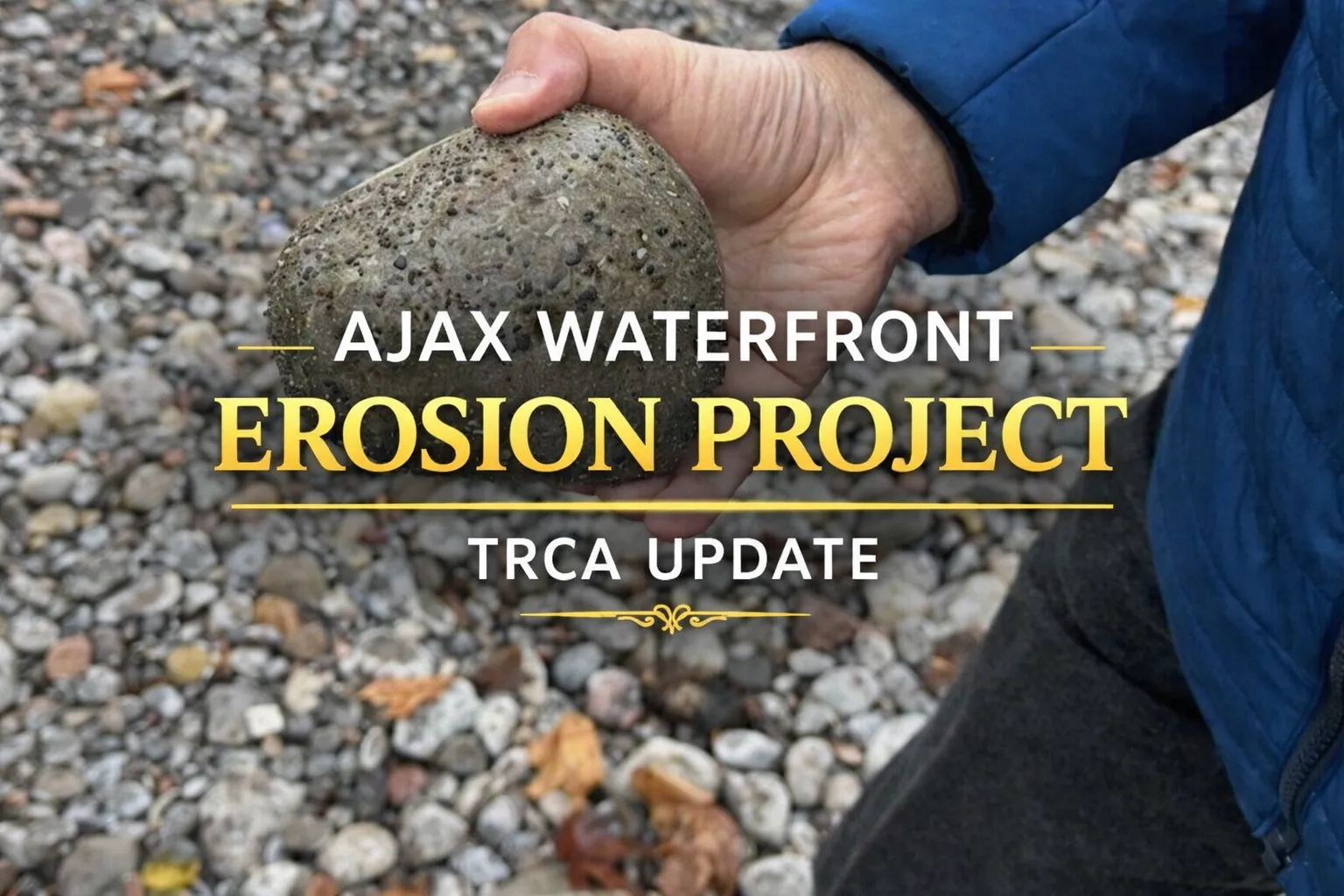
The Ajax waterfront erosion project using nature-based solutions takes an innovative approach by working with natural processes instead of against them. Instead of traditional hard barriers, the project uses cobbles and large stones designed to replicate the lake’s historic shoreline conditions.
Over time, natural wave action will shift these materials into place, helping to form a more stable and gradual shoreline. Much of the material will remain below the waterline, providing long-term erosion control while also enhancing habitats for aquatic and shoreline species.
Officials say the Ajax waterfront erosion project using nature-based solutions not only protects infrastructure but also supports biodiversity and environmental sustainability. The approach reflects a growing trend toward eco-friendly shoreline management across the Great Lakes region.
Funding for the project comes through the Government of Canada’s Great Lakes Freshwater Ecosystem Initiative, as part of the broader Land to Lake Initiative led by the Canada Water Agency. This program brings together municipalities and conservation authorities to address environmental challenges collaboratively.
While work is temporarily paused due to municipal road weight restrictions, the waterfront trail remains open until May. Once construction resumes, residents can expect temporary trail closures as work progresses.
Community leaders have emphasized the importance of the Ajax waterfront erosion project using nature-based solutions, noting that it balances environmental protection with maintaining access to a valued recreational area.
Overall, the Ajax waterfront erosion project using nature-based solutions represents a forward-thinking effort to protect the shoreline, preserve public spaces, and support ecological health in Durham Region.