Durham Left Turn Safety improvements are being introduced at intersections across the region as officials work to reduce collisions involving turning vehicles.
Durham Region says turning movements are the most common type of collision at intersections and account for approximately one-third of all fatal and injury collisions that occur at intersections.

To address the problem, the Region is using a road-design approach known as Positive Offset Left Turns, or POLTs.


What are Positive Offset Left Turns?
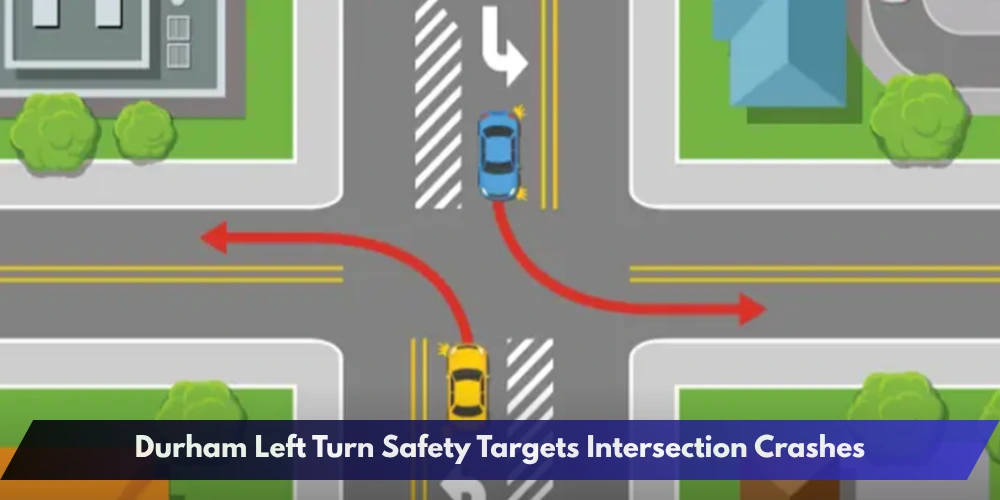
Positive Offset Left Turns reposition opposing left-turn lanes farther toward the centre of an intersection.
The design is intended to improve the view of oncoming traffic for drivers waiting to make a left turn.
At a traditional intersection, opposing vehicles waiting to turn left can partially block each other’s view. This can make it more difficult for drivers to see approaching vehicles and judge whether there is enough time to safely complete a turn.
By shifting the left-turn lanes, POLTs create a clearer line of sight.
The Region says this allows drivers to better judge safe gaps in oncoming traffic and can reduce the likelihood of a collision.
Turning crashes remain major concern
Durham Region says collisions associated with turning movements represent roughly one-third of fatal and injury collisions at intersections.
That makes turning-related crashes a significant road-safety concern for municipalities throughout the region.
Intersections can be particularly complex because drivers must monitor traffic signals, pedestrians, cyclists, approaching vehicles and turning traffic at the same time.
Improving sightlines can reduce one of the challenges drivers face when making an unprotected left turn.
Design focuses on visibility
The Durham Left Turn Safety approach focuses primarily on physical intersection design rather than driver behaviour alone.
When two opposing left-turn lanes are directly aligned, vehicles in the lanes can obstruct each other’s view of approaching traffic.
A positive offset shifts the lanes so drivers can see farther along the opposing roadway.
This additional visibility may help motorists determine whether an approaching vehicle is close enough that they should wait before turning.
The design does not eliminate the need for drivers to remain cautious. Motorists are still responsible for yielding to oncoming traffic and ensuring the intersection is clear before completing a turn.
Region does not mention signal changes
The Region’s announcement focused on Positive Offset Left Turns and did not identify changes to left-turn traffic signals as part of the initiative.
Some intersections use protected left-turn phases, where drivers receive a dedicated green arrow before opposing traffic begins moving.
However, the information released by Durham Region specifically highlights lane placement and improved sightlines rather than additional left-turn signals.
Road safety through engineering
The Durham Left Turn Safety initiative demonstrates how road design can be used alongside enforcement and driver education to reduce collision risk.
Transportation agencies regularly examine collision data to determine where engineering changes could improve safety.
Measures may include intersection redesigns, pavement markings, signs, signal timing, pedestrian improvements and changes to lane configuration.
In this case, Durham Region is emphasizing Positive Offset Left Turns as a way to address one of the most common causes of serious intersection collisions.
Drivers still need to use caution
Even at intersections with improved visibility, motorists should remain patient when making left turns.
Drivers should watch for approaching vehicles, cyclists and pedestrians and avoid trying to turn through gaps that are too small.
The Durham Left Turn Safety upgrades are intended to make those decisions easier by improving visibility, but they cannot eliminate every collision risk.
With turning movements accounting for about one-third of fatal and injury collisions at Durham intersections, the Region says improving left-turn design is one way to make local roads safer for everyone.