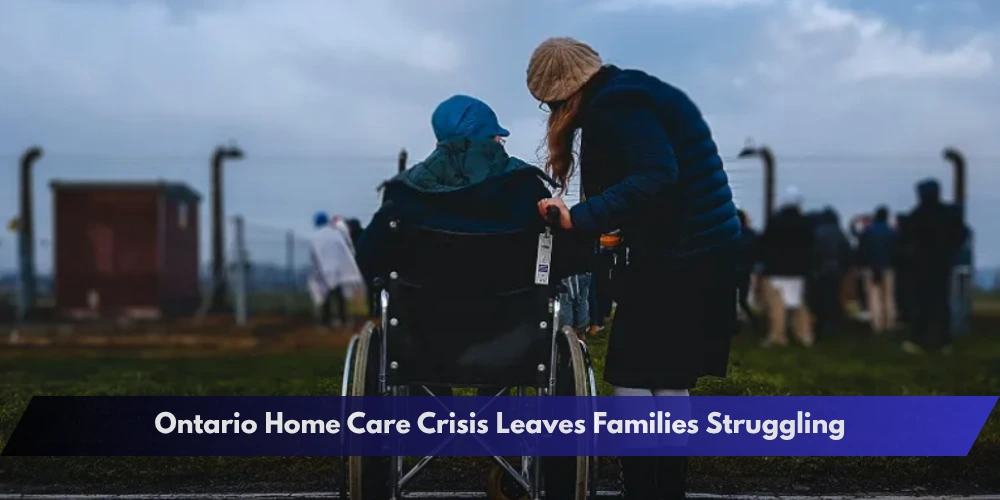
The Ontario Home Care Crisis is leaving medically vulnerable people without reliable access to basic support while placing growing pressure on family caregivers and personal support workers.
For five weeks, I have been unable to receive the assistance needed to have a shower. I have repeatedly requested female personal support workers on Monday and Thursday evenings, but those visits have not been provided as requested.


My morning care schedule has also created serious difficulties. I have asked for my mid-morning visit to be moved to between 8 and 9:30 a.m. so I can receive timely help using the bathroom. Too often, I have been forced to wait three or four hours in soiled clothing.


This is uncomfortable, degrading and potentially harmful to my health. It also creates additional laundry and places more responsibility on my wife, Debbra.
Promised home-care services are not arriving
Debbra is supposed to receive help with laundry, light housekeeping, meal preparation and leg exercises. Those services have not been delivered consistently.
The personal support workers say they do not have enough time to complete the required tasks. Some have explained that they need additional time to help with showers or move clothing between the washing machine and dryer.
A shower involving transfers and mobility assistance may require up to 90 minutes, but workers are often assigned shorter visits. When the scheduled time does not reflect the actual care plan, essential tasks are delayed or missed.
This is not simply a complaint about individual workers. Many PSWs are doing their best under difficult conditions. The larger problem is a system that assigns too little time, struggles to retain staff and fails to match visits with clients’ real needs.
Basic care is a matter of dignity
Regular access to bathing and toileting is not an optional comfort. It is fundamental to health, dignity and personal safety.
Leaving a person without a shower for several weeks can affect physical and emotional well-being. Long waits for toileting assistance can increase the risk of skin irritation, infection, distress and loss of confidence.
Caregiver preferences also matter during intimate personal care. Some clients may only feel comfortable receiving bathing or toileting assistance from a worker of a particular gender. Agencies should treat these requests as legitimate privacy and dignity concerns rather than minor scheduling preferences.
Families carry the burden
When promised home-care services do not arrive, the work does not disappear. It is transferred to spouses, children and other relatives.
In our home, Debbra must take on more cleaning, laundry, food preparation and physical assistance than expected. This increases the risk of exhaustion and injury while reducing the support home care is supposed to provide.
The Ontario Home Care Crisis therefore affects more than the individual receiving care. It can destabilize an entire household and push families toward long-term care earlier than they would otherwise choose.
Personal support workers need better conditions
PSWs frequently work under short appointments, unpredictable schedules and demanding travel requirements. High turnover can also mean clients rarely receive the same worker consistently.
That lack of continuity makes it harder to build trust, especially when care involves bathing, toileting and mobility assistance.
Improving home care requires longer visits when care plans demand them, better wages, reliable hours, paid travel time, improved training and stronger oversight of agencies.
Public authorities should also monitor whether contracted providers are delivering the services listed in each client’s care plan.
A system that must change
Home care is often presented as a less expensive and more personal alternative to institutional care. However, it only works when scheduled services are actually delivered.
When clients are left without basic hygiene, timely bathroom assistance or promised household support, the system is not meeting its purpose.
The Ontario Home Care Crisis will not be solved by expecting families and overworked PSWs to absorb every service gap. Ontario needs a properly funded and accountable model that protects health, respects dignity and gives workers enough time to provide safe, compassionate care.