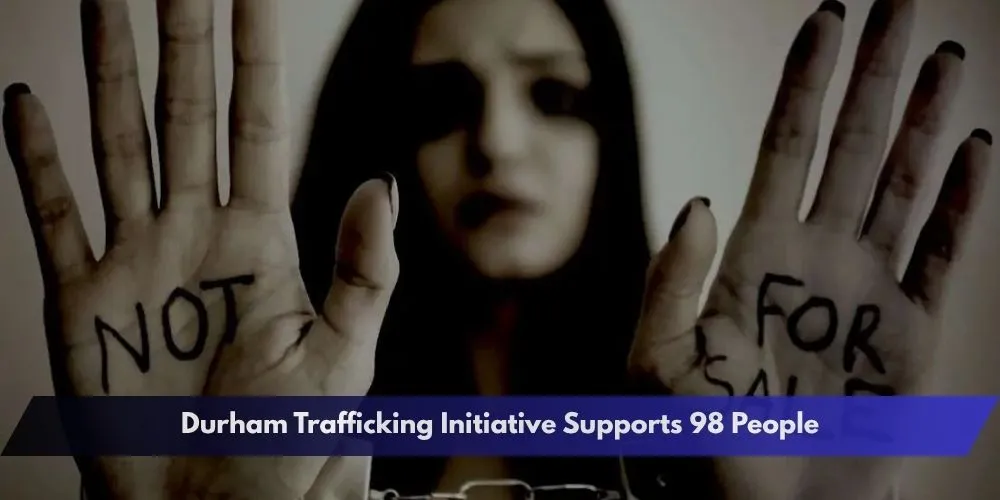
A Durham trafficking initiative involving police and victim-service agencies across Ontario connected 98 people involved in the sex trade with social services and community supports during June and July 2026.
Durham Regional Police participated in the coordinated operation alongside police services from across the province. Peel Regional Police led the multi-agency effort, which focused on identifying people who could be at risk of exploitation, improving access to support and strengthening cooperation among investigators.

Durham Trafficking Initiative Expands Provincial Cooperation
The operation involved 19 police services, including Durham Regional Police, the Ontario Provincial Police and municipal forces serving Peel, York, Halton, Hamilton, Waterloo, London, Kingston and several other Ontario communities.


Victim-services professionals from Durham, Peel, York and Hamilton also participated, providing assistance and resources to people identified during the initiative.
Police said the operation helped establish a coordinated response among human-trafficking investigators across Ontario. Multiple investigations were initiated, while intelligence collection and information sharing were strengthened to assist future enforcement and victim-support efforts.
Durham police Deputy Chief Ryan Connolly said cooperation is essential because trafficking activity and offenders can move between police jurisdictions. He said partnerships with victim-service professionals help investigators identify people at risk, support survivors and investigate those suspected of exploiting vulnerable individuals.
Durham Police Release Five Years of Statistics
Durham Regional Police also released statistics showing the volume of human-trafficking-related work conducted by its specialized unit.
Between 2021 and 2025, the DRPS Human Trafficking Unit conducted 1,332 investigations involving suspected elements of human trafficking. Police identified 531 accused persons and persons of interest and laid 754 human-trafficking-related charges during that five-year period.
The unit also assisted 1,175 people who were identified as victims of human trafficking or considered at risk of exploitation. These figures include investigations and support activity across Durham Region rather than one particular municipality.
Human trafficking can involve sexual exploitation, forced labour, domestic servitude and other situations in which one person controls or exploits another for financial benefit. Durham police describe it as a crime that can involve threats, coercion, manipulation, fear and control.
Victims May Know Their Traffickers
Police say human trafficking remains significantly underreported. People experiencing exploitation may know or have a personal relationship with their trafficker, making it more difficult to recognize the situation, seek assistance or safely leave.
Other barriers can include fear of violence, financial control, isolation, shame, dependency and concern about how authorities may respond. Police and victim-service organizations therefore emphasize support and safety when identifying people who may be experiencing exploitation.
The provincial operation was highlighted as Durham police marked World Day Against Trafficking in Persons on July 30. The annual United Nations observance promotes victim protection, trafficking prevention and stronger cooperation against organized networks involved in exploitation.
Reporting and Support Available
Anyone experiencing exploitation or possessing information about possible human trafficking can contact Durham Regional Police at 1-888-579-1520. Emergencies should be reported through 9-1-1.
Confidential assistance is also available through the Canadian Human Trafficking Hotline at 1-833-900-1010. The hotline connects callers with support services and accepts information related to suspected trafficking activity.
The Durham trafficking initiative demonstrates how police and support organizations are working across municipal boundaries to identify exploitation, assist people involved in the sex trade and improve investigations throughout Ontario.