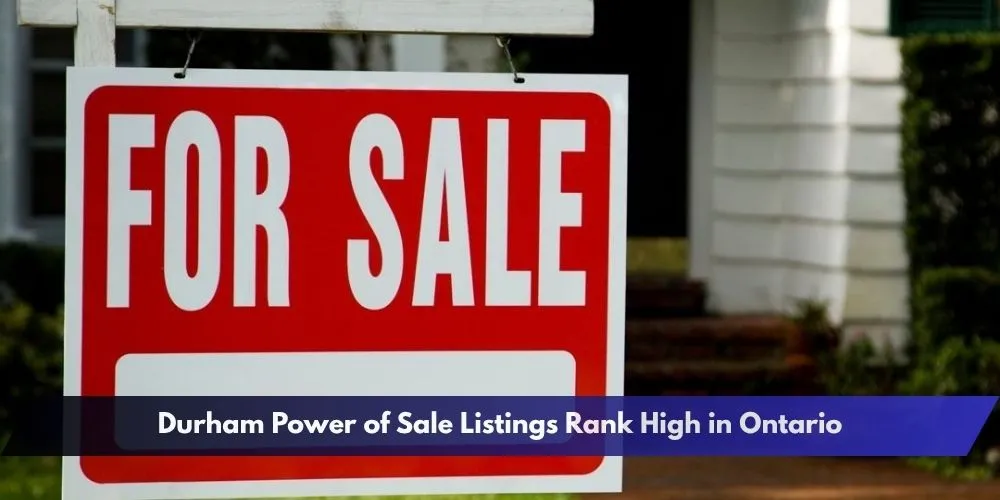
Durham power of sale listings have placed four local municipalities among the 20 Ontario communities with the highest number of lender-controlled home sales currently on the market. A July 30 snapshot listed 18 properties in Oshawa, 13 in Whitby, 13 in Pickering and 12 in Clarington, for a combined total of 56 listings.
The figures came from PowerOfSaleListing.com, a private real estate platform that tracks Ontario multiple-listing-service properties identified as power-of-sale listings. The site says its data is supplied through PropTx and refreshed frequently, meaning totals can change as homes are added, sold or removed.


Oshawa Leads Durham Power of Sale Listings
Oshawa ranked highest among the Durham municipalities included in the provincial list, placing 11th with 18 power-of-sale properties. Whitby and Pickering each had 13, while Clarington had 12.


Toronto led Ontario with 152 listings. Brampton followed with 64, while Mississauga had 33 and Markham had 31. Other communities near the top included London East, New Tecumseth, Hamilton, Richmond Hill, Vaughan and Oakville.
The ranking does not show the percentage of local homeowners in default and should not be treated as a formal municipal delinquency rate. Larger housing markets naturally tend to have more listings. It is also a snapshot from one real estate website rather than an official government or lender database.
What a Power of Sale Means in Ontario
A power of sale may occur when a borrower fails to meet mortgage obligations. The lender can take steps to sell the property and use the proceeds to recover the unpaid loan, interest and eligible costs. Ontario’s Mortgages Act establishes the provincial legal framework for notices and sales conducted under a mortgage.
This process differs from foreclosure. Under a power of sale, ownership generally remains with the borrower until the property is sold, while the lender controls the sale. If money remains after the debt and costs are paid, the balance generally belongs to the homeowner. If the sale does not cover the amount owed, the lender may pursue the borrower for the shortfall.
A power-of-sale listing does not automatically mean a property is a bargain. Buyers must still examine the home’s condition, financing requirements, title and sale terms carefully.
Ontario Mortgage Stress Has Increased
The figures arrive as more Ontario borrowers struggle with mortgage payments. Equifax data reported for the first quarter of 2026 showed the province’s mortgage delinquency rate rising to 0.36 per cent from 0.24 per cent a year earlier, a 52 per cent year-over-year increase.
That remains a small share of all mortgages, but the rapid rise signals growing pressure on some households. Owners who purchased during the pandemic-era market may now be renewing at higher interest rates while also facing elevated living costs, weaker home values or unstable employment.
The source data listed Ontario power-of-sale properties at an average asking price above $1.2 million, although prices varied widely. Asking prices do not show what homes will ultimately sell for, and losses reported on individual properties cannot be applied to every transaction.
Buyers and Tenants Should Review Their Rights
Prospective buyers should work with qualified legal and real estate professionals before making an offer. Power-of-sale homes may be sold under stricter terms and with fewer warranties than a conventional resale.
Tenants living in a property subject to a lender sale should not assume they must leave immediately. Their rights can depend on the tenancy, notices provided and the purchaser’s intended use. A mortgage enforcement notice alone does not immediately end an existing tenancy.
The current Durham power of sale listings show that mortgage-related sales are present across Oshawa, Whitby, Pickering and Clarington. Because online totals change frequently, readers should treat the ranking as a dated market snapshot rather than a permanent measure of financial distress in Durham Region.