








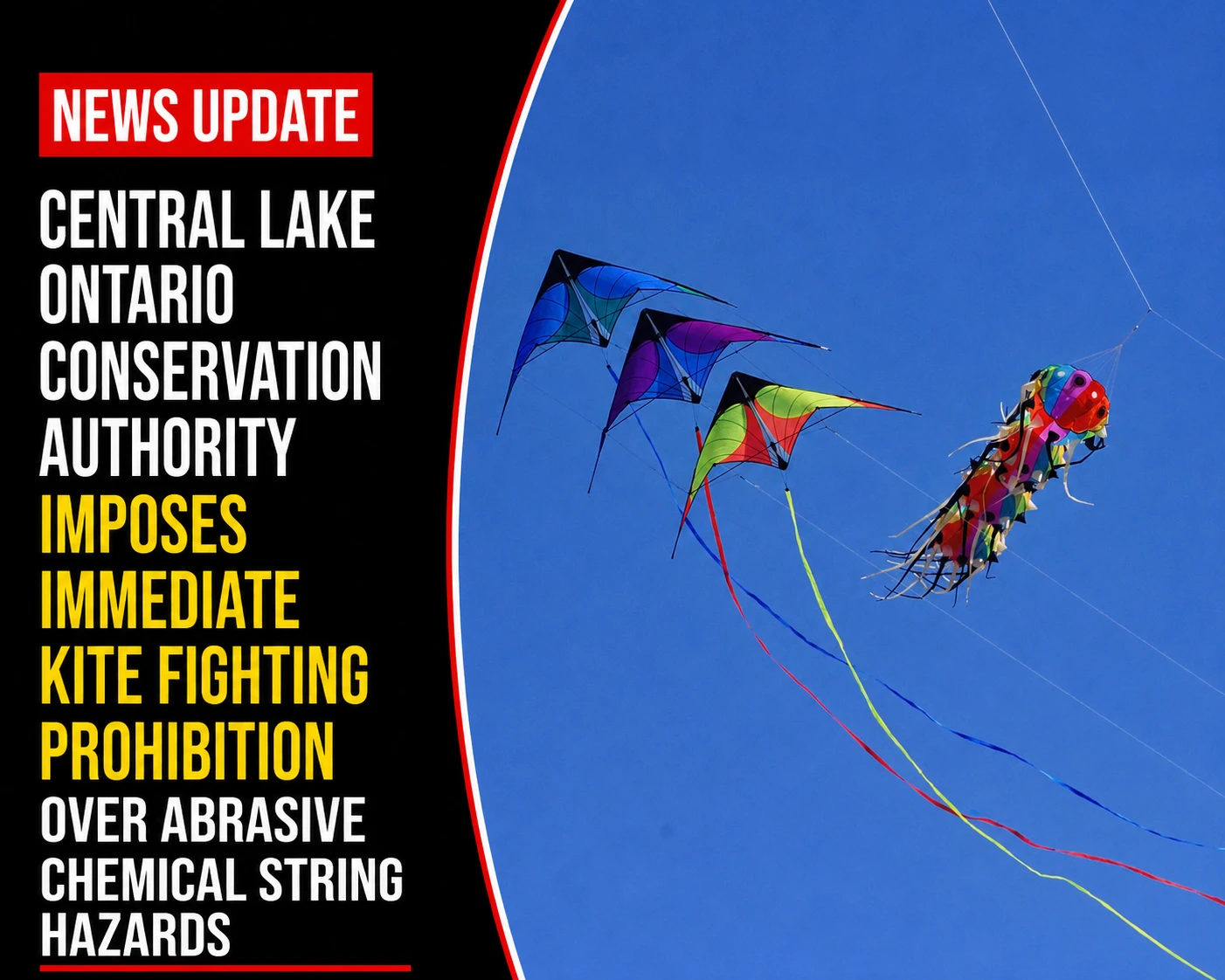
The environmental protection branches, municipal land-use enforcement wings, and park safety operations within the Durham Region have instituted a hard public restriction across all regional conservation lands. Tracked under provincial environmental protection and municipal public safety portfolios on Thursday, July 9, 2026, conservation compliance clerks finalized the regulatory order ‘Kite fighting’ banned in Whitby conservation area. Responding to a significant accumulation of abandoned structural debris that threatens both off-leash pets and nesting avian wildlife, the Central Lake Ontario Conservation Authority (CLOCA) enacted a strict regional ban to block unmanaged competitive flight events.
Park supervisors note that the sudden implementation of localized fines targets the deliberate use of reinforced, chemically treated cutting strings that pose severe laceration risks to trail users.


The Mechanics of the Ban and Environmental Entanglement Risks
The regulatory intervention specifically addresses the long-term structural and biological damage left behind by unmanaged competitive events.


-
The Prohibited Activity: Kite fighting involves multiple participants maneuvering competitive airborne units with the explicit goal of cutting an opponent’s line. Once a line is severed, the unmanaged, losing unit drifts for multiple kilometers before dropping onto public pathways, wetlands, and tree canopies.
-
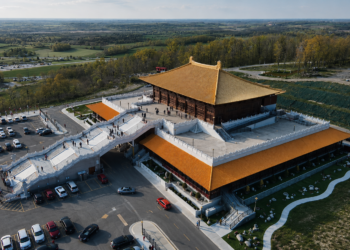
The Micro-Infraction Area: While the ban covers all properties managed by CLOCA across the watershed, field enforcement is heavily concentrated at the Heber Downs Conservation Area (5000 Cochrane Street / 500 Lyndebrook Road) in Whitby, where volunteer trail stewards have repeatedly cleared dense clusters of fallen lines.
-
The Structural Weaponization: The primary driver for the absolute prohibition is the material makeup of the line itself. Participants systematically utilize line variants that are heavily glazed with pulverized glass, abrasive compounds, or industrial chemical bonding agents to maximize their cutting capability.
Analyzing the Ecological and Infrastructure Impact Matrix
Environmental protection teams have classified the specific hazards generated when abandoned, near-invisible lines settle into the local ecosystem.
| Identified Hazard Vector | Physical Field Behavior | Direct Biological Threat | Secondary Infrastructure Strain |
| Chemically Glazed Cutting Lines | Suspends invisibly across active single-track bike lines and hiking paths. | Severe Human Laceration: Can slice through exposed skin, deep muscle tissue, and pet paws. | Forces deployment of emergency park rangers to manually clear high tree canopies. |
| Drifting Structural Synthetic Fabrics | Entangles tightly within low-lying dense ground brush and wetland reeds. | Wildlife Entanglement: Traps local waterfowl, raptors, and small mammals, causing starvation. | Wraps securely around commercial mowing rotors, damaging public maintenance tools. |
The Legislative and Enforcement Framework
“The abandoned string is hazardous because it drifts until it becomes lodged in tree branches or other vegetation, is difficult to see, and can cut people, pets, and wildlife,” CLOCA operations staff noted in an official public safety directive. To enforce compliance, municipal bylaw officers and conservation authorities are authorized to issue immediate regulatory fines to anyone caught participating in competitive events or flying units with hazardous lines inside park lines. Land management teams are asking the public to immediately flag any large groups mobilizing un-booked competitive events.
The Central Lake Ontario Conservation Authority Board of Directors and the Durham Regional Police Service handle ongoing environmental compliance monitoring and public safety sweeps.
Whitby residents, recreational trail users, and local conservationists looking to submit a formal “Report a Concern” environmental hazard sheet, view active trail condition notices, or review the comprehensive CLOCA public land-use bylaws can find the database networks online through the central Central Lake Ontario Conservation Authority portal or monitor regional environmental updates via the Durham Region administrative hub.