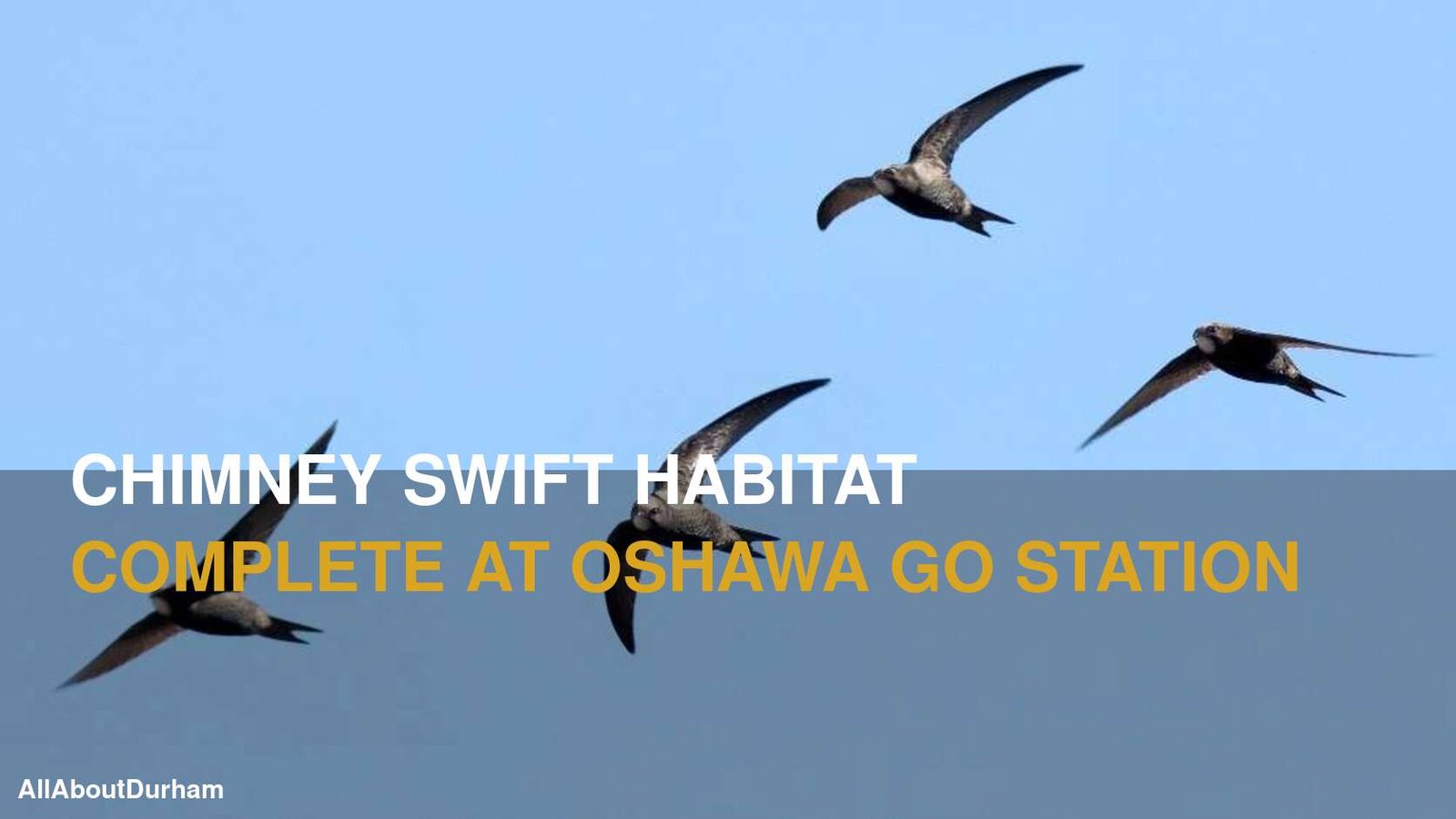
A new chimney swift habitat at the site of the future Oshawa Central GO station is now complete, providing a safe home for the threatened bird species as they return to Durham Region from their winter migration.
The new chimney structure at 500 Howard Street in Oshawa was built as a compensatory habitat for chimney swifts during construction on the Bowmanville GO train extension project. The standalone chimney stands at the north end of the former Knob Hill Farms site, where one of the largest food terminals in Ontario once operated.
Chimney swifts are acrobatic birds that play a vital role in keeping the insect population in check across Durham Region and beyond. They are classified as a threatened species in Ontario and depend heavily on human-made structures like chimneys for their nesting and roosting needs. Unlike most birds, chimney swifts can only perch on vertical surfaces such as the inside walls of chimneys, making these structures essential to their survival.
The birds are also known for their lifelong mating bonds, similar to swans and bald eagles, forming pairs that return to the same nesting sites year after year.
There was no evidence that chimney swifts were actively nesting at the site of the former giant grocery terminal on Howard Street. The original chimney and most of the massive structure were demolished in early 2025. However, chimney swifts are known to roost in the surrounding area, so the new habitat was constructed as an environmental requirement while the Simcoe Street railway bridge is being demolished and rebuilt to accommodate the future GO station.
The bridge work is part of a two-year project that began in early January and will accommodate trains running into the new Oshawa Central GO station just to the east of the chimney site.
Metrolinx said they are taking extra precautions to protect swift habitats when building new transit projects across the province. In Hamilton, where a new light rail transit line is under construction, a species-at-risk study along the future route discovered a potential chimney swift habitat. The transit agency is building a new chimney there as well, which will remain in place for three to five years and be monitored seasonally for signs of new residents.
In Oshawa, Metrolinx also set up a motion capture camera at the mouth of a culvert that runs under the train tracks, learning a great deal about the local wildlife highway. Over an eleven-month observation period, the camera captured images of deer, raccoons, wild turkeys, coyotes, and muskrats, documenting more than thirty species using the corridor.
The site for the new GO station carries significant historical weight in Oshawa. It was home to the Knob Hill Farms food terminal from 1983 until it closed in 2000, when founder and former Maple Leaf Gardens boss Steve Stavros shut down his entire operation. At its peak, it was the largest food terminal in Ontario. All that remains of the original site is what is left of an iron factory dating back nearly 130 years, which will be preserved and incorporated into the design of the new station.
The new chimney swift habitat represents a small but meaningful step in balancing infrastructure development with environmental stewardship in Durham Region. Oshawa’s new central GO station is one of two new stations planned for the city and four across Durham Region as the commuter rail line is extended eastward into Bowmanville.