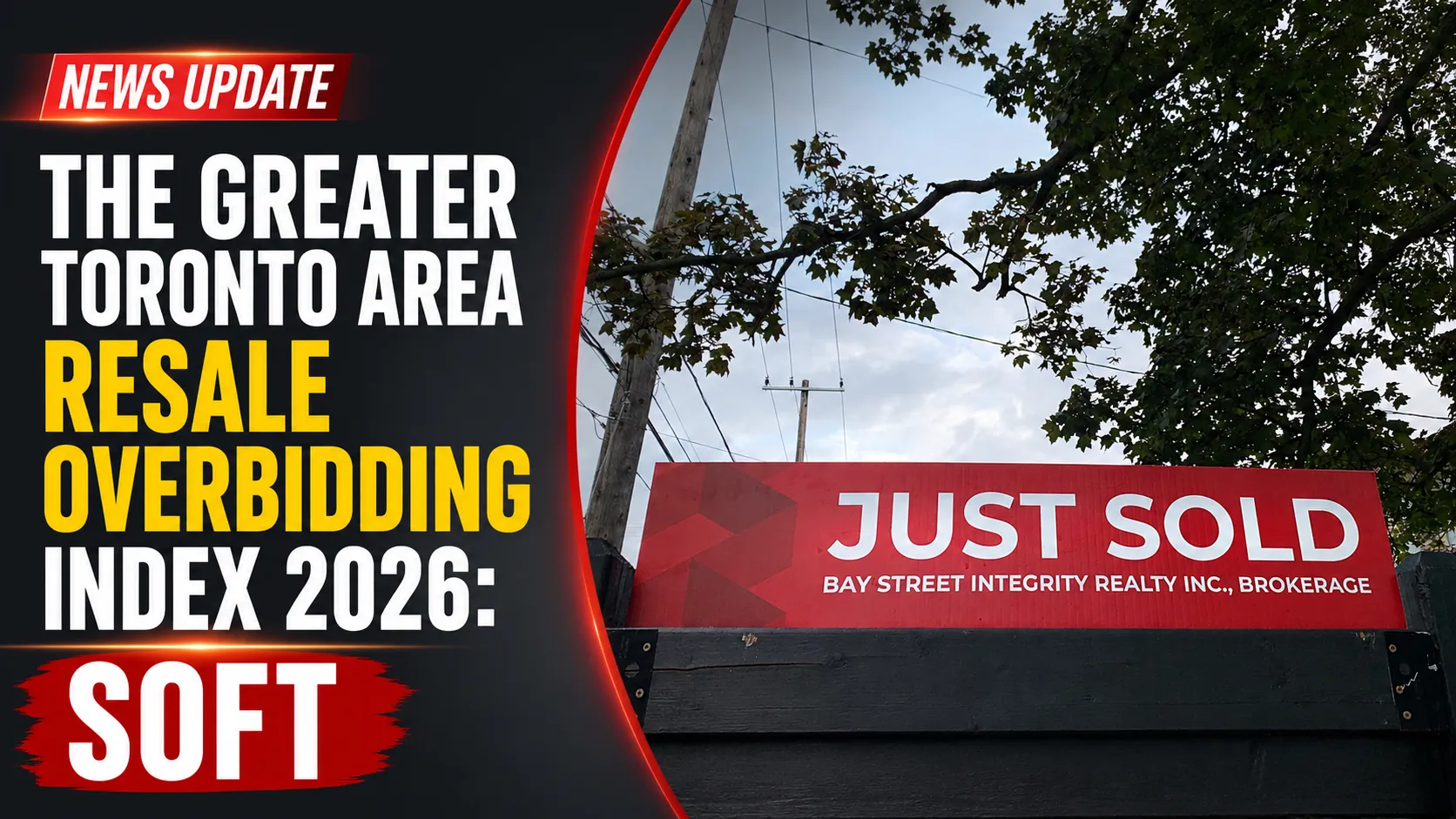
A pronounced deceleration in multiple-offer strategies has redefined the late-spring real estate landscape across the northern shore of Lake Ontario, pulling the traditional peak spring market into buyer-friendly territory. Tracked under the property transaction registry The Greater Toronto Area Resale Overbidding Index 2026, digital real estate platform Wahi published its monthly analytics report on Thursday, June 4, 2026. The empirical data reveals that only 7 per cent of GTA neighborhoods with a minimum of five monthly resale transactions remained in overbidding territory in May—a sharp descent from the 13 per cent volume recorded in April.
The data indicates that the traditionally aggressive spring market has failed to materialize for the third consecutive year, leaving the overwhelming majority of neighborhoods trading safely below asking prices.
The Bidding Environment and Geographic Concentration
The structural shift in market dynamics has effectively insulated active buyers from the chaotic bidding wars that came to define the post-pandemic era. According to Wahi’s diagnostic charting, an overwhelming 92 per cent of regional neighborhoods saw homes change hands beneath the seller’s original listing price, while a minor 1 per cent transacted exactly at asking.
Wahi economist Ryan McLaughlin noted that while the broader market strongly favors consumer negotiations, specialized pockets of persistent demand remain highly concentrated within Toronto’s historic east end. Specifically, three of the top five overbidding hotspots in May were tracked within the 416 core: Riverdale, The Beaches, and The Danforth.
Real estate analysts attribute these specific anomalies to targeted underpricing strategies, where listing realtors intentionally price a property below true market value to manufacture artificial bidding environments. Conversely, the deepest underbidding trends were consistently identified in affluent pockets featuring median residential listing prices ranging from $2.1 million to upwards of $3 million.
Housing Type Breakdowns and the Pre-Construction Shift
The drop in competitive bidding was felt most acutely within the freehold detached and semi-detached housing markets, which typically experience the highest spring transaction volumes.
| Housing Demographic | Overbid Neighborhood Share (April) | Overbid Neighborhood Share (May) | Primary Market Catalyst |
| Single-Family Freeholds | 21% of GTA Markets | 12% of GTA Markets | Rapid drop in multiple-offer strategies |
| Condominium Suites | 3% of GTA Markets | 1% of GTA Markets | High inventory floors / Soft buyer pools |
| Pre-Construction Builds | N/A (Exempt from Resale Index) | Rising Intake Projections | Waived provincial HST under $1M cap |
Wahi’s research suggests that a major factor dampening demand for standard resale listings is a significant consumer pivot toward the pre-construction housing market. This movement is being driven by the Ontario government’s recently enacted Harmonized Sales Tax (HST) relief legislation.
Passed in March 2026, the provincial policy completely waives the provincial portion of the HST on newly constructed homes priced below the $1 million threshold. By providing entry-level buyers with up to $130,000 in immediate tax savings, the fiscal incentive has successfully redirected a substantial segment of the suburban buyer pool away from competitive resale bidding circles and into long-term developer pipelines.