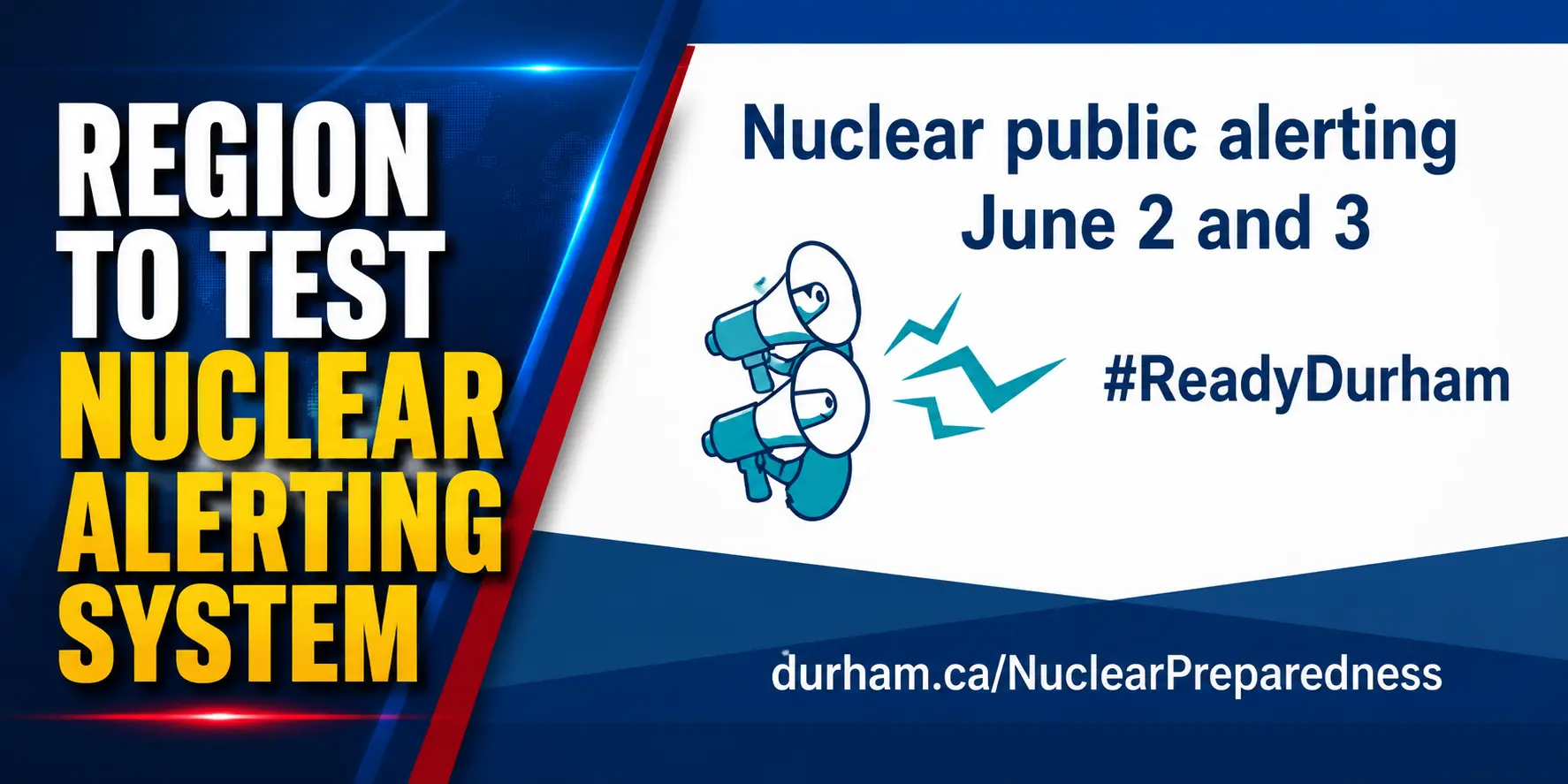
The Region of Durham has scheduled its annual assessment of the nuclear public alerting infrastructure for early June, specifically targeting the days of June 2 and 3. This evaluation is a standard procedure designed to ensure the safety mechanisms intended to warn residents in the unlikely event of an emergency at the nuclear-generating stations located in Clarington or Pickering remain fully operational. Residents across the region should be aware that these activities are strictly for testing purposes and do not indicate an actual threat to public safety.
Set to occur during daytime hours over the two-day period, the testing protocol will involve various components of the alerting network. The primary objective is to verify that the systems capable of reaching the population are functioning correctly. This includes checking the integrity of communication lines and broadcast equipment that are essential for disseminating urgent information rapidly to the community. The municipal authorities emphasize that this is a proactive measure to maintain high standards of emergency readiness throughout the area, covering the zones surrounding both the Pickering and Darlington Nuclear Generating Stations.


On June 2, the first phase of the test will focus on the notification systems that contact residents directly via telephone. Individuals receiving a phone call on this date are advised that no response or action is necessary on their part. To help residents understand exactly how they will be alerted based on their specific location within the region, an interactive tool is available. By visiting durham.ca/AlertMap and entering an address, community members can view the specific alerting zones relevant to their property and stay informed about local procedures. This tool is particularly useful for those living within the 10-kilometer primary zones of the stations.


Following the telephone system checks, the second phase of the test on June 3 will involve the sounding of the outdoor sirens. These sirens are a critical component of the warning network and will be activated during the day. Much like the telephone test, hearing the sirens on June 3 does not require residents to take any protective measures. The distinct sound is simply part of the verification process to ensure the auditory warning devices are ready for deployment should a real situation ever arise. The siren system is designed to reach individuals who are outdoors and may not have immediate access to other media notifications.
In a stark contrast to the testing procedures, the protocol for a genuine nuclear emergency requires immediate public action. Were this a real event, hearing the sirens would be the signal for everyone to go indoors immediately. Once inside, residents are instructed to tune into trusted local media outlets or monitor official government channels to receive further instructions and updates. This distinction is crucial for public understanding, ensuring that the community reacts appropriately only when there is an actual hazard. Staying indoors and monitoring information provides the best protection in the initial stages of an incident.
For those seeking additional details about the alerting system or the upcoming tests, several resources are available. The Region of Durham provides comprehensive information regarding nuclear preparedness on its website at durham.ca/NuclearPreparedness. Furthermore, residents within Durham Region boundaries can contact 311 for specific inquiries. These channels serve as the primary source for accurate information regarding the testing schedule and general emergency planning, ensuring the public remains well-informed and prepared for any scenario.
Maintaining the reliability of the public alerting system remains a priority for regional officials as they continue to safeguard the community. By conducting these annual tests, the Region of Durham ensures that the infrastructure designed to protect citizens in the event of an incident at the Clarington or Pickering facilities is always ready to perform as intended. The cooperation of residents in acknowledging these tests without alarm contributes to the overall safety culture of the region.