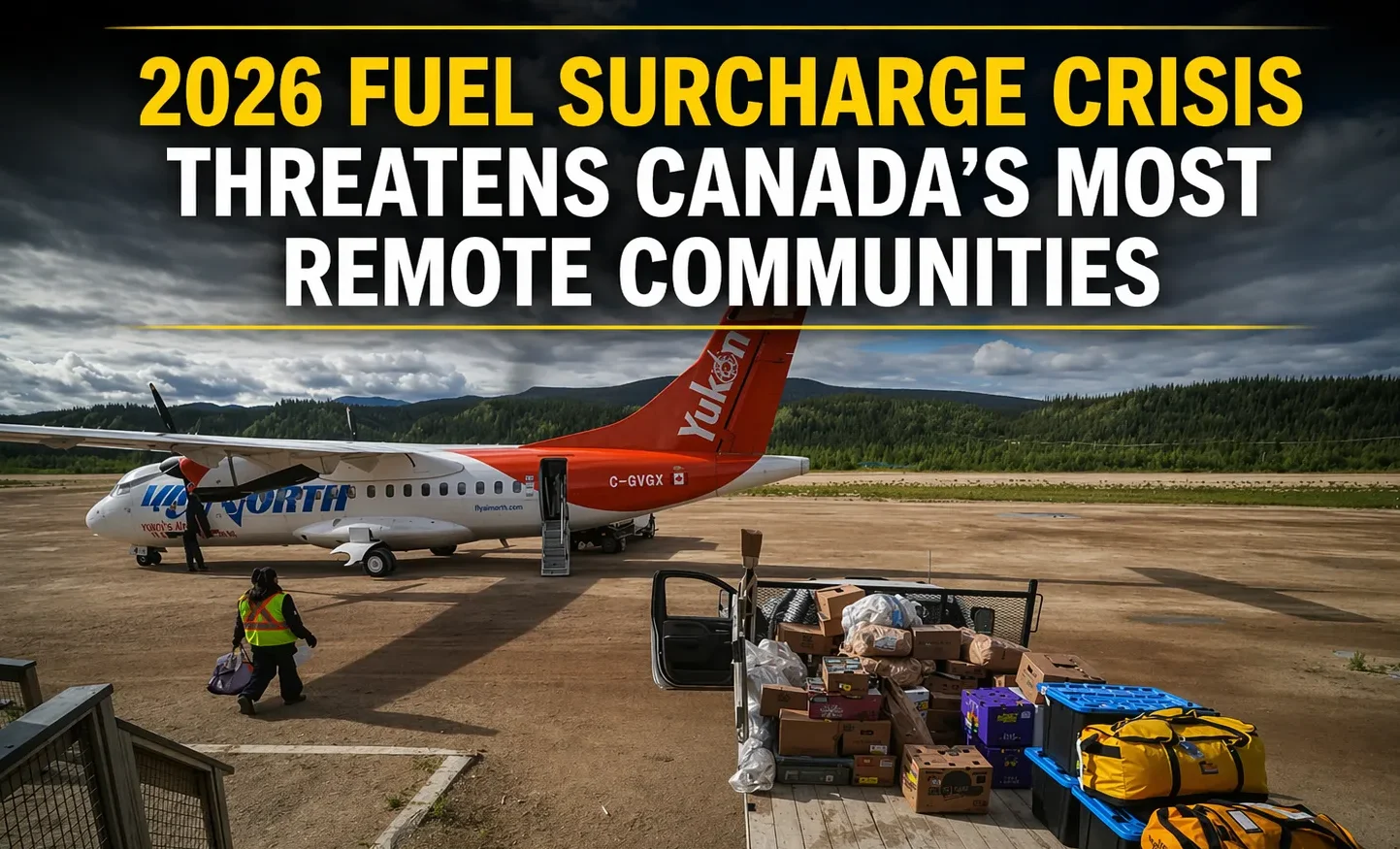
The already high cost of living in Canada’s North is reaching a breaking point as a global energy crisis triggers a massive spike in shipping fees. Following the blockade of the Strait of Hormuz in late February 2026, jet fuel and diesel prices have doubled, leading major food suppliers and air carriers to implement an emergency 2026 fuel surcharge crisis response. For remote communities that rely almost entirely on air freight for fresh produce and dairy, these surcharges—ranging from 20 to 50 cents per pound—are turning basic essentials into luxury items. In Nunavut, a standard 24-item grocery basket that costs roughly $132 in Ottawa has surged to nearly $200, with further increases expected as summer cargo ship fuel rates also begin to climb.
The North West Co., which operates major retail banners like Northern and Giant Tiger, has warned that the logistics of shipping a single four-litre jug of milk now involves a $2-to-$5 cost increase due to its weight. While some grocers have attempted to shield consumers from hikes on essentials like baby formula and bread, they admit that the 2026 fuel surcharge crisis is making it “unavoidable” to raise prices on non-essential goods and snacks. Air Inuit and Canadian North have already added a three per cent surcharge to all cargo, with Marie-Noëlle Pronovost of Air Inuit warning that these fees may increase further in the coming days as volatility in the Middle East continues to destabilize oil markets.


For communities managed by Arctic Co-operatives Ltd., there is a temporary “insulating effect” because the Nunavut government typically purchases fuel annually in the fall. However, this buffer is thinning as northbound flights are forced to buy fuel at current market prices. Duane Wilson, vice-president of stakeholder relations for Arctic Co-op, noted that even maritime shipping—usually the most cost-effective method—is seeing “bunker oil” prices reach record highs. This is particularly concerning as co-ops begin their annual “sea-lift” restocking, where they bring in a year’s worth of shelf-stable inventory.


The federal government’s Nutrition North Canada subsidy, designed to ease food insecurity, is reportedly failing to keep pace with the dramatic inflation of 2026. Critics and economic professors alike point out that the marginal benefit of these subsidies has eroded significantly since the post-COVID-19 era. As jet fuel surges past $2 per litre in some regions, the cost of transporting heavy but low-value items like potatoes, milk, and fresh fruit is becoming unsustainable for independent retailers. For families in the Far North, the 2026 fuel surcharge crisis is not just an economic statistic; it is a direct threat to their ability to afford a healthy diet.
As Prime Minister Mark Carney’s government faces pressure to intervene, the focus remains on the Strait of Hormuz negotiations. If the blockade continues into the fall, analysts predict that northern governments will be forced to buy their year’s supply of fuel at peak prices, locking in high grocery costs for the foreseeable future. This national emergency highlights the extreme vulnerability of Canada’s remote supply chains and the urgent need for more robust infrastructure and subsidy frameworks that can withstand global geopolitical shocks.