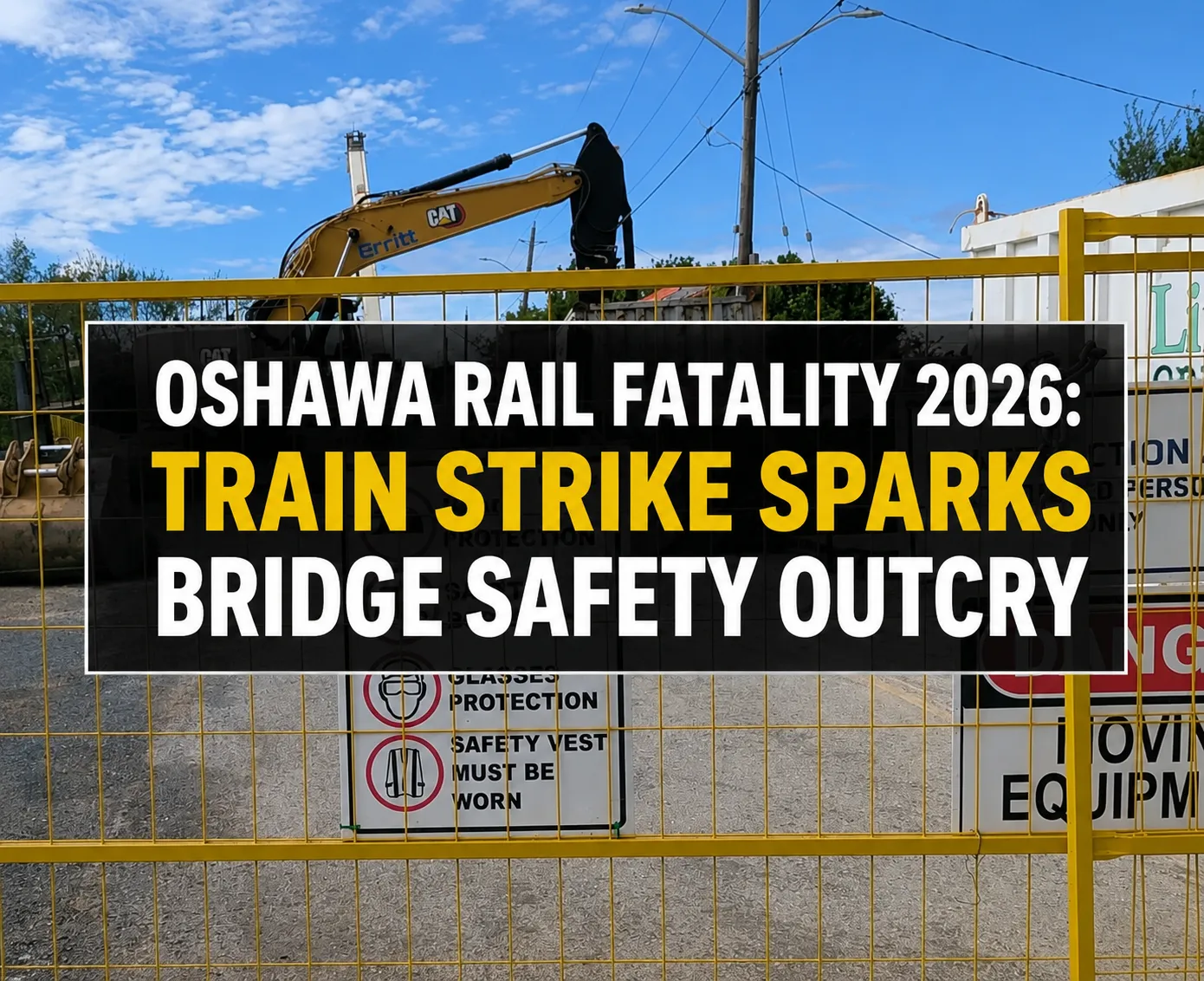
A tragic pedestrian fatality on a central Oshawa rail line has intensified an ongoing political battle over localized transit infrastructure. Emergency responders flooded a neighborhood sector just south of the downtown core early Wednesday morning after a male pedestrian was struck and killed by an oncoming train. The fatal incident occurred as the victim attempted to navigate a ground-level rail crossing directly adjacent to a major municipal construction zone that has funneled localized vehicular and pedestrian traffic into narrow detours for months.
The fatality represents the first confirmed loss of life since a series of sweeping, multi-year bridge closures began choking off access to neighborhood communities in early 2026, prompting local ward representatives to aggressively renew demands for enhanced pedestrian safety structures.

The Simcoe and Hall Street Emergency Response
The fatal collision occurred at approximately 8:30 a.m. on Wednesday, May 20, where the primary rail corridor intersects the crossing grid at Simcoe Street and Hall Street. Durham Regional Police Service (DRPS) patrol units, alongside Oshawa Fire Services and regional paramedics, converged on the line immediately following a priority alert from the train’s operating crew.


First responders successfully located the male victim on the tracks just south of the closed Simcoe Street bridge footprint and immediately initiated advanced life-saving protocols. Despite the intensive medical intervention on the ballast, the victim’s injuries were too severe, and he was officially pronounced deceased at the scene. Rail operations along the busy corridor were halted for several hours as forensic collision investigators mapped out the site and collected physical evidence, though the initial event path points toward an accidental crossing attempt.
Bridge Demolitions and Neighborhood Traffic Chaos
The spatial context surrounding Wednesday’s accident has become a point of intense friction for local residents. In January 2026, Metrolinx and the City of Oshawa executed a mandatory two-year complete closure of the Simcoe Street bridge to allow heavy engineering crews to widen and lower the corridor. This massive structural project is required to accommodate incoming GO Transit train traffic heading toward the future Central Oshawa station expansion.
However, the closure of Simcoe Street was compounded by two parallel rail infrastructure adjustments:
-
Albert Street: The permanent decommissioning and closure of the neighboring Albert Street bridge.
-
Farewell Street: Ongoing structural bridge replacement work to the east, which required the complete demolition of the legacy Farewell vehicular overpass.
This simultaneous loss of three core north-south neighborhood conduits has triggered severe traffic chaos, localized gridlock, and a spike in vehicular near-misses as residents from surrounding residential pockets try to find alternative routes to their homes. With formal pedestrian walkways severed or poorly marked around the active construction zones, local community members have increasingly taken to tracking directly across live rail ballast to move between neighborhoods, creating a dangerous transit dynamic that culminated in Wednesday’s fatal strike.
Councillors Demand Structural Safety Fixes
The tragedy has immediately shifted the administrative spotlight back onto Oshawa City Council. For months, Ward Councillors—led by veteran representative Brian Nicholson—have been lobbying Metrolinx and municipal staff to alter their current construction master plan.
In light of the incident, Nicholson and his allies are renewing their push for the immediate budgeting and construction of a dual-purpose pedestrian and vehicular bridge in the city’s east end to directly replace the demolished Farewell structure. Rebuilding the Farewell asset to safely accommodate both foot traffic and passenger cars is an urgent priority from both a neighborhood access and public safety perspective, Nicholson noted following the crash. Community advocates warn that without immediate investments in robust, physical pedestrian barricades and clear, separated bypass walkways across the central Oshawa rail grid, the mass confusion generated by the ongoing GO Transit expansion lines will continue to put local lives at risk.