Durham Youth Seek Practical Mental Health Skills as Ontario Shores Launches Recovery High School
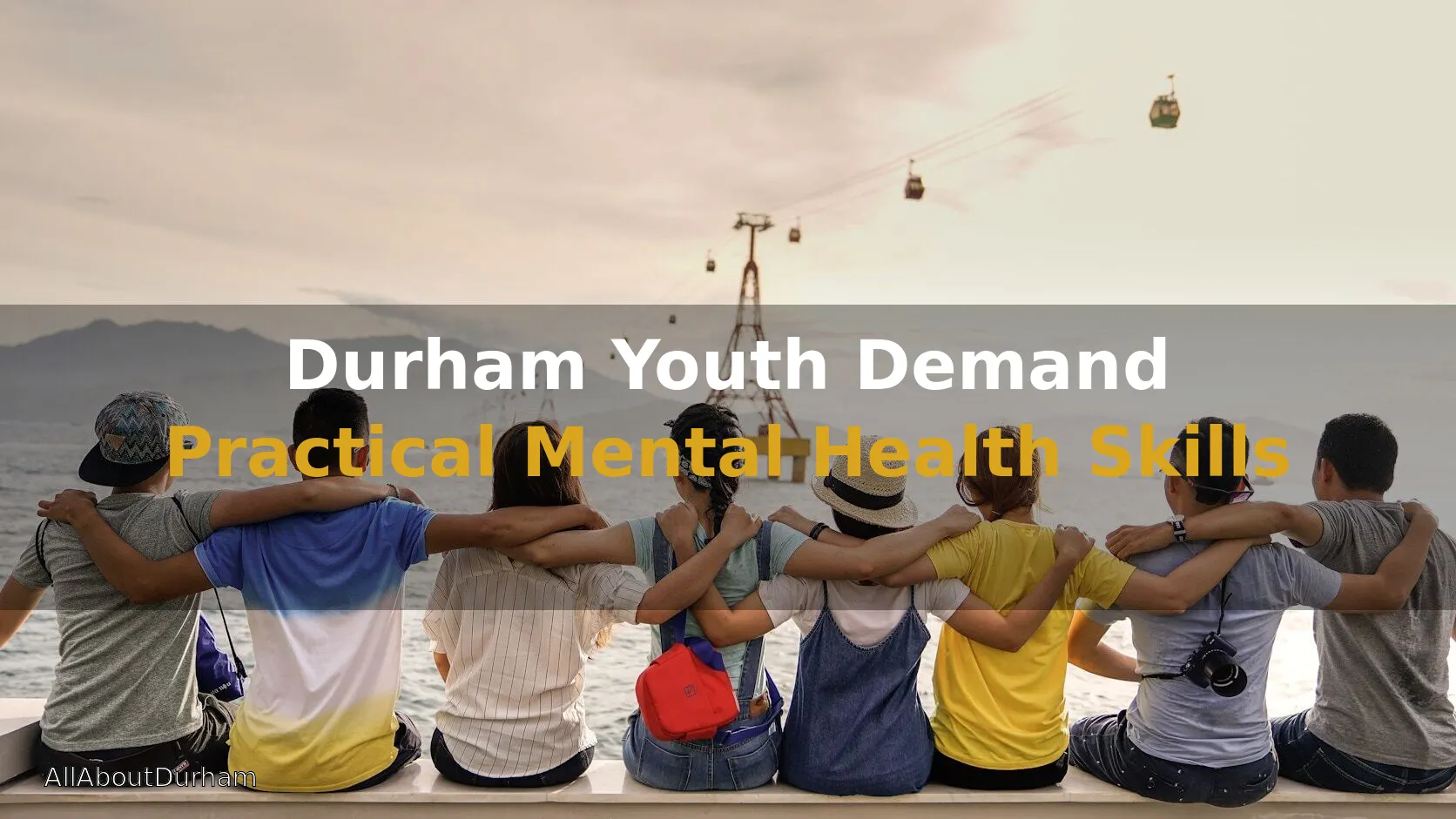
Young people in Durham Region are calling for practical, skills-based mental health support rather than traditional therapy alone, according to new research from Ontario Shores Centre for Mental Health Sciences. The findings are reshaping how local health providers approach youth mental wellness across the community.

Dr. Simone Arbour, a research scientist at Ontario Shores, said early findings from youth outpatient data point to growing concerns about social difficulties, emotional regulation challenges, and the lasting effects of trauma among young people in the region. Clinicians have emphasized that youth consistently ask for hands-on tools they can use in their daily lives.


In response to these findings, Ontario Shores launched Recovery High School in November 2025, the first program in Canada to bring the Recovery College model directly into a local high school setting. The program offers both in-person and virtual access for students aged 12 to 18 who are experiencing mental health challenges and want to build practical skills for everyday situations.
What makes Recovery High School unique is its co-design approach. Youth were active partners in shaping the program from the start, helping to select course topics and design activities alongside clinicians. Sessions are led by a peer support specialist with lived experience, and youth participants earn volunteer hours for contributing their insights and perspectives to the program.
Jordan, a 14-year-old participant in the co-design process, reflected on the experience by saying the discussions opened his eyes to perspectives he had not considered before. He noted that hearing other opinions helped him realize he was not alone in what he was going through.
The impact of youth involvement has been measurable. Among 36 young people who participated in the co-development process, 67 per cent found the experience meaningful and 70 per cent felt their contributions were genuinely important to building the program. Their direct input ensured that Recovery High School is grounded in lived experience rather than clinical assumptions about what young people need.
Access to mental health services continues to be a significant barrier for many young people across Durham and beyond. Long waitlists and limited age-appropriate programs often delay critical support for months. Recovery High School aims to address these barriers by offering free early intervention that is easy to access and built on evidence-based approaches including dialectical behaviour therapy strategies and interpersonal skills development.
The program also recognizes that parents and caregivers face their own mental health challenges when supporting children through difficult times. To address this gap, Recovery High School launched Caregiving the Caregivers of Adolescents, a free virtual course for parents and caregivers that covers the emotional, social, and developmental changes youth experience. The course also provides practical tools for caregiver wellbeing. So far, 20 caregivers have completed the program with a 100 per cent recommendation rate.
With one in five youth across Canada, representing more than 1.2 million young people, experiencing mental health challenges, early and collaborative approaches like Recovery High School are seen as essential to addressing the growing crisis. This Mental Health Month, health professionals across Durham are encouraging youth and families to take an active role in shaping their mental health care and seeking out programs that prioritize practical skills and genuine youth engagement.