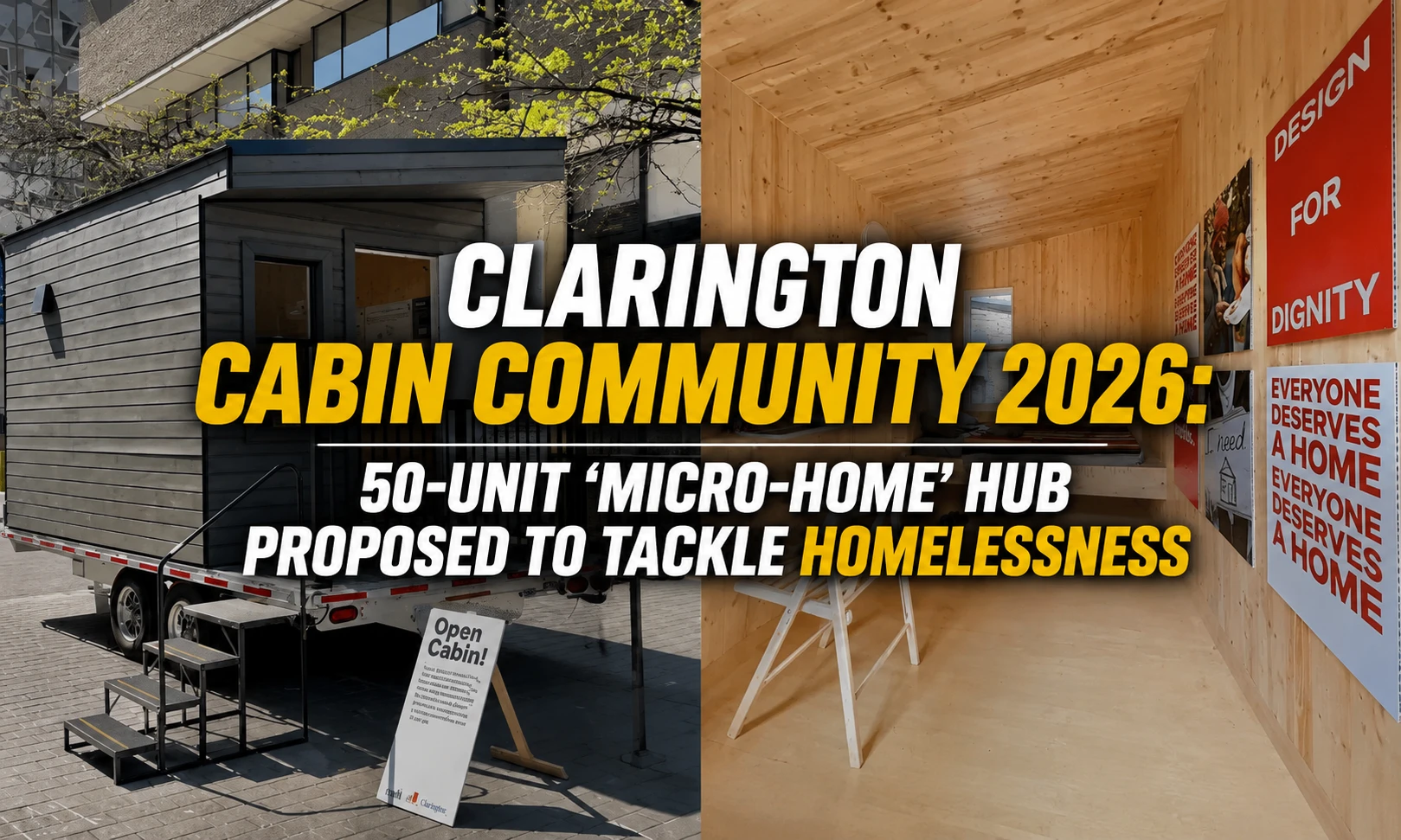
A revolutionary approach to the housing crisis is heading to Clarington Council, promising a massive reduction in the cost of supporting the region’s most vulnerable residents. The Clarington Cabin Community 2026 project, pitched by the Durham Region Non-Profit Housing Corporation (DRNPHC), aims to build 50 micro-units in Bowmanville. CEO Tracy Greig presented the “missing middle” strategy to the Planning and Development Committee this week, arguing that the model could save over $430,000 per person annually compared to traditional supportive housing models.
The Model: Efficiency and Wraparound Support
The Clarington Cabin Community 2026 is designed as a bridge between temporary encampments and permanent affordable housing.

-
The Units: Each private cabin will be approximately 100 square feet.


-
Communal Facilities: The site will feature centralized kitchen, laundry, shower, and washroom facilities.
-
Professional Care: Unlike unregulated encampments, the community will provide 24-hour wraparound support, including mental health services and addiction counseling.
-
Safety Features: To address community concerns (“NIMBYism”), the project will be fully fenced, staffed 24/7, and is strategically located directly across from a police station.
The Economics of the ‘Missing Link’
Greig highlighted that the Clarington Cabin Community 2026 is not just a social imperative but a fiscal one. The cost analysis presented to the committee is striking:
-
Cabin Community Cost: ~$174,000 per person/year (including operations).
-
Traditional Supportive Housing: ~$604,000 per person/year.
-
The Cost of Inaction: Homelessness currently costs Durham taxpayers between $8,500 and $200,000 per person/year in emergency room visits, police interventions, and shelter services—without providing a permanent roof.
Strategic Partnership and Land Acquisition
The Clarington Cabin Community 2026 has secured a rare advantage: land. A local developer has stepped forward to provide a site on Maple Grove Road, just south of Highway 2, for a nominal lease of $1 per month.
-
Partnership: The project is a collaboration between DRNPHC and Two Steps Housing, an organization specializing in modular community design.
-
Proven Success: Greig cited the Elizabeth Fry Society modular community in Peterborough, which saw a 90% reduction in emergency calls and successfully transitioned 30 residents into permanent housing within its first two years of operation.
Next Steps for Council
The proponents are requesting $355,000 in funding from Clarington’s allocation of the provincial Building Faster Fund—the same fund that recently awarded Pickering $4.4 million.
-
The Vote: Clarington Council will officially vote on the funding request during the full council meeting on Monday, May 25, 2026.
-
The Need: With over 13,000 people currently on the rent-geared-to-income waitlist in Durham, this project is being framed as a vital pilot that could be scaled to other municipalities like Oshawa and Whitby if successful.