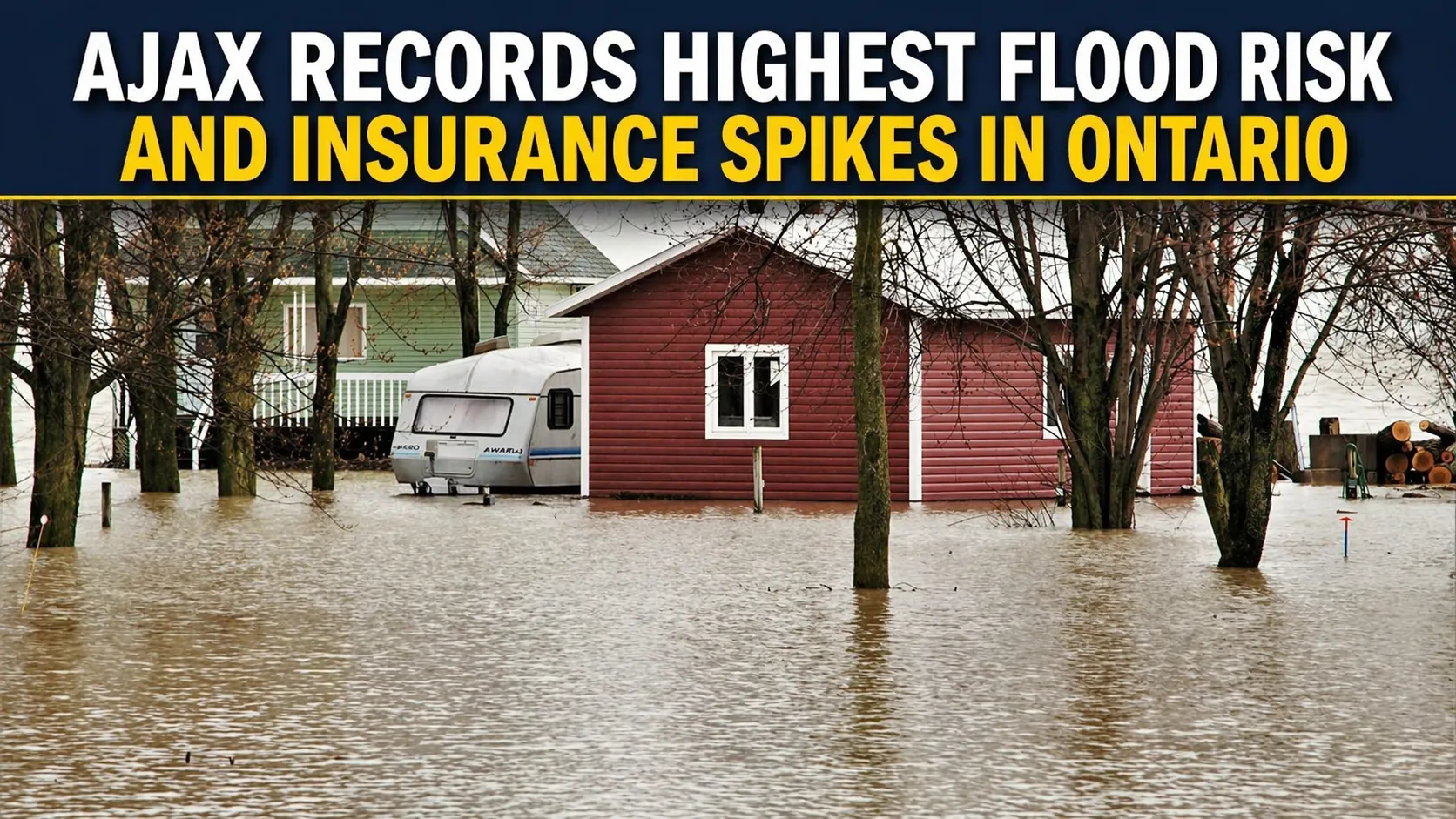
A new analytical report has identified Ajax as the most flood-prone housing market in Ontario, leading to a massive surge in local property insurance costs. According to data released on April 21, 2026, by real estate platform Wahi and insurance aggregator MyChoice, home insurance premiums in Ajax have skyrocketed by 26 per cent since 2024. This inflation is directly tied to the town’s provincial-high flood risk score of 4.6 out of 5, a figure that sits significantly above the Ontario average of 3.4. The report underscores the growing financial burden on Durham Region homeowners as climate-driven “flash flooding” events become more frequent and destructive.
The Ajax flood risk insurance spike reflects a broader provincial trend where increasingly frequent heavy rainfalls are causing billions of dollars in annual damages. The Insurance Bureau of Canada previously noted that a single two-day flash flood event in 2024 resulted in nearly $940 million in insured damage across the GTA. In Ajax, the combination of its proximity to Lake Ontario and its internal watershed systems has made it a primary area of concern for underwriters. While the average Ontario household pays less than $1,500 annually for home insurance, residents in high-risk zones like Ajax are seeing their premiums climb much faster than the provincial inflation rate.

Following Ajax, other markets in the Greater Toronto Area are also feeling the pinch. Markham saw a 22 per cent increase in premiums with a risk score of 3.9, while Burlington recorded a 20 per cent spike. Interestingly, the report found that insurance inflation is not exclusively tied to water; Northern Ontario cities like Thunder Bay and North Bay saw even higher premium hikes (up to 31 per cent) despite lower flood scores. Experts attribute those northern increases to the high cost of labor and materials in remote areas, along with the growing threat of wildfires—factors that, combined with the Ajax flood risk insurance spike, are making homeownership increasingly expensive across the province.


For homeowners in the Durham Region, these rising costs are prompting a shift in real estate priorities. Wahi economist Ryan McLaughlin noted that savvy buyers are now scrutinizing flood maps as closely as school rankings or transit access. “The average annual cost remains below $2,000 in most markets, but the rate of growth is what is catching people off guard,” McLaughlin explained. In response to these findings, local conservation authorities have reiterated the importance of homeowner mitigation efforts, such as installing backwater valves and ensuring proper lot grading to divert water away from foundations.
As the insurance industry adjusts its risk models for 2026 and beyond, municipalities like Ajax are under increasing pressure to invest in resilient stormwater infrastructure. The report suggests that without significant provincial intervention or infrastructure upgrades, premiums in these “red-zoned” areas will continue to rise, potentially impacting property values and overall housing affordability. Residents are encouraged to review the full Wahi report to see how their specific neighborhood compares to the provincial average and to shop around for coverage that accounts for specific localized mitigation measures.