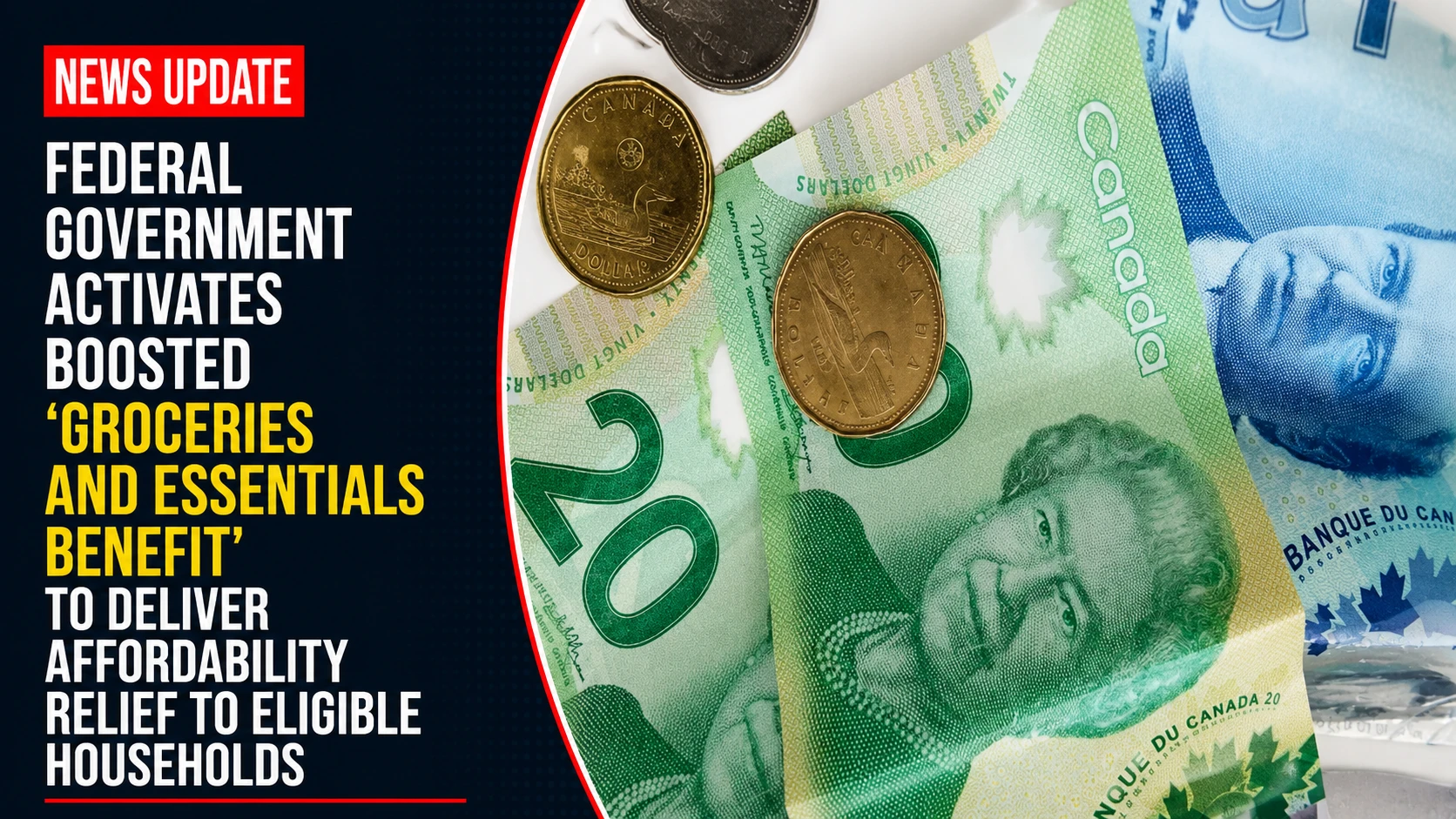
The community social service agencies, regional low-income support networks, and family advocacy circles across Ontario are adjusting to a significant structural shift in federal financial aid. Tracked under national social development registries on Friday, July 3, 2026, corporate finance desks finalized the rollout parameters for the announcement New benefit payments starts for eligible Canadians. Representing the flagship affordability initiative championed by the federal administration, eligible lower-income households are seeing direct deposits land in their bank accounts as the government officially transitions away from its historical sales tax rebate model.
The modernized financial support framework is designed to provide immediate relief against persistent inflation affecting grocery store checkout lines and home utility expenses.


The Structural Shift: Rebranding and the 25 Percent Boost
The new delivery system combines the regular quarterly distribution schedule with a guaranteed multi-year funding expansion.


-
The New Identity: The program, officially named the Canada Groceries and Essentials Benefit, formally replaces the legacy Goods and Services Tax / Harmonized Sales Tax (GST/HST) credit network.
-
The June Buffer: To ease the transition into the regular quarterly schedule, the Canada Revenue Agency (CRA) distributed a special, one-time lump-sum payment in early June worth exactly 50 percent of the benefit’s total annual value.
-
The Five-Year Expansion: Prime Minister Mark Carney, who originally introduced the updated affordability measure in January to cushion households against ongoing economic shifts, has legally locked in a 25 percent benefit boost that will remain active for the next five years.
-
The Payment Windows: Following today’s July 3 launch, the federal agency will auto-deposit the expanded funds every three months into verified recipient accounts.
Analyzing the Groceries and Essentials Benefit Allocation Grid
Total annual financial support scales dynamically based on a household’s net income, certified marital status, and the number of dependent children living under the primary roof.
| Recipient Household Profile | Annual Base Funding Range | Distribution Cycle Strategy | Long-Term Funding Stability |
| Single Individuals (Low-Income) | A few hundred dollars annually | Direct quarterly automated deposit | 25% premium locked through 2031 |
| Single Parents (Multi-Dependent) | Highly scaled upper tier | Direct quarterly automated deposit | 25% premium locked through 2031 |
| Married / Common-Law Families | Exceeding $1,000 maximum cap | Direct quarterly automated deposit | 25% premium locked through 2031 |
Automated Filing Notice: The Canada Revenue Agency confirms that eligible residents do not need to fill out separate applications to receive the new money. The digital system automatically calculates eligibility and payment values using data from the recently filed 2025 personal income tax returns.
Local financial literacy advocates are advising families to double-check their official My Account portals on the federal system to ensure their direct deposit banking links are active and correct. If a resident qualifies based on their net income but still receives physical checks by mail, the arrival window can take up to ten business days from the initial release date.
The Canada Revenue Agency manages the central distribution registry for all federal benefit programs.
Durham Region residents, community support workers, and families looking to calculate their exact quarterly payment values, check personal eligibility thresholds, or update their direct deposit information can access the secure portal online at canada.ca/cra-benefits or call the automated tax information line at 1-800-959-8281.