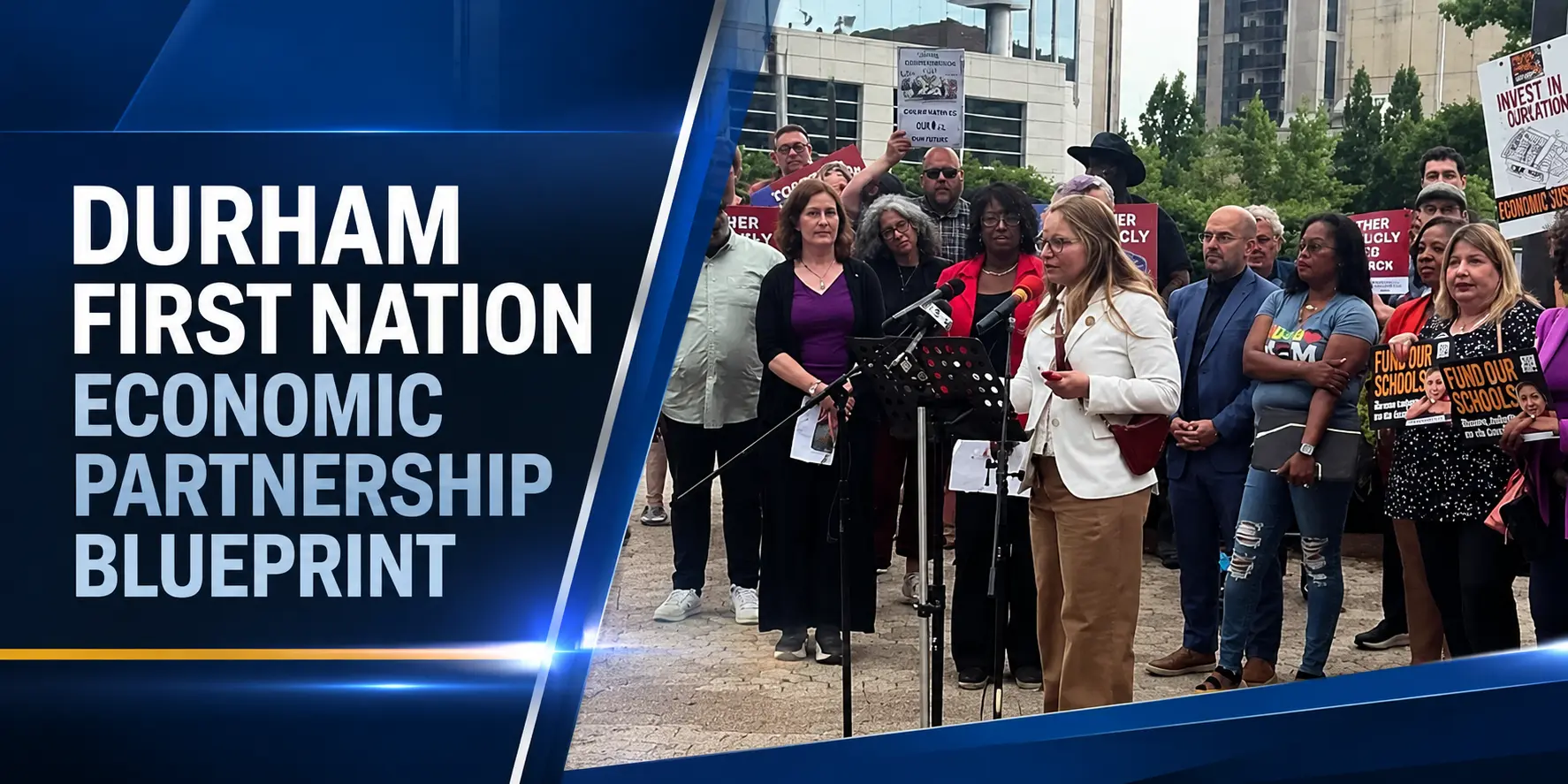
Durham Region and the Mississaugas of Scugog Island First Nation (MSIFN) have entered into a significant new partnership aimed at strengthening economic development, reconciliation, and long-term collaboration. The Durham First Nation Economic Partnership Blueprint is expected to serve as a model for other municipalities and Indigenous communities across Canada.
The Durham First Nation Economic Partnership Blueprint is part of the Community Economic Development Initiative (CEDI), a national program jointly delivered by the Council for the Advancement of Native Development Officers and the Federation of Canadian Municipalities. The initiative supports First Nations and neighbouring municipalities in creating equitable, respectful, and sustainable partnerships focused on economic development and land-use planning.


Durham Region and MSIFN were selected as one of only six partnerships participating in the Accelerated Phase IV Cohort of the program. The current phase began in 2025 and will continue through 2027. Officials believe the Durham First Nation Economic Partnership Blueprint will help create a stronger framework for cooperation while advancing shared goals and priorities.


Durham Region Chair John Henry described the partnership as an opportunity to demonstrate how reconciliation can move beyond discussion and become a practical reality. According to Henry, the Durham First Nation Economic Partnership Blueprint represents a shared commitment to building prosperity while strengthening relationships between Indigenous and municipal governments.
The initiative builds upon a milestone agreement signed in May 2025, when Durham Region and MSIFN formalized a bilateral government-to-government relationship. That agreement was based on mutual respect, reconciliation, and shared prosperity. The Durham First Nation Economic Partnership Blueprint expands on those principles by establishing structured collaboration and measurable outcomes.
Mississaugas of Scugog Island First Nation Chief Kelly LaRocca emphasized the importance of trust and cooperation throughout the process. She noted that the Durham First Nation Economic Partnership Blueprint creates opportunities to align priorities while supporting economic, cultural, environmental, and community development goals that benefit the entire region.
A key feature of the Durham First Nation Economic Partnership Blueprint is the development of a joint workplan that will guide future collaboration. The framework includes monthly working group meetings, bi-annual workshops, and access to specialized tools designed to strengthen partnerships and build capacity between the two governments.
Several priority areas have already been identified within the Durham First Nation Economic Partnership Blueprint. These include joint economic development initiatives, tourism opportunities, and cultural projects that promote regional growth and Indigenous heritage.
The partnership will also focus on clean energy projects and infrastructure planning. Officials say the Durham First Nation Economic Partnership Blueprint will encourage sustainable development while addressing future economic and environmental needs.
Environmental stewardship is another major component of the agreement. Through the Durham First Nation Economic Partnership Blueprint, both parties will work together on ecological restoration projects and land stewardship initiatives that combine Indigenous knowledge with municipal expertise.
Additional priorities include public art, placemaking, and place-keeping initiatives designed to celebrate local culture and strengthen community identity. By integrating these goals into the partnership, the Durham First Nation Economic Partnership Blueprint aims to create lasting benefits for residents throughout Durham Region.
By the conclusion of the program in 2027, Durham Region and MSIFN expect to have a fully developed action plan supported by open communication, measurable outcomes, and a sustainable long-term relationship. Leaders from both organizations believe the Durham First Nation Economic Partnership Blueprint could become a national example of successful collaboration between Indigenous communities and municipal governments.