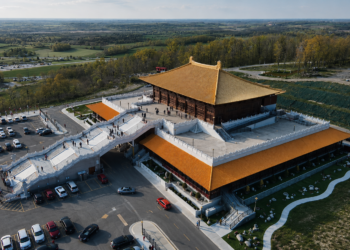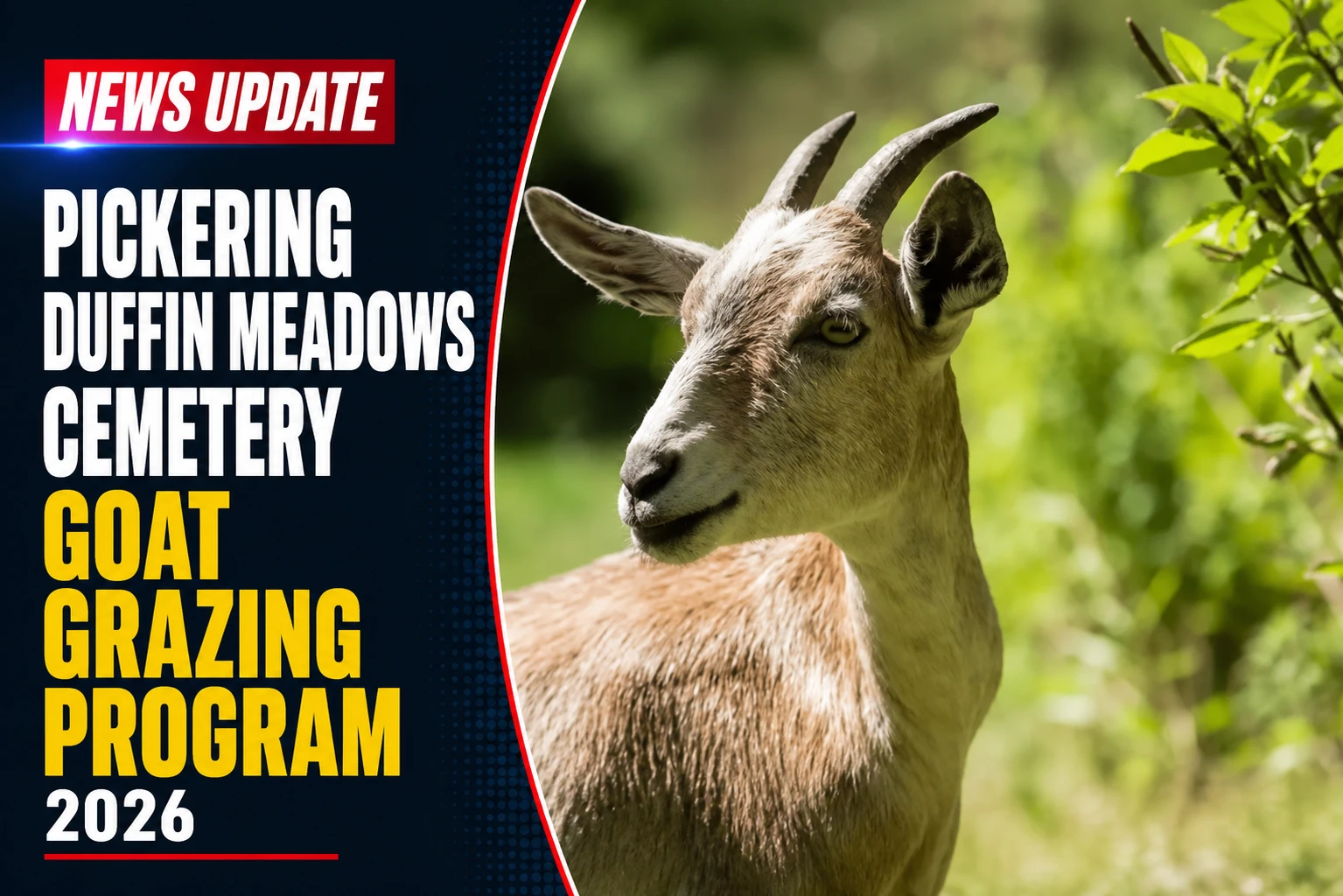
The environmental land stewardship and property maintenance network in the City of Pickering has introduced a biological alternative to traditional landscaping practices. Tracked under the central green initiatives directory The Pickering Duffin Meadows Cemetery Goat Grazing Program 2026, property logistics teams and conservation managers finalized the spring deployment schedules on Wednesday afternoon, June 17, 2026. In a strategic push to eliminate chemical herbicides and carbon-heavy machinery, a specialized herd of approximately 50 goats has been deployed to manage delicate vegetation zones across the local landscape.
The innovative program targets natural burial plots, using monitored grazing to revitalize native ecosystems while maintaining the quiet, reflective atmosphere of the cemetery grounds.


The Grazing Protocol and Environmental Action Plan
The eco-friendly property maintenance program relies on precise, short-term grazing windows designed to clear out aggressive weeds without harming the local ecosystem.


The underlying property services registries outline the operational specifications of the green initiative:
-
The Pilot Framework: Property Manager Jason Cabral confirmed that the goats will be introduced into the dedicated natural burial sections of both Duffin Meadows Cemetery in Pickering and Meadowvale Cemetery in Brampton, running across alternating spring and autumn cycles.
-
The Operational Timeline: The 50-head herd will rotate through each cemetery site twice a year, staying for about two days per visit. The animals graze inside a secure, portable fence grid under the constant supervision of a professional “eco-shepherd.”
-
The Botanical Objectives: By eating invasive plants down to the root, the herd creates optimal growing conditions for native wildflowers. This natural approach helps protect local pollinator populations while completely avoiding the use of gas-powered mowers or chemical weed killers.
Analyzing Property Maintenance Shifts and Soil Science Benefits
Property Services Director John Perotta highlighted that switching to grazing animals delivers a steady supply of high-nutrient organic fertilizer that helps rebuild long-term soil health.
| Landscaping Method Used | Carbon Footprint Metric | Weed Control Mechanism | Secondary Soil Health Impact |
| Gas-Powered Mowers | High carbon & noise output | Mechanical cutting blades | Packages soil down; strips nutrients |
| Chemical Herbicides | Chemical runoff risks | Targeted toxic sprays | Can damage helpful insects & pollinators |
| Goat Grazing Program | Zero emissions & quiet run | Natural biological consumption | Manure adds nitrogen & potassium |
The organic fertilizer dropped by the herd acts as a slow-release nutrient boost, creating a healthier, more resilient landscape that can better withstand summer droughts.
The corporate partnership with Goats in the City reflects a broader trend of local businesses adapting to eco-friendly land management practices that work alongside nature rather than fighting against it.
Visitors to the Pickering grounds are welcome to watch the herd at work from a respectful distance, with signs posted along the trail network explaining the environmental benefits of the program.
Durham Region residents looking to check upcoming grazing schedules, explore eco-friendly burial options, or review regional conservation programs can access the master property database online at mountpleasantgroup.com.