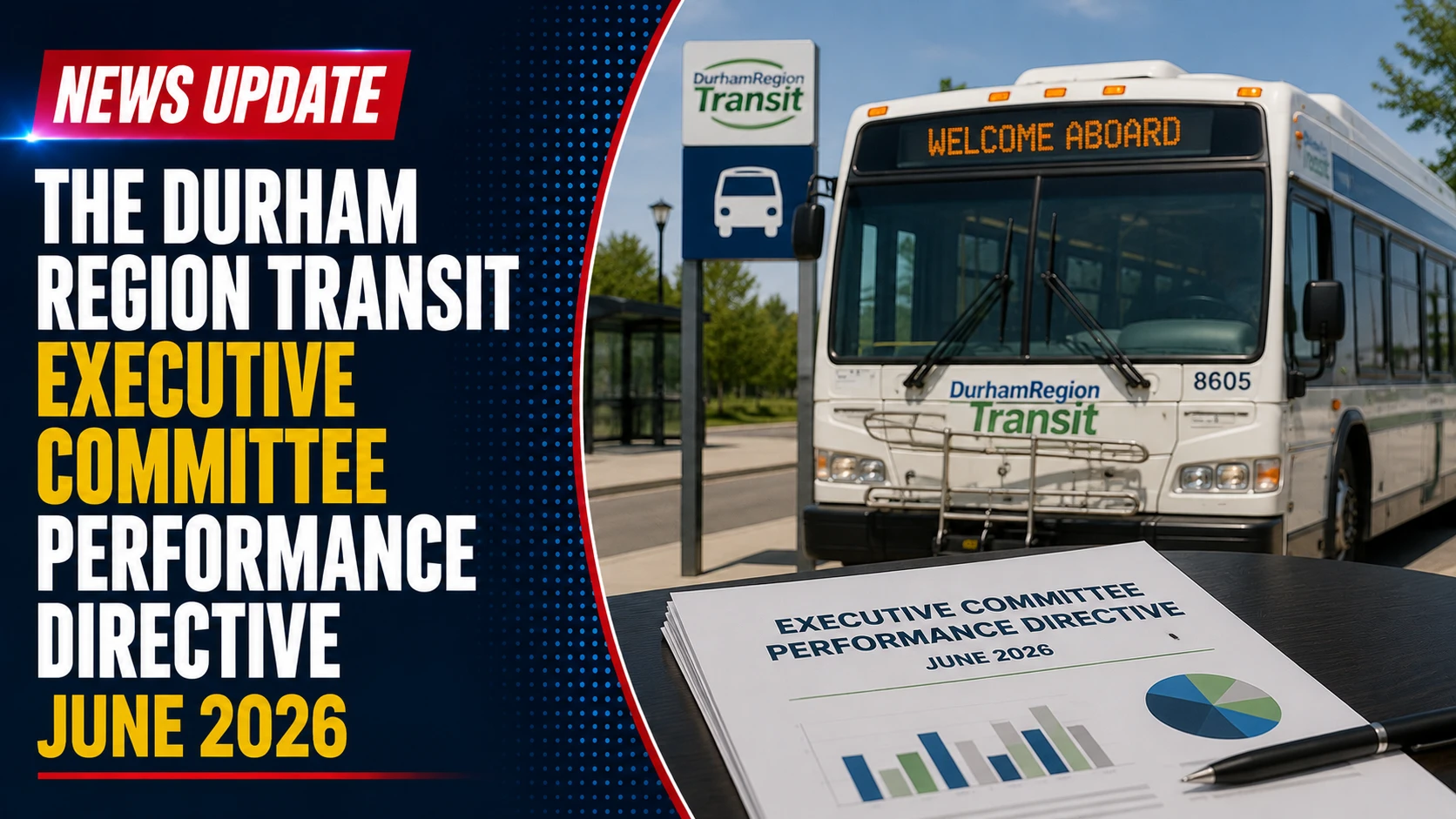
The executive governance and municipal logistics wings of Durham Region Transit (DRT), operating in compliance with the Regional Municipality of Durham’s long-term service growth framework, have ratified a comprehensive series of systemic operational modernizations. Tracked under the active administrative archive The Durham Region Transit Executive Committee Performance Directive June 2026, transit directors and regional planners finalized the strategic session outcomes on Monday, June 15, 2026. The policy sweep balances a full digital overhaul of accessibility trip-booking with upcoming summer fare increases aimed at stabilizing transit budgets amidst rapid population influxes.
The approved changes seek to immediately lower vehicle dispatch wait times, minimize call center volumes, and build a steady, self-sustaining workforce of transit mechanics from within the community.
Specialized Services Automation and the Via App Integration
The centerpiece of the committee’s technological push is a complete rewrite of how specialized, door-to-door transit services are managed, shifting from manual telephone booking to automated software grids.


The localized transit updates outline exactly how specialized paratransit operations will change:
-
The Intake Centralization: All specialized transit records are being pulled from legacy files and moved into a single, centralized digital database. A newly designed online web portal will allow clients to submit applications instantly without using paper forms.
-
The App-Based Booking Rollout: Throughout the summer and fall of 2026, riders can bypass calling agents entirely by using the DRT On Demand App (powered by Via). The initial pilot phase will roll out exclusively to customers registered with unconditional eligibility before expanding to the wider passenger base.
-
Live Vehicle Tracking: Once the software integration is complete, users can map out trips, view real-time vehicle arrival times, modify schedules, and cancel pickups directly from their smartphones.
Fare Adjustments, Web Migrations, and Trade Apprenticeships
To fund these advanced software systems and maintain a growing fleet of modern buses, the committee finalized a mandatory revenue adjustment. Starting July 1, 2026, a new fare pricing grid will take effect across the entire region, securing ridership revenues that cover more than a third of DRT’s total operating expenses.
| Monitored Operational Pillar | Active Project Influx Strategy | Targeted Performance Milestone | Long-Term Strategic Deliverable |
| Systemic Fare Pricing | July 1, 2026 Rate Inversion | Funding >33% of operating costs | Expanded routes and upgraded hubs |
| Corporate Web Infrastructure | Region-wide platform migration | Shift to unified, modern layout | Stable access to web tools |
| Active Performance Review | Real-time user feedback tracking | 117 point-to-point audits logged | Fixing next-stop audio systems |
| Apprenticeship Program | Paid training and mentorship lines | Graduates 3 certified mechanics | Fills critical trade shortages |
Transit General Manager Bill Holmes highlighted that passengers using a PRESTO card, virtual wallet, or digital E-Ticket will keep their travel costs down, saving regular commuters up to $10 a week compared to paying with cash.
To keep its expanding fleet running safely, the transit agency is leaning heavily on its updated Apprenticeship Program, which has already graduated three certified full-time mechanics since its launch last year.
At the same time, customer service teams are using real-time rider feedback to resolve common issues, focusing on fixing next-stop automated announcements on buses and clearing litter from local bus stops.
Durham residents can view the complete Transit Executive Committee agenda, check the upcoming July 1 fare tables, or trace bus routes by exploring the centralized transit platform online at durhamregiontransit.com, or by dialing the regional service line at 311.