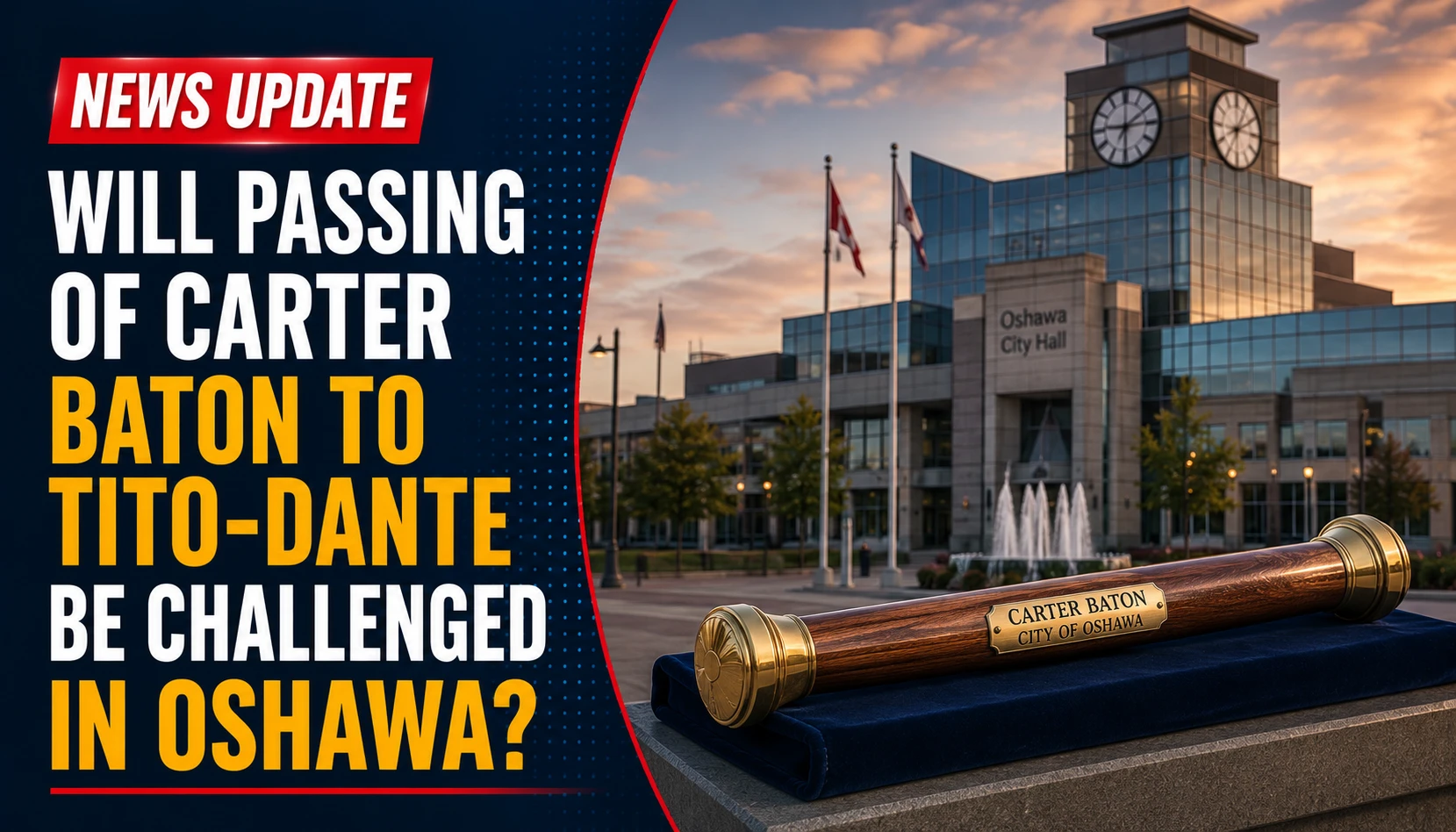
The question of political succession in Oshawa is drawing attention as speculation builds about whether the passing of the Carter political legacy to Tito-Dante will face a formal challenge in the upcoming municipal election season.
The Carter name has been synonymous with Oshawa politics for decades, with multiple members of the family having served in elected office at various levels of government. The prospect of the Carter baton being passed to a new generation has generated both support and skepticism among Oshawa voters and political observers.
Tito-Dante, who has been positioning himself as the heir to the Carter political legacy, faces questions about whether his candidacy will be welcomed by the party establishment or whether internal divisions could lead to a contested nomination. The dynamics reflect broader tensions within Oshawa politics, where established political families have long played a dominant role in shaping the city’s direction.
Supporters of Tito-Dante argue that he brings fresh energy and perspective while maintaining the community connections and institutional knowledge that the Carter name represents. They point to his involvement in local initiatives and his understanding of the issues facing Oshawa residents as evidence that he is ready to step into a larger political role.
Critics, however, have raised concerns about political dynasties and the concentration of power within a small number of families. Some community members have called for a more open and competitive political process that gives newcomers and diverse voices a fair chance at elected office.
The potential challenge to Tito-Dante’s political aspirations comes at a time when Oshawa is undergoing significant change. The city’s population is growing, its downtown is being revitalized and the economic landscape is shifting away from its traditional manufacturing base. These changes are creating new political dynamics and bringing new voices into the civic conversation.
The municipal election scheduled for October 2026 will be a pivotal moment for Oshawa politics. With several incumbent councillors and the mayor’s office potentially in play, the election could reshape the city’s political landscape for years to come.
Whether the Carter legacy proves to be an asset or a liability for Tito-Dante remains to be seen. Political analysts note that name recognition alone is no longer sufficient to win elections in an era of increased voter engagement and access to information through social media and digital platforms.
Community engagement will be key in the lead-up to the vote. Candidates who can connect with residents on issues such as affordable housing, transit expansion, economic development and community safety are likely to gain the most traction. Oshawa’s diverse population means that successful candidates will need to appeal to a broad coalition of voters across the city’s varied neighbourhoods and communities.
The coming months are expected to bring clarity as potential candidates announce their intentions and the political landscape takes shape. For Oshawa residents, the question of who will lead their city into the future is one of the most important local political stories of the year.
As the election approaches, voters will have the opportunity to assess all candidates on their merits, their platforms and their vision for Oshawa’s future. The passing of any political baton, whether challenged or not, ultimately rests in the hands of the electorate.