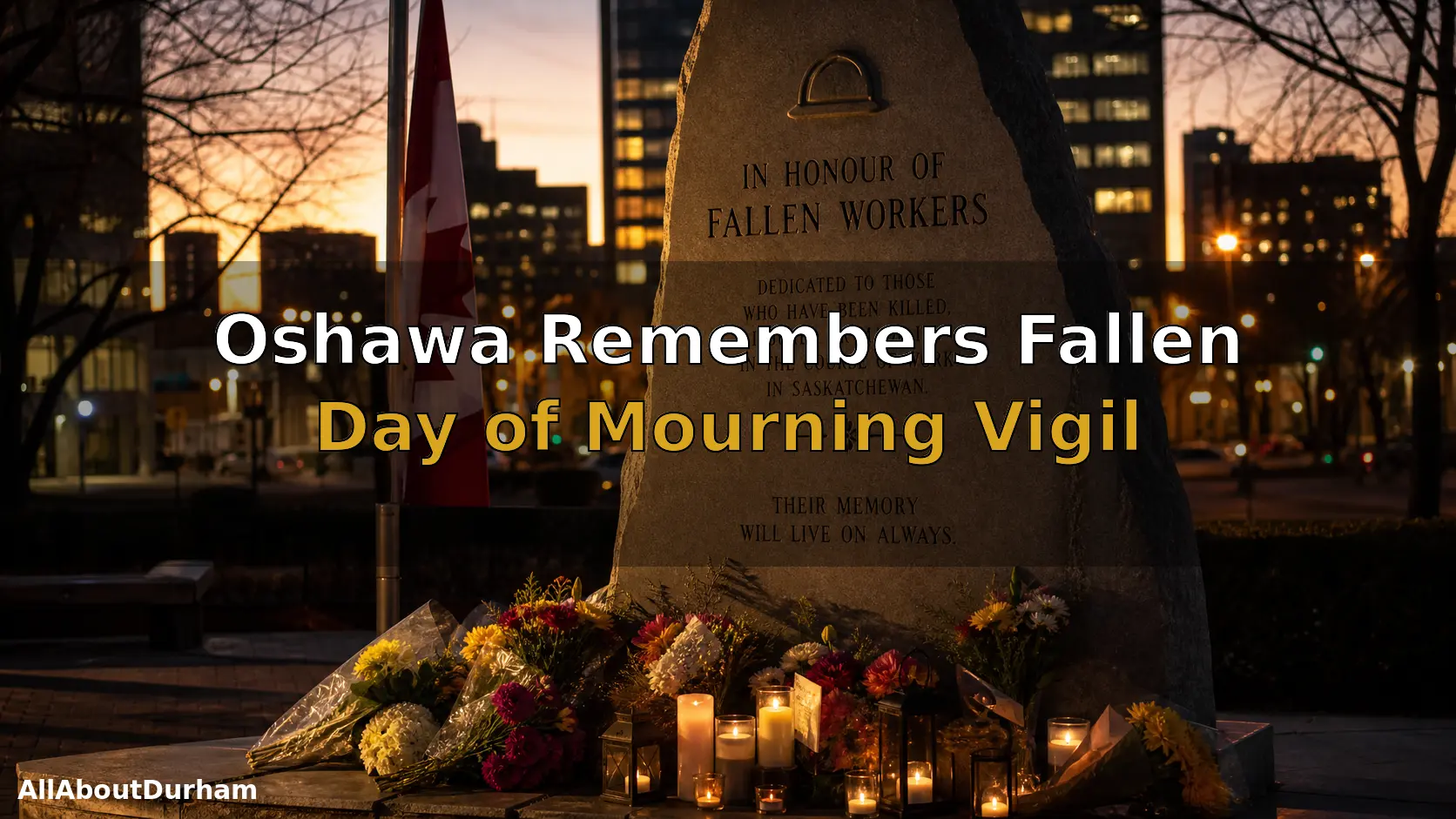
A vigil was held in downtown Oshawa on April 28 to mark the annual National Day of Mourning, honouring workers who have been killed, injured, or fallen ill on the job.
The event was organized by the Durham Regional Labour Council and took place at the Fallen Workers Monument Parkette, where community members gathered to lay flowers and pay their respects.


The National Day of Mourning, observed every year on April 28, was first recognized by the Canadian Labour Congress in 1991 and has since been adopted by more than 100 countries worldwide. It serves as a solemn reminder of the human cost of workplace accidents and occupational disease.


In Durham Region, the day carries particular significance given the area’s deep industrial roots. Oshawa’s history is closely tied to the labour movement, most notably the 1937 General Motors strike where 4,000 workers walked off the job to secure historic rights that would go on to shape labour standards across Canada.
The Fallen Workers Monument in downtown Oshawa stands as a permanent tribute to those who lost their lives in workplace incidents. Each year, the monument serves as the focal point for the region’s Day of Mourning ceremonies.
Workplace fatalities remain a serious concern across Ontario. According to the Workplace Safety and Insurance Board, dozens of workers die on the job in the province each year, with thousands more suffering injuries or developing occupational illnesses.
The Durham Regional Labour Council, which represents unionized workers across the region, has been a consistent advocate for stronger workplace safety measures. The council organizes the annual vigil as both a memorial and a call to action for improved protections for all workers.
The ceremony included remarks from labour leaders and community figures, with attendees laying flowers at the monument in memory of those who never made it home from work.
Events like the Day of Mourning serve not only to remember those who have been lost but also to push for the changes needed to prevent future tragedies. For the Durham Region labour community, the fight for safer workplaces remains as relevant today as it was during the landmark strikes that shaped the region decades ago.
This year’s ceremony also comes at a time of renewed focus on workers’ rights across Ontario, with ongoing debates about workplace safety regulations, mental health support, and the evolving nature of work in a changing economy. As Durham Region continues to grow and attract new industries, ensuring that worker safety keeps pace with economic development remains a priority for labour advocates and community leaders alike.