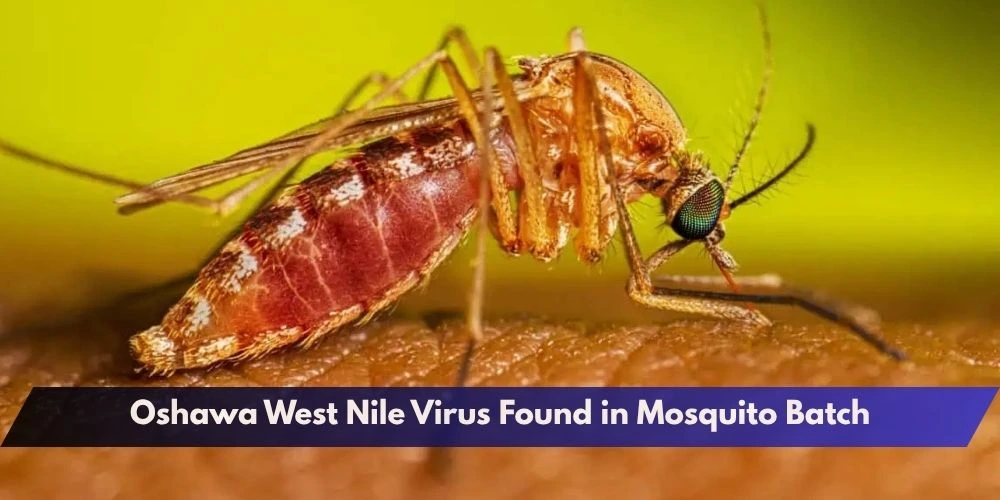
Oshawa residents are being advised to take precautions against mosquito bites after the Oshawa West Nile virus was detected in a batch of adult mosquitoes collected at a local trap site. Durham Region Health Department announced the positive result on July 24, 2026, confirming the second West Nile virus-positive mosquito pool recorded in the region this season. The first positive batch was identified in Ajax earlier in July.
The Health Department operates mosquito traps throughout Durham Region as part of its seasonal surveillance program. Adult mosquitoes are trapped weekly from mid-June until mid-to-late September, then sent to an accredited laboratory for identification and West Nile virus testing. As of the July 24 update, one positive pool had been recorded at an Oshawa trap site and one at an Ajax site.


What the Oshawa West Nile Virus Finding Means
A positive mosquito batch does not mean that every mosquito in Oshawa carries West Nile virus or that a human infection has been confirmed. It indicates that the virus is circulating among mosquitoes in the area and that residents should continue taking routine preventive measures.


West Nile virus mainly affects birds but can spread to humans through the bite of an infected mosquito. Mosquitoes can become infected after feeding on a bird carrying the virus. Durham Region says the disease is not transmitted directly from birds to people and generally does not spread from one person to another.
Approximately 70 to 80 per cent of people infected with West Nile virus do not develop symptoms. Those who become ill may experience headaches, body aches, joint pain, vomiting, diarrhea or a rash. Symptoms usually develop between two and 15 days after infection.
Less than one per cent of infected people may develop severe neurological illnesses, including meningitis or encephalitis. Warning signs can include a severe headache, high fever, stiff neck, confusion, drowsiness, nausea, vomiting or difficulty swallowing. Anyone concerned about serious symptoms should seek medical advice.
How Oshawa Residents Can Reduce Their Risk
Durham Region Health Department says preventing mosquito bites is the most effective way to lower the risk of West Nile virus infection. Residents are advised to use insect repellent containing DEET or icaridin and follow the product instructions carefully.
People spending time outdoors, particularly around dawn and dusk when mosquitoes are often most active, should consider wearing shoes, socks, long sleeves, full-length pants and light-coloured clothing. Window and door screens should also be checked for holes or damage that could allow mosquitoes to enter homes.
Standing water should be removed from properties because it can provide mosquito breeding sites. Residents should regularly empty birdbaths, buckets, flowerpot trays, toys, pool covers and other containers that collect rainwater.
Durham Region also conducts mosquito-control work by applying larvicide to roadside catch basins and stagnant surface-water sites. The Health Department traps and tests adult mosquitoes and investigates reported human cases as part of its wider surveillance program.
The Oshawa West Nile virus detection is the city’s first positive mosquito pool reported in 2026. Because the latest finding involves a new municipality and testing result, it is a separate health update rather than a duplicate of the earlier Ajax announcement.
Residents can review updated mosquito surveillance results and prevention guidance through Durham Region Health Department. The department also provides information through the Durham Health Connection Line for residents seeking additional advice about West Nile virus and mosquito control.