








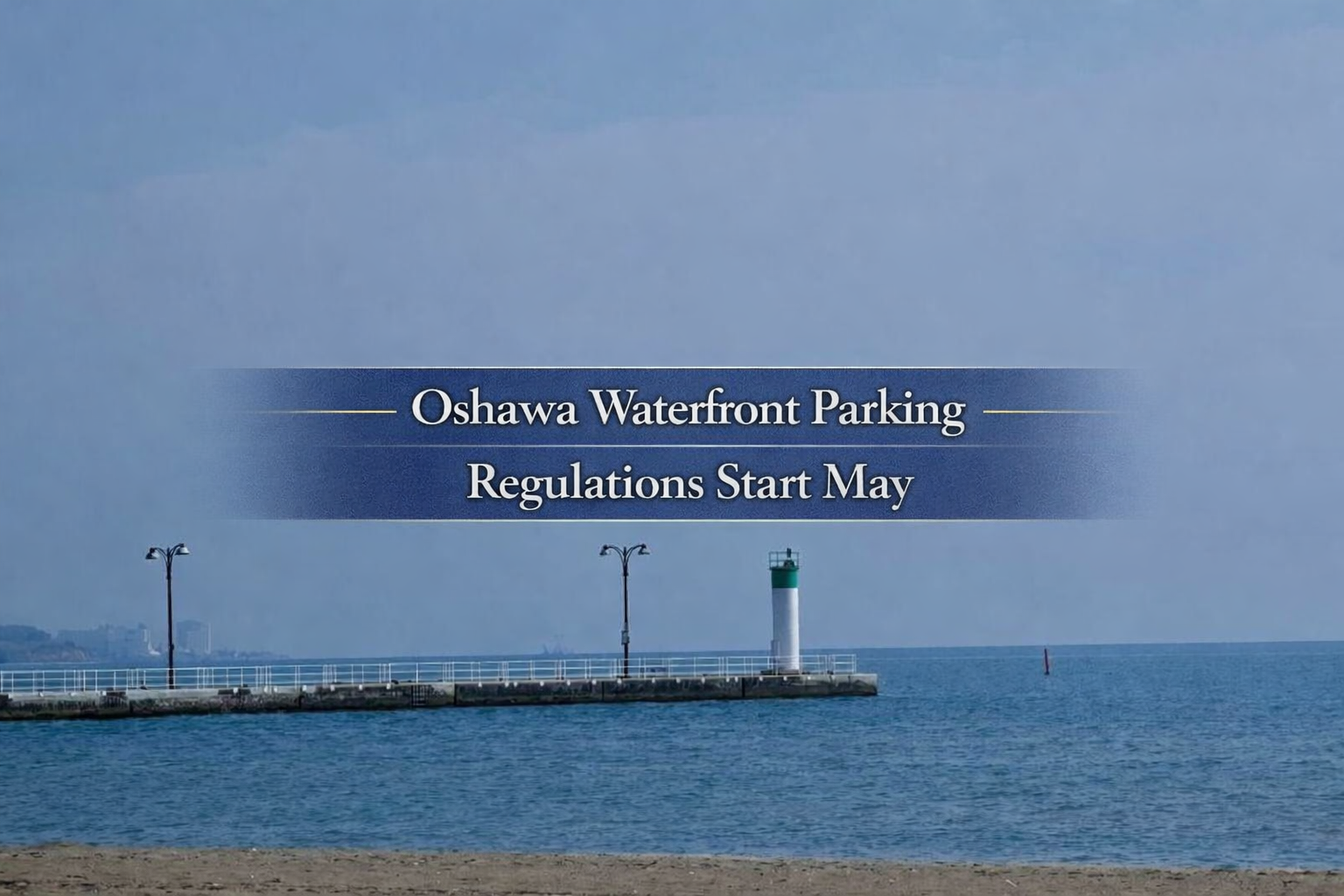
New Oshawa waterfront parking regulations are set to take effect this spring, impacting visitors to Lakeview Park and Ed Broadbent Waterfront Park as the city prepares for increased seasonal traffic.
The City of Oshawa has announced that from May 15 to October 15, 2026, paid parking will be enforced at both waterfront parks during weekends, public holidays, and city events. The move aims to reduce congestion and ensure that residents have better access to these popular outdoor spaces during peak periods.


Under the new system, Oshawa residents will still be able to park for free, but they must register for a waterfront parking permit in advance. Registration opens on April 1, and applicants must provide proof that their vehicle is registered to an Oshawa address.

To qualify, residents will need documents such as a vehicle registration, along with proof of residency like a driver’s licence, utility bill, lease agreement, or tax document. Once registered, the permit allows free parking for the entire season, regardless of who is driving the registered vehicle.
Local business owners and employees using company vehicles may also qualify for free parking, provided the business is located within Oshawa.
For non-residents or unregistered vehicles, a flat parking fee of $20 will apply. Drivers who fail to comply with the new rules could face fines ranging from $40 to $80, particularly for repeat violations.
The paid parking program will also be in effect during major holidays, including Victoria Day, Canada Day, Labour Day, and Thanksgiving Monday, as well as during select city events. These include planned activities such as an Indigenous cultural celebration on May 30 and the “Events in the Park” series scheduled throughout August at Ed Broadbent Park.
City officials say the new Oshawa waterfront parking regulations are designed to better manage parking demand as visitor numbers increase during warmer months. The waterfront parks are among the city’s most popular recreational destinations, especially during summer weekends and public events.
Ward 5 Councillor Brian Nicholson noted that revenue generated from the paid parking program will be reinvested into the parks. Funds will be used for infrastructure upgrades, maintenance, and equipment replacements, helping to improve the overall visitor experience.
The city also acknowledged that some individuals may have unique circumstances, such as students, non-resident property owners, or those with leased or rental vehicles. These individuals are encouraged to contact Service Oshawa to determine their eligibility for parking permits.
It’s important to note that all permits issued for 2026 will expire on October 15 and must be renewed annually.
The introduction of these regulations reflects Oshawa’s efforts to balance accessibility for residents while managing increasing demand at its waterfront locations.