Residents in the community of Newcastle are voicing strong opposition to a proposed residential development that would bring more than one thousand new housing units to Wilmot Creek Drive, citing serious concerns about traffic congestion, emergency vehicle access, and flooding risks that they believe have not been adequately addressed by the developer or the municipality in their current planning documents submitted for review.
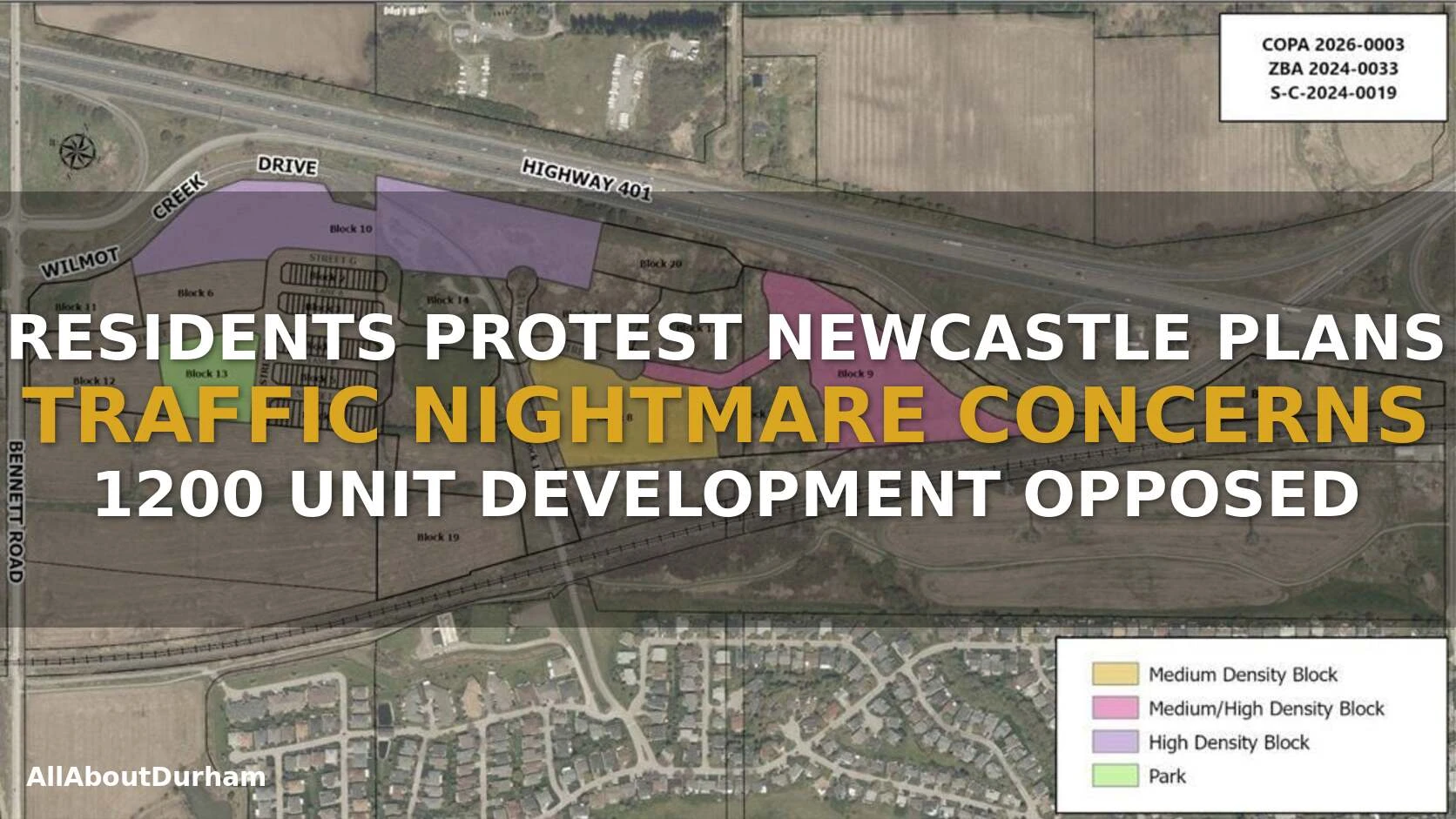
The Newcastle development traffic protest comes as several local residents spoke out forcefully against plans for a major construction project at 6 Wilmot Creek Drive in Newcastle, located within the Municipality of Clarington in Durham Region. The ambitious proposal calls for the construction of 1,293 residential units, which would include 102 townhouse units and 18 separate apartment buildings spread across the large property that is currently undeveloped land.


The scale of the proposed development has alarmed many existing residents who fear that the local infrastructure in the area simply cannot support such a dramatic increase in population density. Traffic along Wilmot Creek Drive and surrounding roadways is already a significant concern for homeowners in the community on a daily basis, and the addition of hundreds of new vehicles from the proposed residential units would substantially worsen an already problematic traffic situation that residents deal with every day.


During recent public meetings, residents expressed deep frustration over what they perceive as a lack of meaningful consultation and insufficient planning for the infrastructure improvements needed to support the new community. The Newcastle development traffic protest has highlighted the growing tension between the urgent need for new housing across Durham Region and the legitimate concerns of existing residents about maintaining safe and livable conditions in their established neighbourhoods and communities.
Emergency vehicle access has emerged as a particularly critical issue in the ongoing debate, with residents warning that the current road network may not provide adequate routes for ambulances, fire trucks, and police vehicles during peak traffic periods throughout the day. The potential for significantly delayed emergency response times has become one of the most emotionally charged aspects of the entire discussion, with residents pointing out that mere minutes can make the difference between life and death in serious medical emergencies that require immediate attention.
Flooding is another major concern that residents have raised repeatedly in connection with the large development proposal and its potential impact on the local watershed. The Newcastle area has experienced significant flooding events in recent years, and homeowners worry that extensive new construction could worsen existing drainage problems by replacing natural absorbent surfaces with impermeable building materials and paved areas throughout the development site.
The Municipality of Clarington is expected to review the development proposal in the coming weeks, with residents demanding that council thoroughly examine all traffic studies, environmental impact assessments, and infrastructure capacity reports before making any decisions on the controversial project that could reshape the community for decades.
As Durham Region continues to experience rapid population growth and increasing demand for new housing across all municipalities, the Newcastle development traffic protest serves as an important reminder that new development must always be accompanied by thoughtful and comprehensive infrastructure planning that protects the safety and quality of life of all residents.