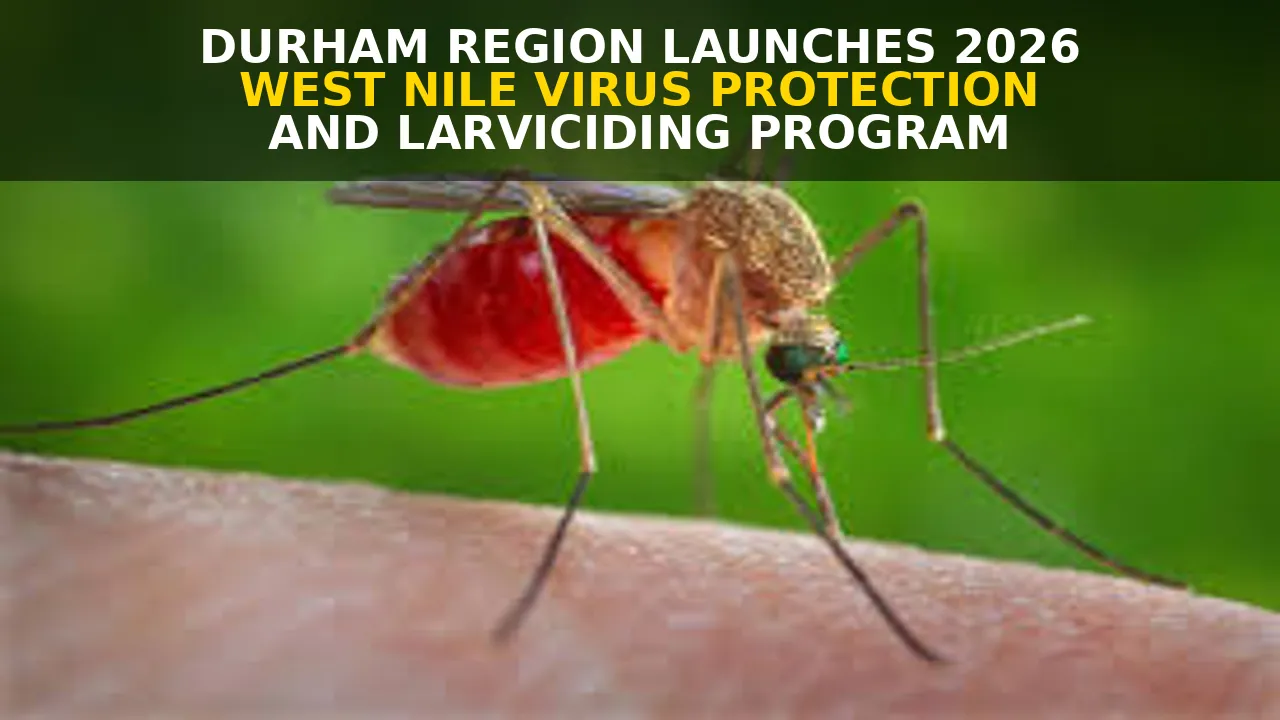
As the spring season progresses, the Durham Region Health Department is officially kicking off its 2026 surveillance and control efforts to combat the spread of the West Nile virus. This year, officials are introducing a key administrative change that residents need to be aware of: the Region will no longer be mailing out paper forms to private property owners. Instead, any resident who requires the application of larvicide for West Nile virus in catch basins located on their private land must now complete their request through a new online application system. This shift to a digital-first approach is part of a broader effort to streamline the region’s public health response.
The official 2026 West Nile virus (WNV) program is scheduled to run between May 11 and June 8. During this window, health officials will engage in rigorous surveillance of larval mosquito activity and the strategic administration of larvicide for West Nile virus in both municipal catch basins and standing surface water sites. Additionally, adult mosquito trapping will be conducted across the region to test for the presence of the virus. This proactive monitoring is critical, especially following the 2025 season where Durham reported 21 human cases of the virus and identified 26 positive mosquito batches through its trapping network.
West Nile virus is a mosquito-borne disease that is transmitted to humans through the bite of an infected mosquito. While it does not spread from person to person, the risk remains significant in areas with high concentrations of stagnant water. Health officials emphasize that the most effective way to lower the spread is to eliminate breeding sites. Beyond applying for professional larvicide for West Nile virus treatment, residents are urged to clear roof gutters, drain water from wading pools and bird baths, and ensure that swimming pools and hot tubs are properly maintained. Even small amounts of water in unused tires or ceramic pots can serve as a nursery for mosquito larvae.
For those spending time outdoors, the Health Department recommends several personal precautions. Wearing light-colored clothing with long sleeves and full-length pants is advised, particularly during the peak mosquito hours between dusk and dawn. The use of Health Canada-approved insect repellents containing DEET or Picaridin is also a primary line of defense. Furthermore, ensuring that window and door screens are in good repair can prevent mosquitoes from entering homes. Maintaining a tidy backyard by trimming hedges and turning over compost piles regularly can also reduce the local mosquito population.
The transition to an online request form for private property larviciding marks a new phase in the region’s health strategy. By taking these preventive measures now, the community can collectively work to reduce the record-setting numbers seen in the previous year. Residents can find the digital application form on the Durham Region Health Department website to ensure their property is protected before the height of the summer mosquito season begins.
With the Region moving to an online-only system for requesting larvicide for West Nile virus, do you think this digital shift will be as effective in reaching all property owners, or could it leave some residents unaware of their options for mosquito control?