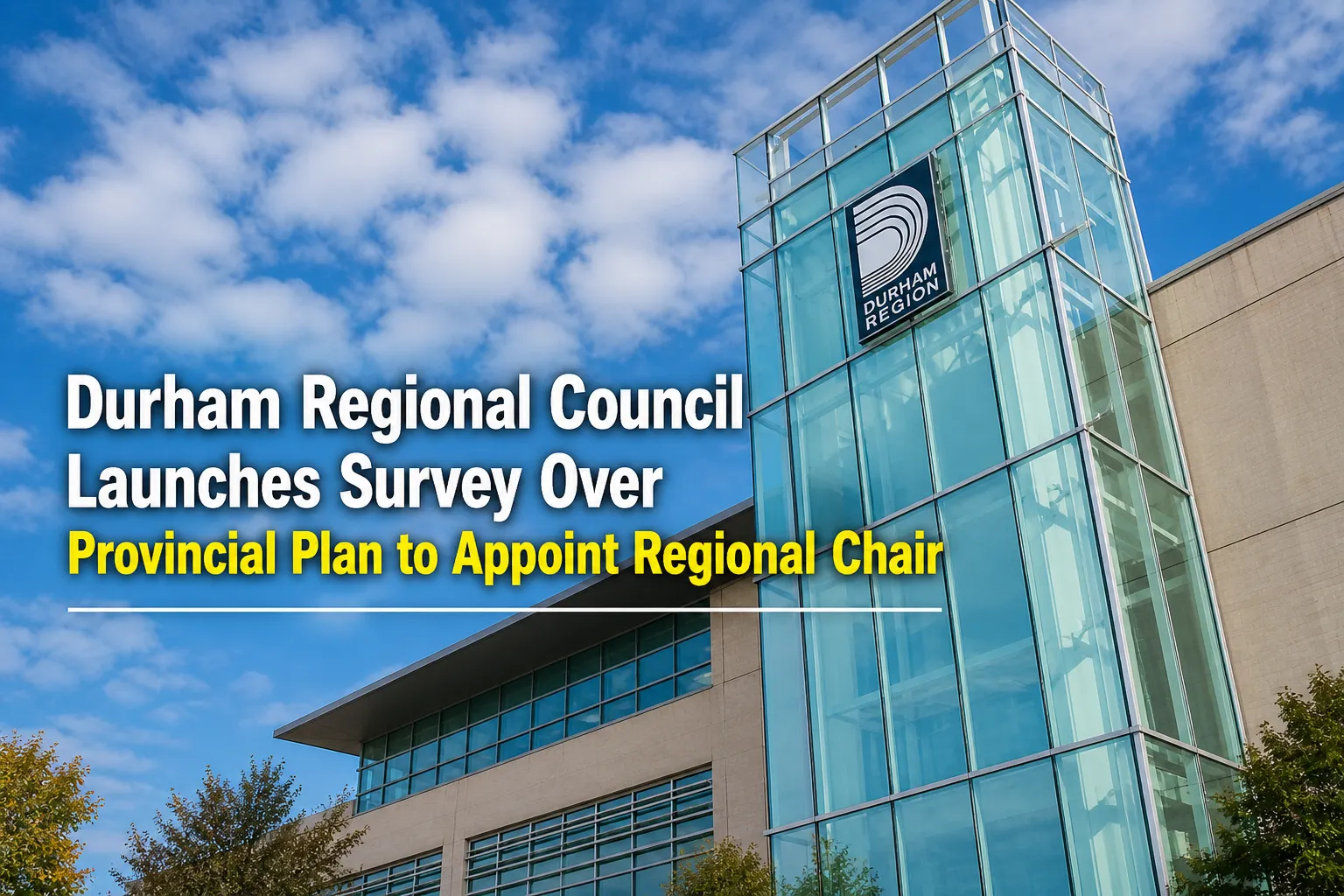
A significant shift in local democracy is on the horizon as Durham Regional Council invites residents to voice their opinions on the Durham Regional Chair Appointment Survey. This public consultation follows the introduction of provincial Bill 100, also known as the Better Regional Governance Act, 2026. If passed, the legislation would strip residents of their right to directly elect the Regional Chair and CEO—a position currently held by John Henry—and instead grant the Ontario Minister of Municipal Affairs and Housing the power to appoint leadership in eight fast-growing regions.
The proposed changes have sparked a debate over municipal autonomy and local representation. John Henry, who currently serves as the elected Chair and CEO of Durham Region, has been vocal about his opposition to the bill. In a recent statement, Henry characterized the move as a “disservice” to the community, arguing that residents deserve a direct voice in choosing the leadership that oversees regional services, infrastructure, and budgeting. While Henry has expressed his intention to continue serving the community in other capacities should the bill pass, the uncertainty regarding his potential replacement by a provincial nominee remains a focal point of local concern.


The Durham Regional Chair Appointment Survey serves as the Council’s formal mechanism to gauge community sentiment before the bill proceeds. Under the Better Regional Governance Act, 2026, the Minister would gain the authority to appoint chairs not only in Durham but also in York, Halton, Muskoka, Niagara, Peel, Waterloo, and Simcoe County. Furthermore, these appointed leaders would be granted “strong chair” powers, similar to the “strong mayor” powers recently introduced in several Ontario cities, effectively consolidating executive authority within the regional government.


Durham residents have a two-week window to participate in the Durham Regional Chair Appointment Survey, which is live from May 4 to May 18, 2026. The survey is concise and focuses on whether the public believes the head of the regional government should remain an elected position. Regional Council intends to use the data gathered from this outreach to form a Council Information Package. This document will serve as the official collective voice of Durham Region and will be forwarded to Queen’s Park to influence provincial deliberations on Bill 100.
The outcome of this legislative battle could redefine the relationship between the province and its upper-tier municipalities. Proponents of the bill suggest it will lead to “strategic alignment” and more efficient decision-making for provincial priorities like housing and transit. However, for many in Durham, the Durham Regional Chair Appointment Survey is an essential stand for maintaining a direct link between the taxpayer and the executive office. Residents are urged to visit the region’s official website to ensure their perspective is included in the final report to the provincial government.