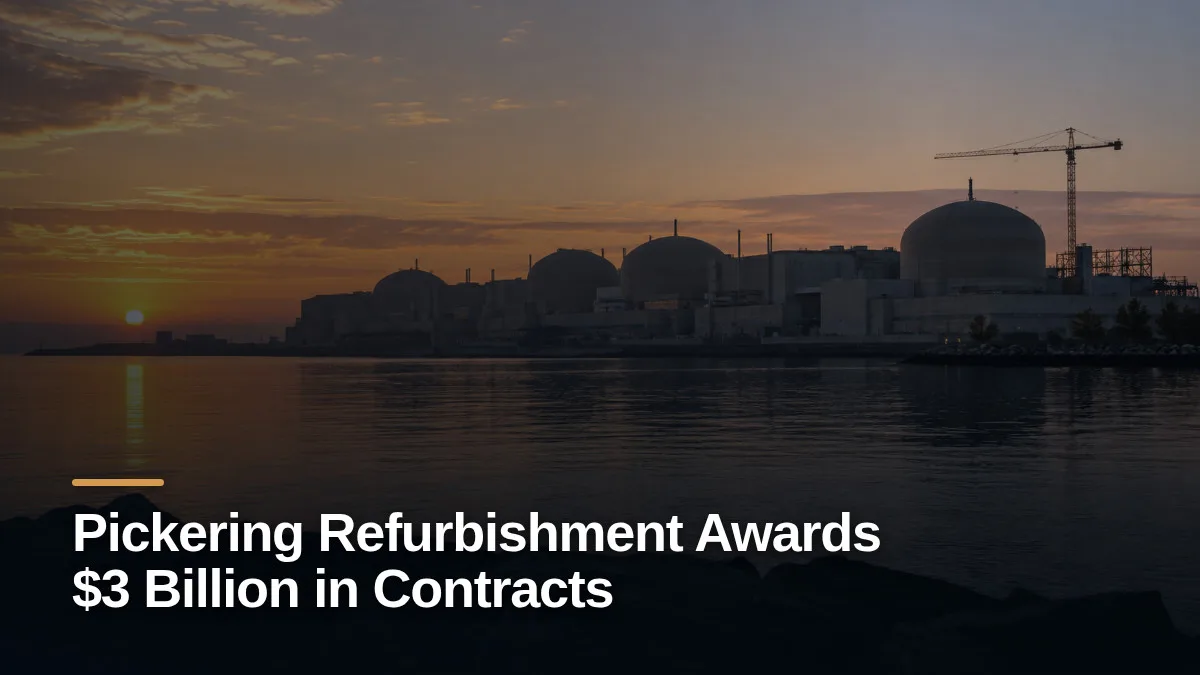
Two major Pickering refurbishment contracts worth a combined $3 billion have been awarded as construction begins on the project to renew four reactors at the Pickering Nuclear Generating Station.
The Ontario government announced the contracts on September 21. Aecon Group and Candu Energy, an AtkinsRéalis company, received a contract valued at approximately $1.7 billion for the execution phase of the Unit 5 retube, feeder and boiler replacement. Aecon and Siemens Energy Canada received a $1.3-billion turbine-generator replacement contract.


Work covers reactor and turbine systems
The turbine contract includes installing 14 steam-turbine rotors, rewinding stators, overhauling four generators and supplying new auxiliary, control and monitoring systems. The reactor contract covers the specialized work needed to replace major components in Unit 5.


The awards are a substantial new stage in a project that All About Durham has previously reported. Earlier coverage detailed the planned outage, overall $26.8-billion budget and training facility. The new announcement identifies the firms selected for two of the largest work packages and marks the start of site construction.
Ontario Power Generation plans to refurbish Pickering B Units 5 through 8. The four units are scheduled to leave service by the end of September 2026. Reactor refurbishment remains subject to final Canadian Nuclear Safety Commission approval expected in January 2027.
Training centre will prepare 2,800 workers
A 200,000-square-foot retube, feeder and boiler replacement training and mock-up centre is being built at the Pickering site. More than 2,800 skilled-trades workers are expected to train there before carrying out reactor work.
The province estimates refurbishment activity will support about 30,500 jobs annually during construction. It projects more than $17 billion in economic activity across Durham Region and Ontario, while more than 90 per cent of project spending is expected to remain in Ontario and Canada.
When the project is complete, the renewed station is expected to produce up to 2,200 megawatts, enough electricity for roughly 2.2 million homes. The refurbishment is intended to extend the operating life of the four units by as much as 38 years.
The project also involves replacing 1,520 fuel channels and 48 boilers and constructing a 1.5-kilometre deep-water intake. Units are expected to return to service on a staggered schedule in the 2030s.
The Canadian Nuclear Safety Commission is responsible for the regulatory decision on the planned reactor work. The contract awards and preparatory construction do not replace that approval process.