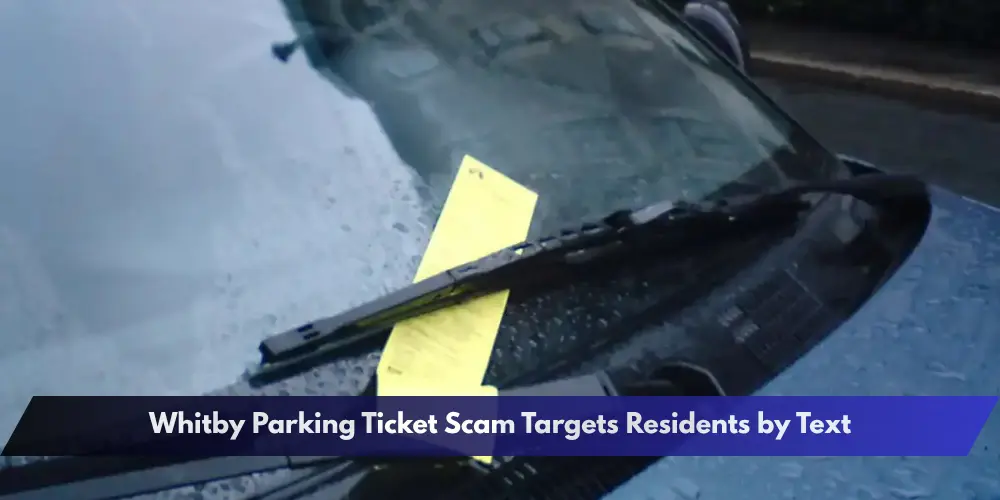
The Whitby parking ticket scam is targeting residents through text messages claiming that money is owed for an outstanding parking violation. The Town of Whitby says it does not send text messages about parking tickets and is warning residents not to open links or provide personal information.
Whitby issued the warning after learning that residents had received suspicious payment messages. The municipality did not disclose how many people received the texts or whether anyone lost money.

How the Whitby Parking Ticket Scam Works


The fraudulent messages are designed to look like official municipal notices. They may claim that a parking balance is overdue and direct the recipient to a website where payment can supposedly be made.
This type of text message fraud is commonly known as smishing, which is a form of phishing delivered through text messages. Scammers often impersonate governments, financial institutions and businesses. They may use urgent language to pressure recipients into clicking a link or providing personal and financial information.
Whitby says it does not communicate about parking violations or tickets through text messages. Anyone who receives such a message should not click the link, reply to the sender or enter credit card, banking or personal information.
Residents who are unsure whether they have a legitimate ticket should contact the Town of Whitby through its official website or published telephone number. The town provides authorized methods for paying or disputing parking penalties.
Similar Warnings Issued in Oshawa and Clarington
Other Durham Region municipalities have also warned residents about parking penalty confusion and fraudulent payment requests.
In May, Oshawa reminded residents how to identify an official city Administrative Monetary Penalty. A legitimate Oshawa penalty includes the City of Oshawa logo, an option to dispute the penalty and a seven digit penalty number.
Official penalties may be issued by municipal enforcement officers, Durham Regional Police officers or certified private parking enforcement officers.
Oshawa published the notice after receiving reports of confusion involving tickets issued in private parking lots by companies that were not registered with the city. That issue concerns parking ticket verification but is different from Whitby’s current text message scam warning.
Clarington also warns residents that it does not contact people by text message or email about outstanding parking tickets. The municipality advises recipients not to click suspicious links or provide personal or financial information.
What to Do After Receiving a Scam Text
People who receive a suspicious text should not click any links or download attachments. Fraudulent messages can be used to steal payment details, passwords and other personal information. Some links may also install harmful software on a device.
Recipients can take a screenshot of the message, block the sender and report the attempted fraud to the Canadian Anti Fraud Centre. Reports can be submitted by victims or by people who witnessed an attempted scam.
Anyone who entered credit card or banking information should contact their financial institution immediately. Passwords connected to compromised accounts should also be changed.
People who believe their identity has been stolen may need to contact the police and notify Canada’s major credit bureaus.
Residents should verify parking penalties by visiting their municipality’s official website directly instead of using a link contained in an unexpected message.
The Whitby parking ticket scam warning applies specifically to text messages claiming to collect municipal parking fines. Legitimate parking penalties should always be verified through official municipal payment and dispute channels.