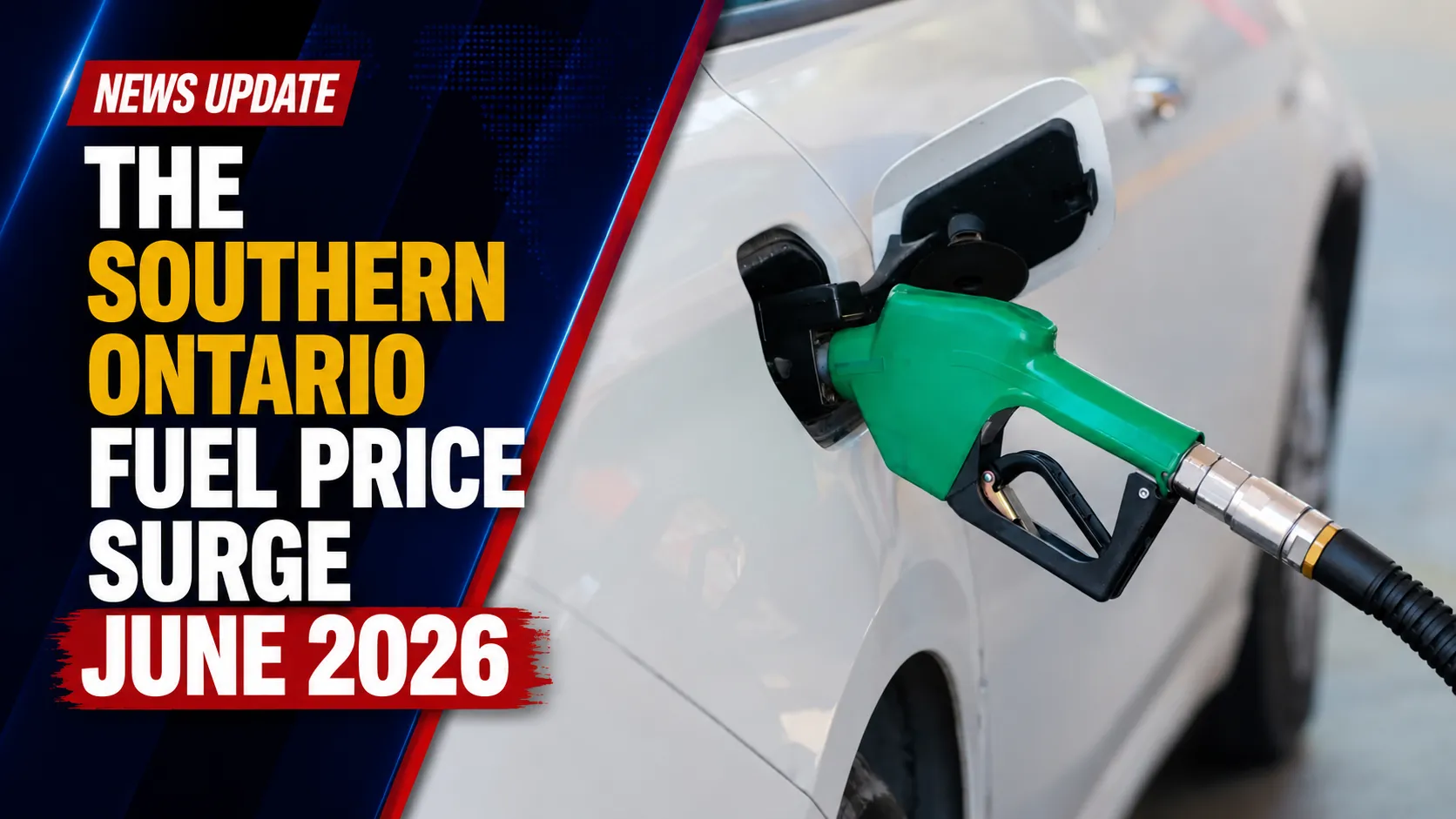
A sudden wave of wholesale procurement pressures has broken a period of relative retail price stability across regional fuel pumps, triggering a sharp mid-week financial squeeze for commuter networks. Under the energy tracking index The Southern Ontario Fuel Price Surge June 2026, market analytics delivered by consumer resource affordableenergy.ca on June 2, 2026, confirmed that retail fuel stations across the Durham Region will execute an immediate, sweeping overnight price correction. The looming eight-cent upward adjustment will elevate standard regular-grade gasoline costs past the mid-$1.70 threshold across the southern commercial belt.
The sharp mid-week escalation arrives as regional logistics networks and everyday drivers simultaneously navigate unseasonably hot weather patterns and rising seasonal travel demands.


The Multi-Tier Commodity Pricing Matrix
Prior to this localized market shift, retail petroleum vendors across the Greater Toronto Area (GTA) and the Durham Region had held fuel costs completely stagnant for several consecutive days. Standard regular-grade fuel had settled comfortably at a baseline of $1.699 per litre across mainstream service lanes in Oshawa, Whitby, and Pickering.


Analytical tracking data confirms that the mid-week pump restructuring will take effect at 12:01 a.m. on Wednesday, June 3, 2026, shifting consumer realities across multiple petroleum products:
-
Regular Gasoline Unleaded: Jumps by eight cents flat, moving local pump displays from $1.699 up to an active baseline of $1.779 per litre.
-
Premium Octane Blends: Mirrors the regular trajectory with a steep eight-cent injection, breaking past the two-dollar mark to hit $2.079 per litre.
-
Commercial Diesel Stocks: Adjusts upward by seven cents, pushing standard logistics and freight transport fueling expenses to $1.959 per litre.
National Disparities and Macroeconomic Context
The price adjustments hitting southern Ontario show significant variations when viewed through a wider cross-provincial context. While the broader Toronto-centric commuter grid will settle into the $1.779 pocket, eastern corridors like Ottawa are tracking slightly higher, with regular fuel projected to hit an overnight baseline of $1.789 per litre.
Across the country, the structural spread reveals a deep economic divide. British Columbia’s Lower Mainland maintains the costliest fuel parameters in the country, with Vancouver consumers facing a steep baseline of $2.099 per litre for standard regular fuel. Conversely, the resource corridors of western Canada offer the most significant consumer relief; Edmonton retains the position of the most affordable urban market nationwide, with regular fuel held at a comparatively low baseline of $1.599 per litre.
Local financial planners note that the sudden regional price surge adds a distinct layer of pressure to household budgets, encouraging consumers to leverage newly integrated retail loyalty platforms and active transit cycling options to reduce their monthly transportation footprints.